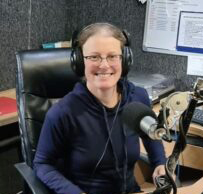
On 27 May 2026, Isla Macgregor — former spokesperson and now Advisor to Women Speak Tasmania (WST) — joined Iris Richter on Wednesday Grapevine on Huon & Kingston FM for a wide-ranging interview.
The conversation covered the erosion of sex-based rights in Australia, the consequences of self-ID laws in Tasmania, the protection of women’s and girls’ spaces, and growing pushback both locally and internationally.
The Core Issue: From Sex to Gender Identity
Isla explained how the landscape changed in 2013 under the Gillard Government:
“Federally in 2013, Julia Gillard basically passed a law for the Australian government that basically did not define sex — what a man and a woman is — and basically opened the door to gender identity being the primary protected characteristic.”
This federal shift influenced state laws, including Tasmania’s self-ID legislation introduced in 2019. Isla described the process as deeply flawed, lacking genuine community consultation.
Backdoor Politics and Media Bias
Iris shared a striking personal story from years earlier. While attending a lobbying training session, she accidentally walked into a small meeting (only six people) involving politicians, transgender activists, and a journalist from The Mercury. She recalled the journalist saying words to the effect of:
“Yes, you can get an article published anytime, just come to me, and I’ll be your mouthpiece in the media.”
Iris described it as “backdoor politics” and noted that her own scientific cause received no such access or coverage. This anecdote powerfully illustrates how media bias on this issue developed early.
Isla reinforced this point by detailing how the former Anti-Discrimination Commissioner, Robin Banks, released the initial self-ID discussion paper in 2016. One of Isla’s colleagues alleged she was bullied and harassed during a meeting with Banks and the policy officer. The Attorney-General later investigated and made an adverse finding against the Commissioner.
Impacts on Women, Girls and Single-Sex Spaces
Isla outlined how self-ID laws have affected women’s rights. Any man, at any time, can self-identify and enter female-only spaces such as women’s prisons, refuges, and the Aquatic Centre in Hobart. She also highlighted the unfair situation in women’s sports, where men identifying as women can now compete and win.
The discussion turned to the recent Giggle v Tickle Federal Court decision, which ruled in favour of Roxy Tickle. Isla noted that under current law, women in Australia cannot have women-only spaces if self-identifying males are excluded. She stated:
“Australia is the laughing stock of the human rights community because of these laws.”
Isla further explained that these laws have also harmed lesbian rights. The shift from “same-sex attraction” to “same-gender attraction” means lesbian groups can no longer hold female-only events.
Harms to Children and Medical Transition
Both speakers expressed deep concern about the impact on children. Schools are required under policy to affirm social transition, often without parental knowledge. Medical interventions such as puberty blockers and hormones can begin from age 12. Isla pointed out that organisations like Working It Out are actively providing “affirmation planning” in Tasmanian schools, describing this as “absolutely unacceptable” and resulting in what she called medical abuse.
Iris referred to the growing number of de-transitioners who are now speaking out:
“They really had some other psychological problems that needed to be addressed instead of mutilating their body.”
Important WST Evidence
Isla referenced two major documents submitted to the Attorney-General. The first is the Dossier on Impacts of Tasmania Sex Self-ID Laws on Women, Girls, Families and LGB People. The second contains 29 personal testimonies from Tasmanians affected by these laws. These testimonies, she said, provide strong evidence for why “sex” must be reinstated as a protected characteristic.
Media Bias and Political Extortion
Isla was critical of the mainstream media’s handling of the issue. She noted that Women Speak Tasmania has been effectively blackballed by outlets like the ABC and The Mercury. She gave the example of a recent article by David Killick: even though it was about an email WST sent to parliamentarians, he refused to mention Women Speak Tasmania. She also referred to a recent ABC interview between Ryk Goddard and Rodney Croome, where they reportedly avoided the term “biological sex” and instead used “biological gender” — an example Isla highlighted as language manipulation.
She described the broader situation as a system of “political extortion”, where coverage of women’s concerns often leads to complaints that it makes trans people feel unsafe.
The Tide is Turning
Despite these challenges, both Isla and Iris agreed there is growing hope. Puberty blockers have been banned or restricted in Queensland and several other countries. The International Olympic Committee has changed its stance on male inclusion in women’s sports, and there is increasing political support in Australia from parties including the Nationals, Liberals, One Nation, and Libertarians to properly define sex in the federal Sex Discrimination Act.
Final Message
Isla closed with a clear call to the audience:
“We’d love people to have a look at our Facebook page and our website. There’s lots of information there.”
Iris seconded that sentiment, saying:
“Please have a look at Women Speak Tasmania and come to your own conclusions. Think for yourself — that’s my best advice to everybody.”
Interview with Isla MacGregor – Huon and Kingston FM
Below is the full transcript of the interview. Please note this transcript has been manually cleaned and edited for readability while staying faithful to the original audio. Some small details may vary slightly due to audio quality.