Across Australia, a quiet but profound shift is occurring in education policy. It is not primarily about pronouns, flags, or even gender identity. At its core, the emerging conflict concerns something far more fundamental: who has responsibility for children — parents or the state?
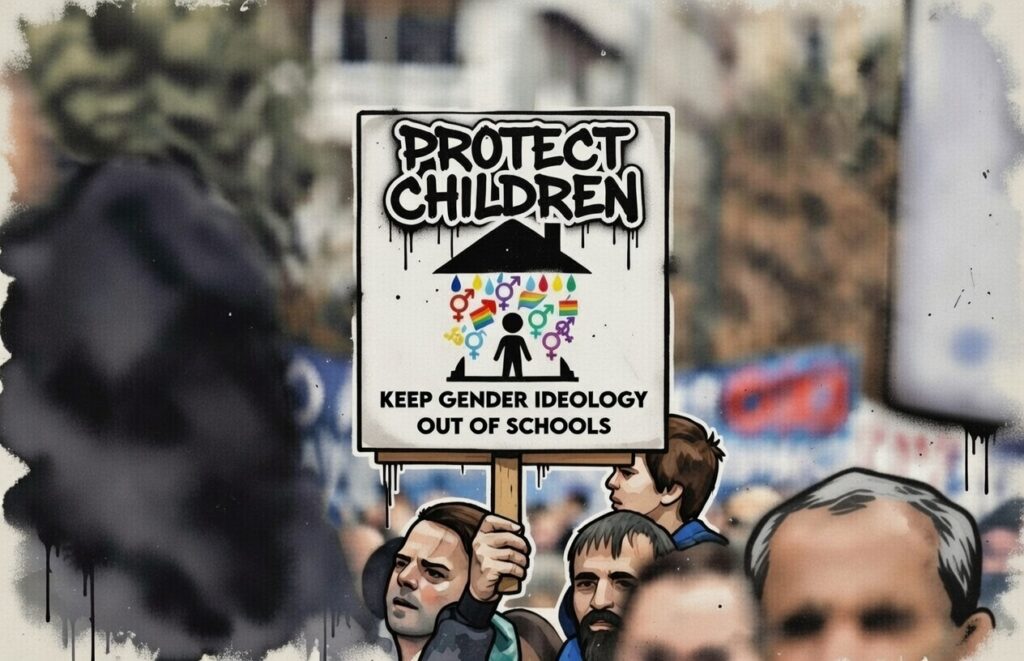
Over the past two years, policies introduced in several Australian states indicate an increasing willingness of government systems to make significant decisions affecting children’s identity, wellbeing, and development while limiting parental knowledge or involvement.
Individually, each policy may appear minor. Taken together, however, they reveal a clear trend.
Victoria: Social Transition Without Parents
Victoria currently has the most far-reaching school guidance. Under Department of Education policies, a child assessed as a “mature minor” may socially transition at school — including changing name, pronouns, and presentation — without parental consent. In some cases, teachers are specifically advised not to inform parents if the student does not want them told.
No minimum age is defined in legislation. The decision is made case-by-case by school staff.
A social transition is not a trivial step. It can involve a child being treated as the opposite sex by teachers and peers across the entire school day. It may also influence future clinical pathways. Yet parents may be unaware that it is occurring.
Melbourne psychiatrist Alison Clayton said social transition was “often the first intervention of the gender-affirmative treatment pathway”.
The ethical question is unavoidable: schools are not simply educating children — they are managing aspects of a child’s identity while deliberately excluding families.
Queensland: Identity Documentation for Preschool Children
In Queensland, kindergarten “transition statements” include a section where a child’s pronouns can be nominated for their future primary school. In 2025, a small number of children aged four to five were recorded using “they/them” pronouns.
Government officials describe the measure as inclusive and parent-driven. However, the presence of identity documentation at preschool age illustrates how early institutional involvement in gender identity now begins.
Some clinicians have expressed concern about developmental readiness at this age. Psychiatrist and James Cook University academic Dr Andrew Amos described the approach as:
“not acceptable on a number of levels and very concerning,”
stating that children of that age are unlikely to understand the underlying concepts and warning it may affect both child development and family dynamics. Other psychiatrists, including Dr Jillian Spencer, have similarly cautioned that introducing complex identity frameworks to very young children may strain school-family relationships.
The issue is not whether a child can express themselves — children have always experimented with roles, interests, and imagination as part of normal development. The concern is whether education systems are formalising identity categories at an age when children are still exploring and understanding the world around them.
Curriculum Changes for Young Children
Victoria’s Respectful Relationships curriculum now includes material teaching young students that a person’s body may not determine whether they are a boy or a girl, and that students may join sex-segregated activities based on identity rather than sex.
Supporters describe this as anti-bullying education. Critics argue it introduces complex identity concepts to children too young to understand long-term implications.
Regardless of viewpoint, these are no longer marginal topics. They are part of the core curriculum delivered in state classrooms.
The Parental Knowledge Question
The central public concern is not whether transgender people deserve respect — most Australians agree they do.
The concern is procedural and democratic:
Should schools keep significant information about a child from their parents?
For generations, education systems operated on the assumption that teachers worked with families. Today, in some jurisdictions, schools are being advised that informing parents may be harmful.
This represents a major philosophical shift. It effectively redefines parents from primary decision-makers into optional participants.
Safeguarding and Evidence
Some clinicians and researchers have raised caution about treating identity distress in children as fixed. International reviews, including the UK’s Cass Review, found the evidence base for certain youth gender interventions to be weaker than previously assumed and recommended careful, individualised assessment.
This does not mean every child questioning gender will later desist. It does mean uncertainty exists — which traditionally would strengthen the case for parental involvement, not weaken it.
Parents are uniquely positioned to understand a child’s developmental history, trauma exposure, mental health patterns, and neurodevelopmental conditions. Removing them from the process risks narrowing, not improving, safeguarding.
Why This Matters
Public debate often collapses into accusations of either bigotry or indoctrination. That framing obscures the real issue.
This is fundamentally a governance question:
- What authority should government institutions exercise over children?
- At what point does student welfare policy override family autonomy?
- Can a school ethically manage a child’s social identity in secrecy from parents?
Reasonable people can disagree about gender identity policy. But democratic societies depend on a shared principle: parents are normally the primary guardians of their children’s welfare unless there is clear evidence of harm.
Policies that presume parents are a risk by default invert that principle.
A Necessary Conversation
Australia has not yet had a transparent national discussion about these changes. Policies have largely been implemented administratively, through departmental guidance rather than parliamentary debate.
Whether one supports or opposes gender-affirming approaches, the public deserves clarity and participation in decisions that reshape the relationship between families, schools, and the state.
The debate now emerging is not merely cultural. It is constitutional in nature — about authority, accountability, and the limits of government power in the lives of children.
And it is only just beginning.