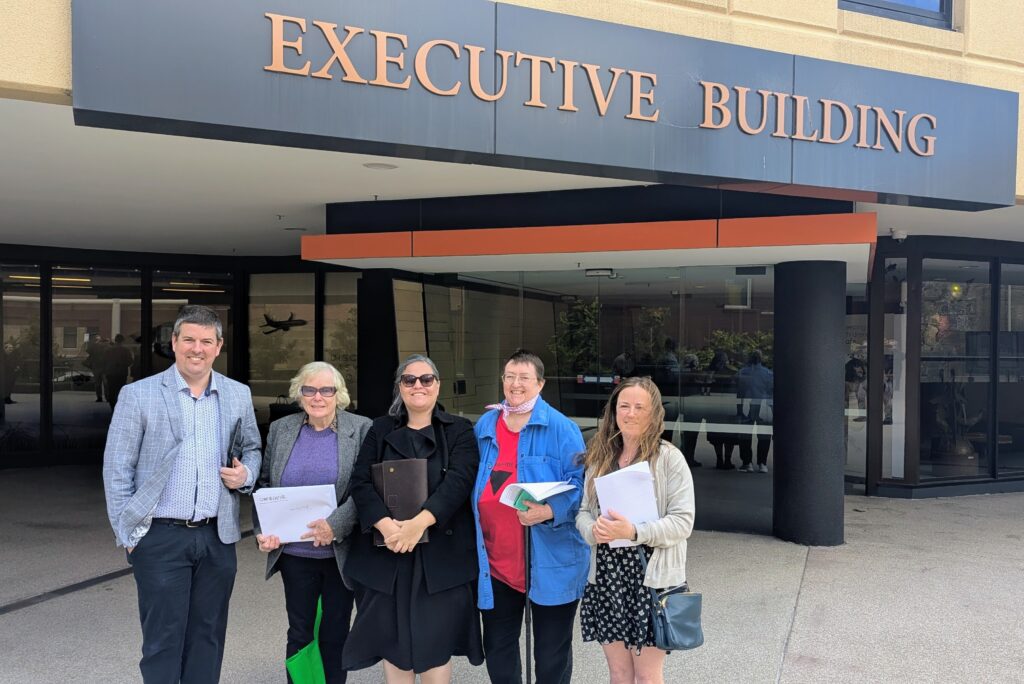
Women Speak Tasmania – Testimonial Project Launch and Delegation to the Attorney General, 15 December 2025
Throughout 2025, members of Women Speak Tasmania (WST) have been engaging in extensive community outreach. We held public meetings in Hobart on 16 June and 10 August, and in the North West on 14 September.
From these gatherings, conversations, and confidential discussions emerged a powerful body of lived experience—stories from parents, teachers, clinicians, women in community sport, lesbian and gay Tasmanians, and families impacted by gender ideology.
These accounts now form the foundation of our new dossier:
“How Gender Policies and Anti-Discrimination Laws Discriminate Against Tasmanians”
On 15 December 2025, WST, joined by a delegation of parents, concerned citizens, members of LGB Alliance Australia and Women’s Action Alliance Tasmania, presented this 84-page document to the Attorney General, the Hon. Guy Barnett.
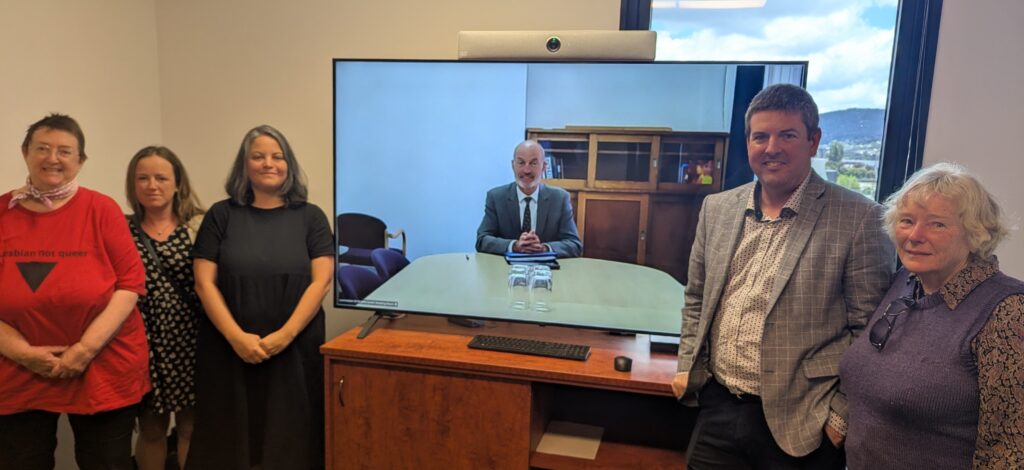
This dossier marks the formal beginning of the WST Testimonial Project—a long-overdue record of Tasmanians whose voices have been ignored, sidelined, or silenced.
Why This Matters
Since Tasmania introduced sex self-identification and expanded protections for “gender” and “gender identity,” a profound and harmful shift has taken hold across public institutions.
The Tasmanian Anti-Discrimination Act 1998 (ADA):
- does not include sex (female/male) as a protected attribute
- does not define “gender,” allowing it to be interpreted as gender identity
- elevates gender identity—a subjective feeling—above biological sex in practice
This legal confusion has created a hierarchy of rights in which women, as a sex class, have been pushed to the bottom.
As a direct result, women’s lawful political speech is increasingly labelled “offensive” or “hateful,” and public institutions now routinely conflate “gender identity” with “gender,” silencing gender-critical viewpoints.
Policies framed as “inclusion” are being used to exclude women on the basis of sex, and speaking biological truth is treated as discriminatory. Women’s rights to single-sex spaces, sport, dignity, privacy, and safety have been systematically eroded.
What should be a neutral anti-discrimination framework has instead become an enforcement mechanism for gender ideology.
Testimonies: A Glimpse Into the Reality Tasmanians Face
Parents have described the impact of gender ideology and how the conflation of “sex” with “gender” has affected their family lives, most likely resulting in teenagers and children increasing in trans-identification—sometimes without proper safeguarding.
Doctors are being told to affirm, and if they don’t, then it is considered harm.
A local GP described ideology embedded in medical practice:
“The Tasmanian Health Department has a mandatory child safety module for employees which states that failing to use a child’s preferred pronouns is an act of abuse towards them.”
She added:
“Medical students are taught to ask patients their preferred pronouns during history taking.”
These are not isolated incidents.
These policies affect children and families who have no one to turn to for help for their distressed children.
A mother describing her daughter’s medical vulnerability:
“She is autistic. She has experienced psychosis. She has anorexia. And yet this belief — that she was ‘born in the wrong body’ — has been treated as gospel.
Her clinicians never paused. Never questioned. Never considered that her identity might be a coping mechanism for deeper distress. And when I tried to challenge it — even cautiously — I was made the enemy.”
Any dissent — even thoughtful, informed concern — is treated like heresy.
A mother describing her then-16-year-old daughter:
“My daughter stated to us she was in fact a boy. She stated she wanted he/him pronouns, a new given name, and that she had always been a boy.”
She continued:
“During her doctor consultation the GP asked to chat to our daughter by herself. After 10 minutes my daughter had an official diagnosis written on a piece of paper stating she had ‘gender dysphoria’ and was given a referral for doctors.”
A ten-minute consultation — that’s all it took.
But gender identity is not always as activists described a “fixed characteristic,” as seen in testimonies from parents of desisters.
A “desister” is someone, often a young person, who previously identified as transgender or had gender dysphoria but later stops identifying that way—usually re-identifying with their birth sex before significant medical transition (though they might have socially transitioned with name/pronouns).
Sometimes trans-identification is simply a sign that the child is in distress—anxiety or depression—as described by parents. Without blanket “affirmation,” and instead with proper psychological therapy that helps find the root cause of this distress, the child can grow up and learn how to work out life.
One mother mentioned about her daughter coming out as trans:
“My daughter struggled socially. She would say she ‘found her community’ in the gender-mixed-up crowd, even though she still was never invited to anything, nor did she have any in-person friends.”
The family did not affirm her and let her work through what the mother described as “self-hatred” with therapy. She is now described as happy, loved, and encouraged by friends and family:
“She has described herself to us as bi or gay. This comes as no surprise to us and we encourage her to explore relationships to see what fits for her.”
Another mother wrote:
“While I can’t say that we are out of the woods, my daughter has matured into her own person who does her own thing, and our relationship has never been stronger. She is seeing a psychologist that I trust and we are working on life.”
Many children experience distress because they don’t understand their new feelings.
As explained by LGB Alliance Australia representative:
“Across Western nations, including Australia, the majority of children being socially or medically transitioned are same-sex attracted. Many parents and clinicians are now recognising that transitioning is functioning as a form of gay conversion therapy: turning gender non-conforming or same-sex attracted children into faux ‘straight’ youth of the opposite legal sex.”
These policies and their enforcement disproportionately affect same-sex attracted women. Lesbians are not allowed to have meetings without including trans-identified males—because that would count as discrimination on the basis of “gender identity,” as in the case of Jessica Hoyle.
She writes:
“When TASCAT made the decision that lesbians—women who are same-sex attracted—must include biological males who believe they are women, I experienced a level of homophobia I have never felt before. It was a complete disregard for my boundaries, my rights, and my existence as a lesbian woman.”
“Throughout my life, it has often felt as though my rights as a woman do not matter. This decision confirmed that message: that I do not matter.”
“I wanted to host lesbian-only events because I hoped they would give me the chance to meet someone, find love, and build a relationship. That opportunity was denied to me by politicians and bureaucratic bigots whose actions are, in my view, deeply homophobic and misogynistic. My right to pursue happiness—to connect with women like myself—has been dismissed entirely.”
If sex is not defined in the Anti-Discrimination Act, then how can we define sexual orientation? On the basis of gender, which is also not well-defined in the Act?.
In the end, the tribunal could not make this distinction, so it gave preference to gender identity—again showing a complete disregard for same-sex relationships. These rights and provisions, which were fought for over years, have now been eroded.
This document also contains many instances of discrimination on the basis of believing in the immutability of sex. It creates a hostile work environment and even a safety issue.
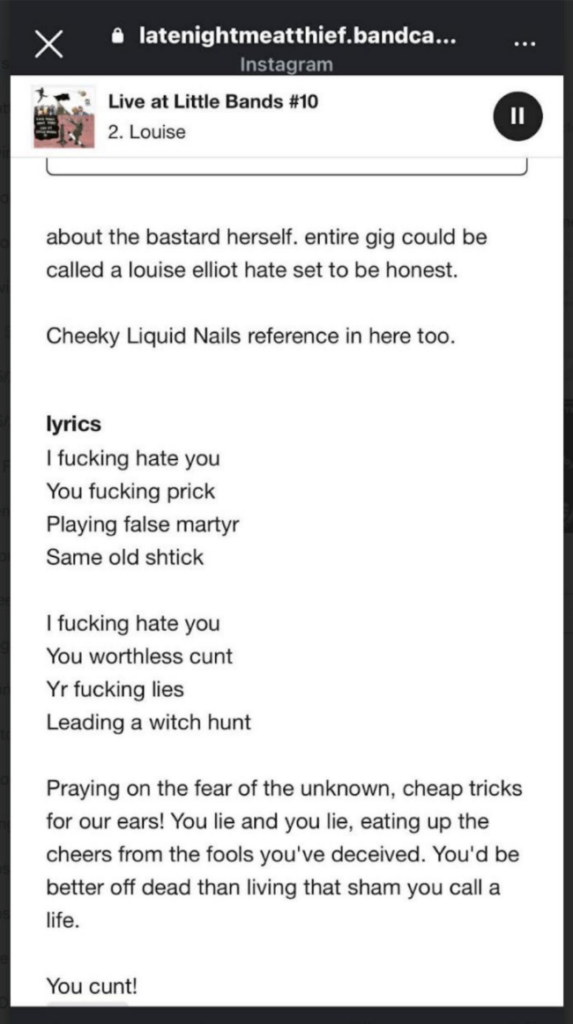
When Councillor Louise Elliot became the target of a disturbing fixation by a local band that has essentially advocated for her death, she reported this matter to the police, she wrote:
“Staff at Hobart Police Station refused to allow me to speak to an officer and told me that because of my views, I ‘need to expect some flak.’”

As we mentioned above, teachers, doctors, and community members are being systematically silenced. Work environments become toxic and unsafe, and dubious complaints are levelled against them just for speaking or giving an opinion in favour of the biological reality of sex.
As happened to Neale—just for asking a question.
In early 2025, SLST issued a circular inviting women, female-identifying, and non-binary people to participate in an IRB (Inflatable Rescue Boat) training program designed to increase women’s representation.
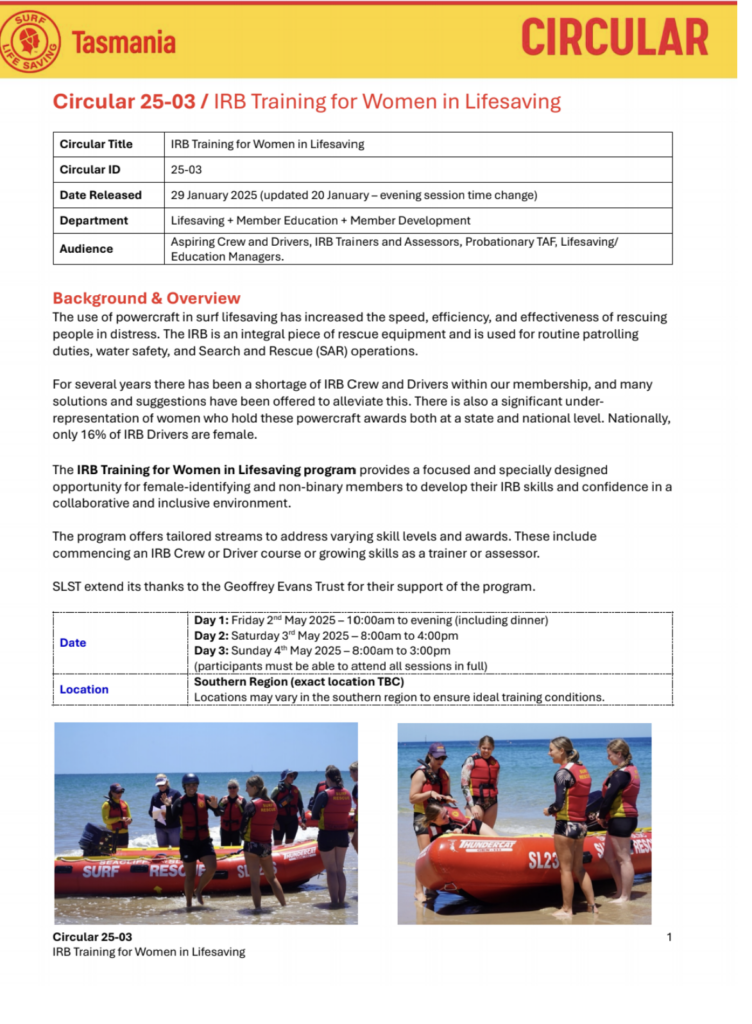
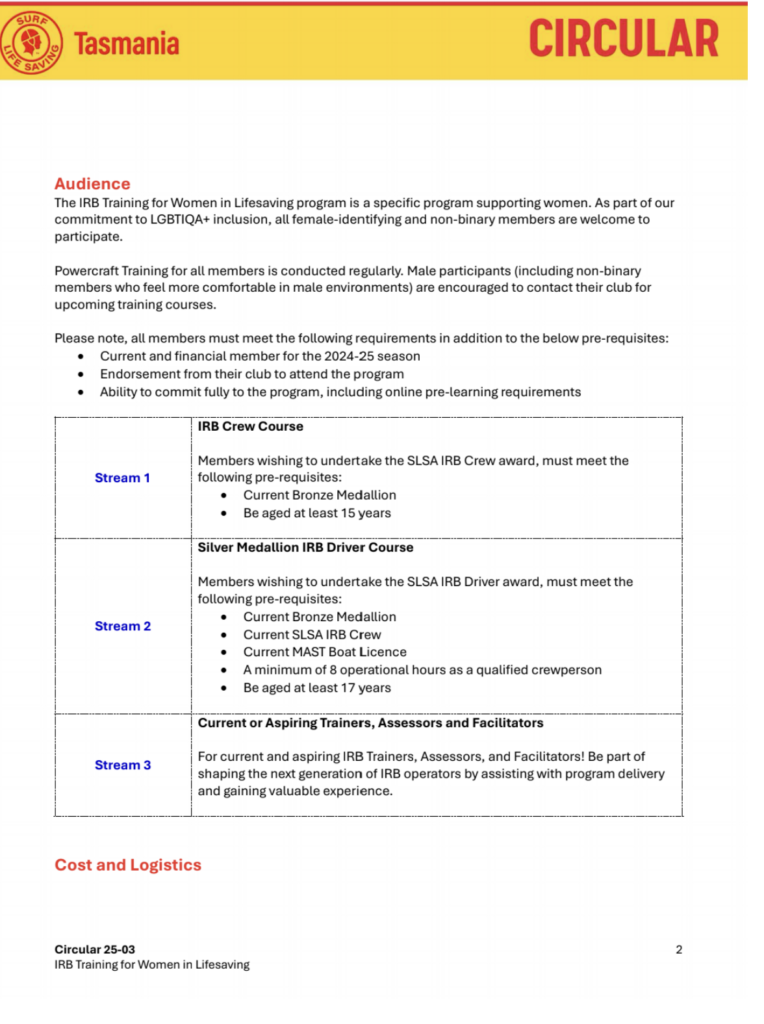
Neale supported the intent—encouraging women’s participation—but questioned the wording. Specifically, he asked what “female-identifying” meant, and whether this would permit males who identify as women to access female changerooms or training spaces. He also asked SLST to clarify its policy on gender identity and safeguarding.
Shortly afterwards, an unsigned grievance complaint was submitted against him.
We also have many instances where workplaces are becoming increasingly hostile towards women. A female worker describes the loss of single-sex spaces at her workplace as “feeling less than human.” She said:
“At my workplace there has been a decrease in female toilets and change rooms. They’re all changing to unisex or ‘all gender.’ It gives me anxiety when a man has a legitimate excuse to be on the other side of a door when I need to take clothing off. I feel degraded when I have to clean up the bodily fluids of my male colleagues just to use the toilet. I hear men talk about how much nicer the toilets are now. It is because their female colleagues are maintaining them. It is incredibly degrading.”
“Meanwhile my workplace brags about how inclusive it is and how great it is for women. It’s the worst place for women I have ever worked.”
While this occurs in workplaces across Tasmania, leaving women to endure the consequences of so-called “inclusion” policies that create unisex toilets and spaces, Tasmanian politicians often congratulate themselves on the improvements made to women’s lives.
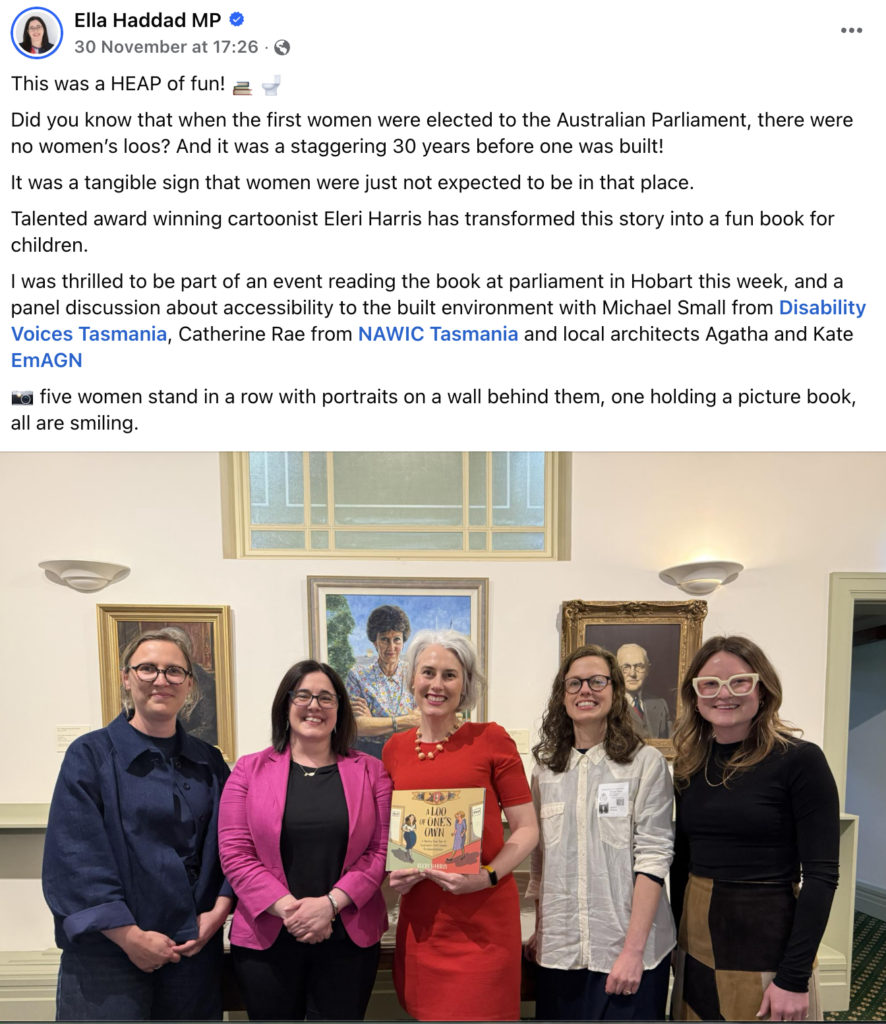
For example, Tasmania MP and Clark electorate representative, Ella Haddad, recently posted about Parliament House, highlighting the historical milestones of female-only toilets as a symbol of progress and inclusion, and celebrating accessibility improvements and public recognition for women in government.
While this is important, it does not reflect the ongoing, tangible challenges faced by women in everyday workplaces, where the removal of female-only facilities continues to compromise their safety, wellbeing, and sense of belonging. This juxtaposition underscores that, beyond symbolism, female-only spaces remain essential for women to fully participate in society with dignity and security.
What We Asked of the Government
So how do we move forward with a policy that serves all Tasmanians?
Our delegation urged the Attorney General to:
- Add sex as a protected attribute in the Anti-Discrimination Act
- Clarify sex in law with an internationally recognised biological definition
- Remove the undefined protected attribute “gender,” which functions as a Trojan horse for gender identity
- Extend vilification protections to include sex, not just gender identity
- Insert explicit single-sex exceptions to protect women’s spaces, services, and sports
- Safeguard children from harmful medicalisation and ideological pressure
- Protect freedom of belief, conscience, and political speech
- End ideological coercion within schools, healthcare, councils, and community organisations
Conclusion
The testimonies in this dossier—mothers, fathers, lesbian and gay Tasmanians, women in prison, desisters, transwidows, community members and frontline professionals—shine a harsh light on the real-world consequences of Tasmania’s legislative vacuum.
These harms are systemic, not anecdotal.
People across Tasmania now describe living with: fear of speaking, fear of disciplinary action, fear of being labelled a bigot, fear of losing employment, fear of losing their children, family estrangement, cult-like social pressure, and institutionalised ideological “re-education.”
This environment is not one most Tasmanians recognise or want. People speak in whispers in hair salons, medical clinics, sports clubs, pubs, workplaces, and even government offices.
This is what happens when laws prioritise gender identity over biological sex.
To restore fairness, safety, and cohesion, we urged the Attorney General to define sex in law, to ensure single-sex services are lawful and bring the Anti-Discrimination Act into balance with reality.
These reforms protect everyone.
A Final Word of Thanks
“We extend our sincere thanks to every Tasmanian who bravely contributed their testimony, and to all members of our delegation who made their voices heard today.”
Tasmania can lead the nation by restoring clarity, fairness, and sex-based rights.
It begins with recognising the obvious:
Sex is real.
Sex matters.
And sex must be restored to the Anti-Discrimination Act.