
In July 2020, amid rising global debates over cancel culture, Liberal Senator for Tasmania Claire Chandler published a powerful Talking Point in The Mercury titled “Big names spark turning point against free speech attacks.”
Senator Chandler highlighted the Harper’s Magazine open letter signed by 150 prominent writers and academics, including Noam Chomsky, Margaret Atwood, and J.K. Rowling. She argued that ordinary Australians — not just celebrities — must be free to express views without fear of social media vitriol, professional ruin, or legal silencing. She defended the importance of biological sex differences, particularly for women’s sports, single-sex toilets, and changerooms, while critiquing radical activism that demands ideological conformity.

Her piece was a principled call for open debate in a democracy. It was met not with counter-arguments, but with exactly the kind of attack she had warned against.
The Complaint and Bureaucratic Escalation
Within weeks, a complaint was lodged with Equal Opportunity Tasmania under the Anti-Discrimination Act 1998. The complainant alleged that Senator Chandler’s op-ed and her email response to him were “offensive, intimidating, insulting, ridiculing or humiliating” on the grounds of “gender identity.”
In her email reply, Chandler had simply stated: “women’s sports, women’s toilets and women’s changerooms are designed for people of the female sex and should remain that way.”
Anti-Discrimination Commissioner Sarah Bolt accepted the complaint (at least in part) and ordered Senator Chandler to attend compulsory mediation. In correspondence, Commissioner Bolt described Chandler’s views as “problematic” and suggested that separate toilets “may no longer be necessary” due to shifts toward unisex facilities. Even though Bolt ruled the complainant lacked standing on the original article (he was not a member of the trans community and had not notified them), the process continued on the basis of the Senator’s email reply.
Senator Chandler raised the matter in the Federal Senate, calling it a “clear and chilling message” to all Australians that free speech is under threat. Disagree with her? Debate her or vote against her — but do not weaponise the law to silence an elected representative and the Tasmanians she serves.
Resistance and the Commissioner’s Overreach
On 13 September 2020, The Mercury reported that Commissioner Bolt had ruled part of the complaint invalid: the complainant lacked standing on the original opinion piece because he was not a member of the trans community and had not informed members of that community. Despite this, Bolt proceeded with the complaint regarding Chandler’s email response. Senator Chandler announced she was seeking legal advice and considering mounting a legal fight. She warned of the chilling effect on everyday Tasmanians who share her views on biological sex and women’s rights — forcing them to hire lawyers, take time off work, and defend themselves against potentially frivolous complaints, with risks of compensation orders or gag orders.

Chandler refused to sign a confidentiality agreement for the mediation. The scheduled conciliation was cancelled.
The Complaint Collapses – But Questions Remain
On 1 October 2020, Senator Chandler issued a media release after learning via the media that the complainant had withdrawn the complaint. She expressed relief at the outcome but fury at the “abuse of process”:
“If I had not refused to sign a confidentiality agreement, I would be currently sitting in a conciliation conference on the basis of a spurious complaint which the Commissioner had no legal authority to accept… This process continues a pattern of behaviour by Equal Opportunity Tasmania in directing conciliation on complaints which have no substance and are only intended to compel the respondent to attend conciliation.”
Chandler called for substantial amendments to the Anti-Discrimination Act to prevent frivolous complaints and protect normal political debate. She stressed that the episode left the community in “legal limbo” around discussing biological sex and advocating for sex-based rights — creating a chilling effect on free speech in Tasmania.
Weaver stated he withdrew because conciliation and dialogue would no longer occur, and because he lacked the legal, financial, or other resources of the Senator. He said his intent had been to “stand in solidarity with other Tasmanians I care about” and expressed sadness that “dialogue is the path to a more inclusive Tasmania.”
Equality Tasmania’s Charlie Burton expressed disappointment that Chandler was not open to mediation and urged her to meet with trans people.
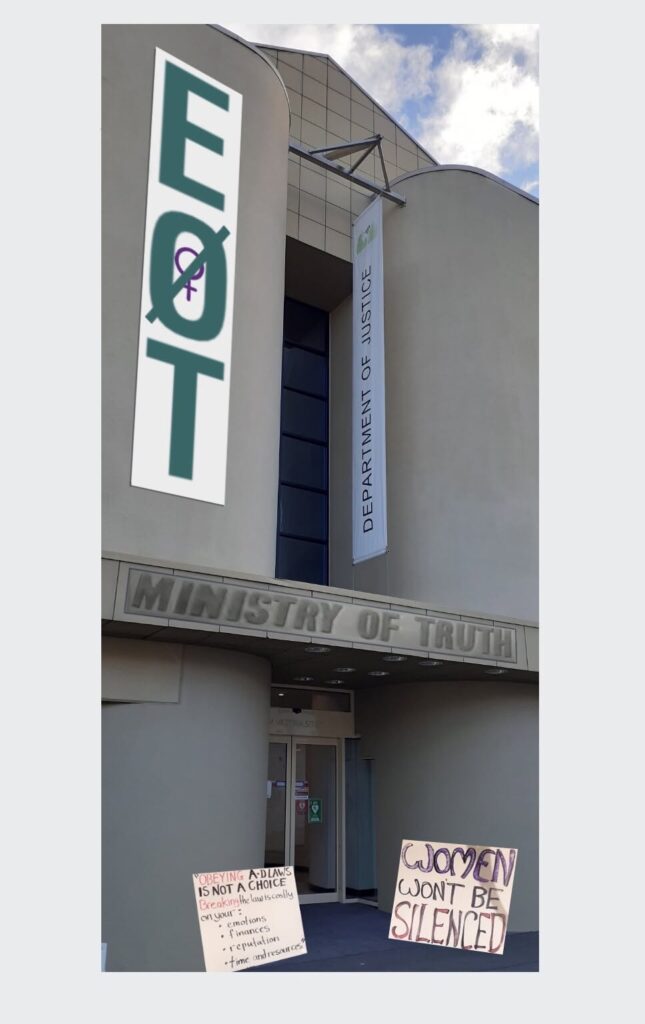
Why This Case Matters
This case exemplifies vexatious litigation — using low-threshold anti-discrimination laws not for genuine redress, but to harass, intimidate, and silence dissenting voices on sex and gender. A senator elected to represent Tasmanians was targeted for stating common-sense positions on women’s rights and fairness.
Senator Chandler stood firm, refused to be silenced, and continued her advocacy. The complaint was dropped, but the process itself imposed costs, stress, and a public chilling effect.
Women Speak Tasmania stands with Senator Chandler’s defence of free speech and sex-based rights. The weaponisation of anti-discrimination processes against elected officials and ordinary citizens chills legitimate advocacy for women and girls.
As Senator Chandler noted, advocating for fairness and safety in women’s sport and single-sex spaces is simply a defence of women’s rights and biological reality.
HOT TOPIC: ANTI-DISCRIMINATION ACT
The Mercury, November 6 2020 Printed Edition
