
What AusPATH Doesn’t Want You to Know: Finland’s Evidence-Based Exit from Routine Gender-Affirming Care for Youth
During her keynote address at the inaugural Coalition Advancing Scientific Care (CASC) Gender Healthcare Summit in Adelaide (October 18–19, 2025), Professor Riittakerttu Kaltiala presented a detailed account of Finland’s real-world experience with adolescent gender dysphoria services. As one of the clinicians who helped establish Finland’s national youth gender identity units in 2011 and who later led the move away from routine medical transition, she drew on more than a decade of registry-linked research, clinical observation, and national policy development to explain why Finland fundamentally revised its approach in 2020.
Summary & Key Findings
The following section provides a summary and conclusion of the key findings from her speech. The presentation traced Finland’s journey—from early adoption of the “Dutch protocol” to a cautious, evidence-based, mental-health-first model—and stands as one of the clearest and best-documented case studies in paediatric gender medicine.
1. The Patient Population Changed Dramatically
Until around 2010, Finland offered medical gender transition only to adults. In 2011, specialised adolescent gender identity services were established at Tampere and Helsinki University Hospitals, expecting a small number of referrals based on historical patterns: mostly pre-pubertal boys with early-onset, apparently stable cross-gender identification and relatively low rates of psychiatric comorbidity.
What arrived instead was a completely different clinical picture:
- ~85% natal females (adolescent girls), reversing the historical male predominance.
- Mean age at first contact ~16.2 years — well into or after puberty.
- Less than half living with both biological parents (compared with >75% of the general adolescent population).
- Two-thirds already had a history of specialist-level psychiatric treatment, nearly always beginning before any gender-related concerns were reported.
- Marked over-representation of autism spectrum conditions, severe depression, anxiety disorders, suicidal ideation, non-suicidal self-injury, eating disorders, and other serious mental health diagnoses.
These observations, first documented in Kaltiala-Heino et al. (2015), did not match the “classic” profile described in early Dutch research or in much of the public advocacy discourse at the time.
2. Psychiatric Comorbidity Was Severe and Usually Pre-dated Gender Distress
Multiple Finnish register-linkage studies (2015–2025) and clinical reviews consistently showed:
- 45–90% of gender-referred adolescents received at least one specialist psychiatric diagnosis (comparable to or exceeding rates in general adolescent psychiatric outpatient populations).
- Common diagnoses: depressive disorders (30–78%), anxiety disorders (21–63%), autism spectrum disorder (15–20%), personality disorders (~15% vs 2.1% in controls), eating disorders (5.0% lifetime vs 1.6% controls), and high rates of suicidal ideation and non-suicidal self-injury (35–74%).
- In head-to-head comparisons (Karvonen et al., 2020 & 2022), symptom profiles of gender-referred youth were broadly similar to those of adolescents referred to general psychiatric services for non-gender reasons. Gender-referred adolescents showed more internalising symptoms (emotional distress, suicidality) and fewer externalising behaviours, but the overall psychiatric burden was equivalent.
Crucially, the majority of psychiatric treatment history pre-dated the emergence of gender-related distress, suggesting that gender dysphoria was frequently secondary to—or co-occurring with—pre-existing mental health and developmental difficulties rather than the primary driver.
3. Medical Gender Reassignment Did Not Resolve Psychiatric Morbidity
Follow-up studies of adolescents who started cross-sex hormones showed disappointing results:
- No broad improvement in psychiatric symptoms or psychosocial functioning (school, peer relationships, daily living skills) after a median of one year on hormones (Kaltiala et al., 2020).
- Those who had significant psychiatric treatment needs or developmental problems before hormones continued to have them afterwards.
- Long-term registry follow-up (1996–2019) found that the risk of needing ongoing specialist psychiatric care after contacting gender services was almost identical whether or not the individual proceeded to medical gender reassignment (adjusted hazard ratios ~3.8–3.9 compared with controls).
- Discontinuation of hormonal treatment occurred in ~7.9% of cases overall, with significantly higher risk in more recent cohorts (2013–2019), suggesting lowered referral thresholds may have led to more individuals later regretting or reconsidering medical steps.
4. Suicide Mortality Was Elevated — But Not Reduced by Medical Transition
All-cause and suicide mortality were higher among gender-referred adolescents and young adults than in age- and sex-matched controls (0.7% vs 0.4% all-cause; 0.6% vs 0.3% suicide). However:
- Suicide mortality remained lower than in general adolescent psychiatric control groups.
- Medical gender reassignment had no measurable impact on subsequent suicide mortality risk.
These findings directly contradict the frequently repeated claim that medical gender-affirming interventions are “life-saving” for gender-distressed youth.
5. The Policy Response: Finland’s 2020 National Guidelines
Faced with this accumulating evidence, Finnish clinicians requested a formal national evidence review. The resulting COHERE Finland guidelines (2020) represent one of the clearest international shifts toward caution:
- Psychosocial and exploratory psychotherapeutic support became the first-line treatment, delivered in local child and adolescent mental health services.
- Psychiatric comorbidities and developmental difficulties must be identified and treated before any referral to specialised gender identity units.
- Assessment in the national gender services (Tampere or Helsinki) is multidisciplinary, extends over 6–12 months, and explicitly evaluates gender identity in the broader context of adolescent development, family situation, trauma history, and neurodevelopmental conditions.
- Medical interventions (puberty blockers or cross-sex hormones) are restricted to exceptional cases:
- Childhood-onset with persistent, stable identity and no severe psychiatric comorbidity → blockers considered only after puberty has started (~13 years), hormones ~16 years.
- Adolescent-onset → hormones considered from ~16 years only if identity appears clearly persistent and stable after exhaustive assessment.
- Genital surgeries are permitted only after age 18.
- Over time, even within this already restrictive framework, clinical decision-making has become increasingly conservative.
6. Key Conclusions from Finland’s Experience
- The adolescent population presenting with gender dysphoria today differs markedly from the cases described in early research that justified the Dutch protocol.
- Severe psychiatric comorbidity is the norm, usually precedes gender-related distress, and persists even after medical gender reassignment.
- Medical interventions do not produce broad, reliable improvements in mental health, psychosocial functioning, or suicide risk.
- Discontinuation of treatment and regret are clinically significant realities that require recognition and support.
- A cautious, evidence-based, mental-health-first model—prioritising thorough psychiatric assessment, treatment of comorbidities, and psychosocial support—is the most responsible approach for vulnerable adolescents.
Finland’s journey demonstrates that real-world clinical data can—and should—drive policy change, even when that change departs from prevailing international narratives. The Finnish experience stands as a sobering reminder that good intentions and early optimism are not sufficient when the stakes are irreversible medical interventions in developing adolescents.
Slides & Transcripts
This section presents the slides shown during Professor Riittakerttu Kaltiala’s keynote presentation at the inaugural Coalition Advancing Scientific Care (CASC) Gender Healthcare Summit in Adelaide (October 18–19, 2025), together with accurate transcriptions of their visible text.
The photographs of the slides were taken by Dr Elizabeth Caballero during the public summit. Transcriptions were prepared as faithfully as possible from those photographs using two independent AI-assisted tools to cross-check accuracy and reduce transcription errors.
The content is reproduced here solely for the purpose of public interest discussion and educational analysis of the evidence presented. We fully acknowledge and respect Professor Kaltiala’s original authorship, research, and intellectual contribution to the material; no claim is made to ownership of the slides or their underlying research.
This summary is not an official record or publication of the CASC Summit and is provided in good faith based on publicly visible presentation content.
Slide: The young people who contacted
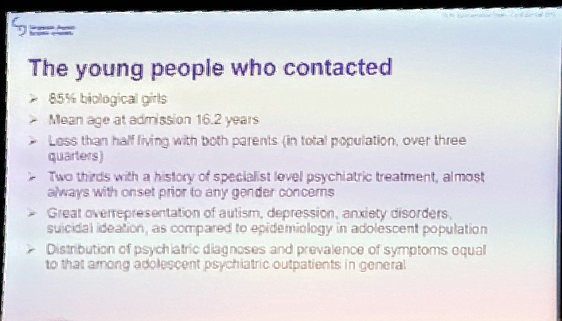
– ~85% biological girls
– Mean age on admission 16.2 years
– Less than half living with both parents (in total population, over three quarters)
– Two thirds with a history of specialist level psychiatric treatment, almost always with onset prior to any gender concerns
– Great overrepresentation of autism, depression, anxiety disorders, suicidal ideation, as compared to epidemiology in adolescent population
– Distribution of psychiatric diagnoses and prevalence of symptoms equally to that among adolescent psychiatric outpatients in general
Slide: RESEARCH – Open Access
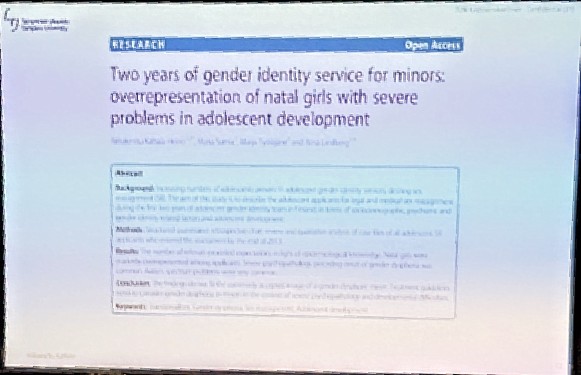
Riittakerttu Kaltiala-Heino¹,², Marja Sumia³, Marja Työläjärvi⁴ and Nina Lindberg⁵
Abstract
Background:
Increasing numbers of adolescents present in adolescent gender identity services during the last decade. The aim of this study is to describe the adolescent applicants for legal and medical sex reassignment during the first two years of adolescent gender team in Finland, in terms of sociodemographic, psychiatric and gender identity related factors and adolescent development.
Methods:
Retrospective quantitative register study and qualitative analysis of case files of all adolescent applicants who entered the assessment by the end of 2011.
Results:
The number of referrals exceeded expectations in light of epidemiological knowledge. Natal girls were markedly overrepresented among applicants. Severe psychopathology preceding gender dysphoria was common. Autism spectrum problems were very common. The adolescents’ problems were often already severe before the onset of gender dysphoria. Gender identity concerns were often secondary to other psychiatric problems.
Conclusion:
The findings do not fit the currently accepted image of a gender dysphoric minor. Treatment guidelines need to consider the context of severe psychopathology and developmental difficulties.
Keywords:
Transsexualism, Gender dysphoria, Sex reassignment, Adolescent development
Slide: The different groups
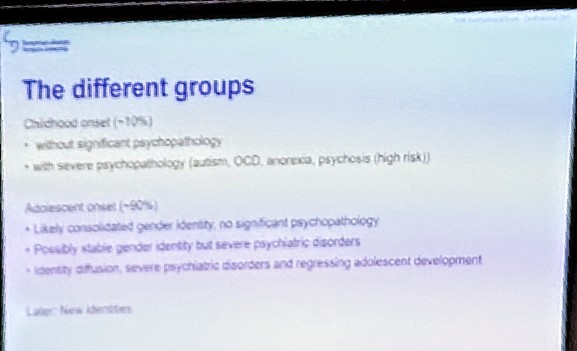
Childhood onset (~10%)
- without significant psychopathology
- with severe psychopathology (autism, OCD, anorexia, psychosis (high risk))
Adolescent onset (~90%)
- Likely consolidated gender identity, no significant psychopathology
- Possibly stable gender identity but severe psychiatric disorders
- Identity diffusion, severe psychiatric disorders and regressing adolescent development
Later: New identities
Slide: Article
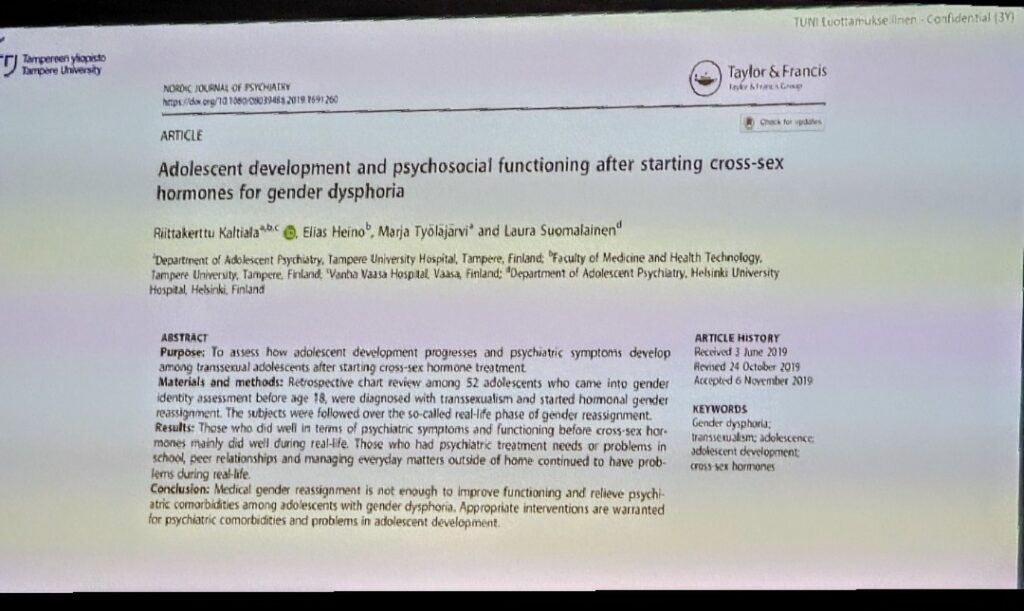
Abstract
Purpose
To assess how adolescent development progresses and psychiatric symptoms develop among adolescents with gender dysphoria after starting cross-sex hormone treatment.
Materials and Methods
Retrospective chart review of 52 adolescents who entered gender identity assessment before age 18, were diagnosed with transsexualism, and started hormonal gender reassignment. Participants were followed for a median of one year after the first administration of cross-sex hormones.
Results
Adolescents who were functioning well psychologically before treatment generally continued to do well. Those with psychiatric treatment needs or difficulties in school, peer relationships, and daily functioning continued to experience these problems during the real-life phase.
Conclusion
Medical gender reassignment alone did not resolve psychiatric comorbidities or developmental difficulties. Additional psychiatric and developmental interventions were necessary.
Slide: Referral Trends in Finland (2011–2022)
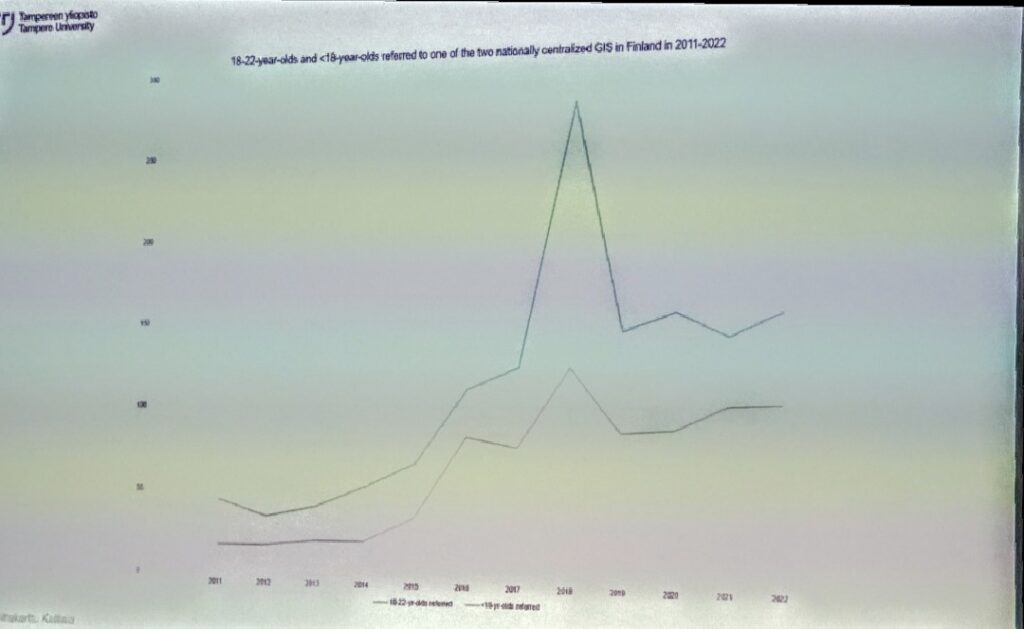
This slide presents a line graph showing referral trends to Finland’s nationally centralized Gender Identity Services (GIS) between 2011 and 2022, based on data presented by Riittakerttu Kaltiala of Tampere University.
The graph compares two groups:
- <18-year-olds (minors) – shown with a solid line
- 18–22-year-olds (young adults) – shown with a dashed line
Both groups show a sharp increase in referrals during the mid-2010s, with the largest surge among minors. Referrals for those under 18 rose from roughly a few dozen in 2011 to a peak around 2017–2018 (approximately 250–280 referrals). After this peak, numbers declined and then stabilized at a lower but still elevated level through 2022.
Referrals among 18–22-year-olds followed a similar pattern but at lower levels, peaking around 100–120 referrals before also declining and plateauing.
The slide is often used to illustrate the rapid growth in demand for gender identity services in Finland during the 2010s, particularly among adolescents, followed by a partial decline and stabilization in later years.
Slide: Challenges
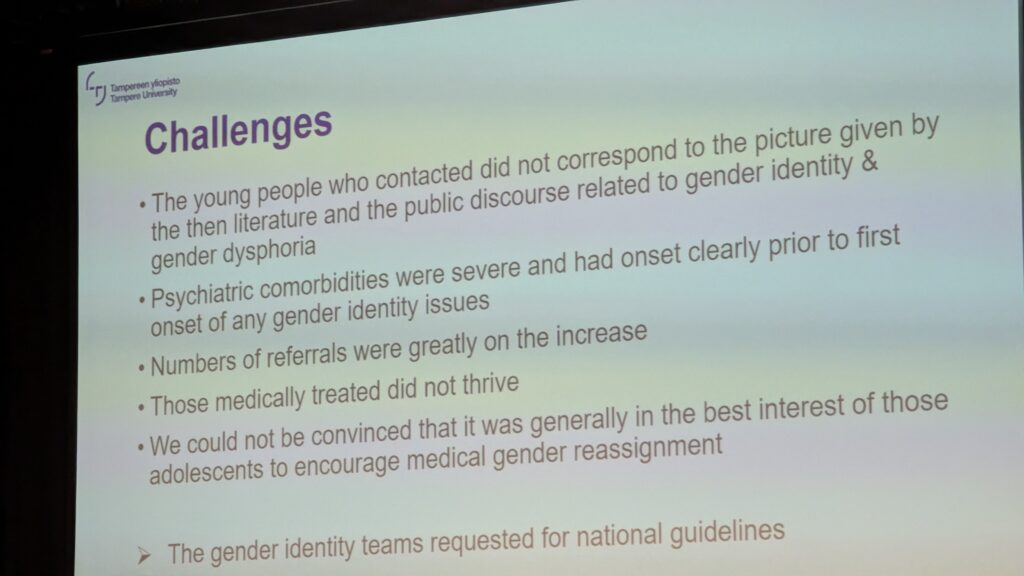
– The young people who contacted did not correspond to the picture given by the literature & the public discourse related to gender identity & the then literature and the public discourse related to gender dysphoria
– Psychiatric comorbidities were severe and had onset clearly prior to first gender dysphoria
– Numbers of referrals were greatly on the increase
– Those medically treated did not thrive
– We could not be convinced that it was generally in the best interest of those adolescents to encourage medical gender reassignment
The gender identity teams requested national guidelines for national guidelines
Slide: National guidelines for treatment 2020
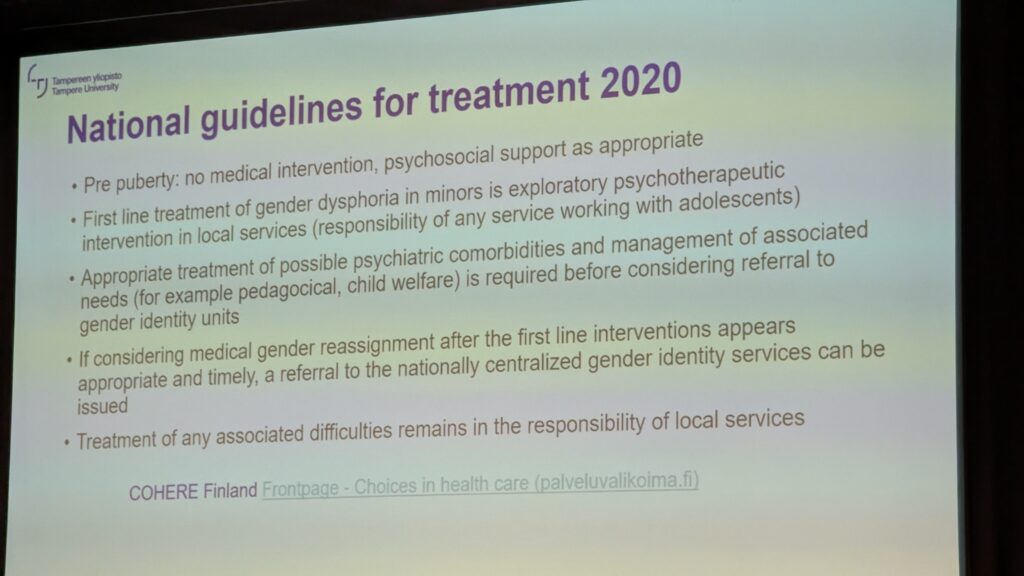
– Pre puberty: no medical intervention, psychosocial support as appropriate.
– First line treatment of gender dysphoria in minors is exploratory psychotherapeutic intervention in local services (responsibility of any service working with adolescents)
– Appropriate treatment of possible psychiatric comorbidities and management of associated needs (for example pedagogical, child welfare) is required before considering referral to gender identity units
– If considering medical gender reassignment after the first line interventions appears appropriate and timely, a referral to the nationally centralized gender identity services can be issued
– Treatment of any associated difficulties remains in the responsibility of local services
COHERE Finland Frontpage – Choices in health care (palveluvalikoima.fi)
Slide: Assessment in the nationally centralized services
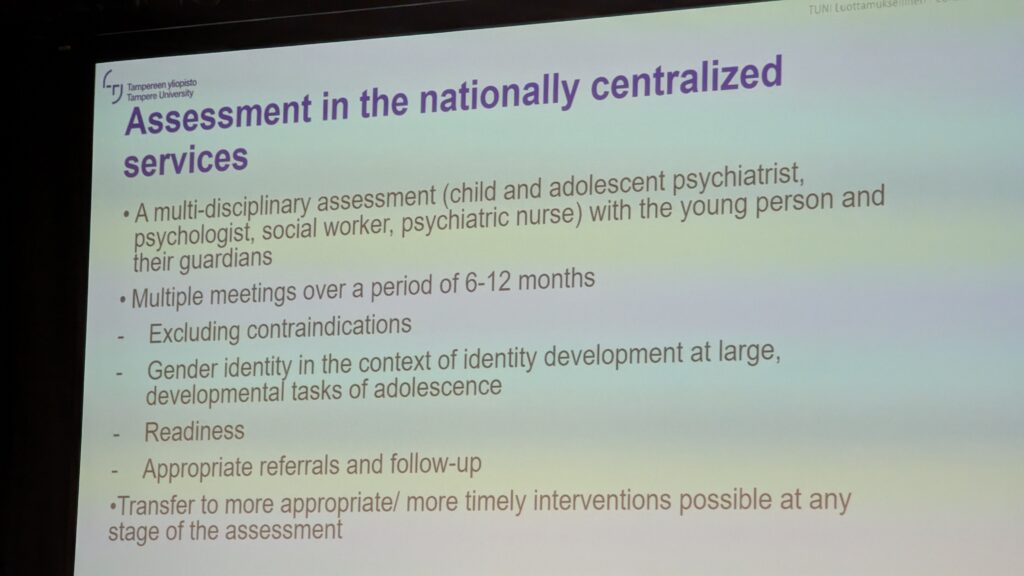
– A multi-disciplinary assessment (child and adolescent psychiatrist, psychologist, social worker, psychiatric nurse) with the young person and their guardians
– Multiple meetings over a period of 6-12 months
- Excluding contraindications
- Gender identity in the context of identity development at large,
- Developmental tasks of adolescence
- Readiness
- Appropriate referrals and follow-up
– Transfer to more appropriate / more timely interventions possible at any stage of the assessment
Slide: Possible medical GR interventions
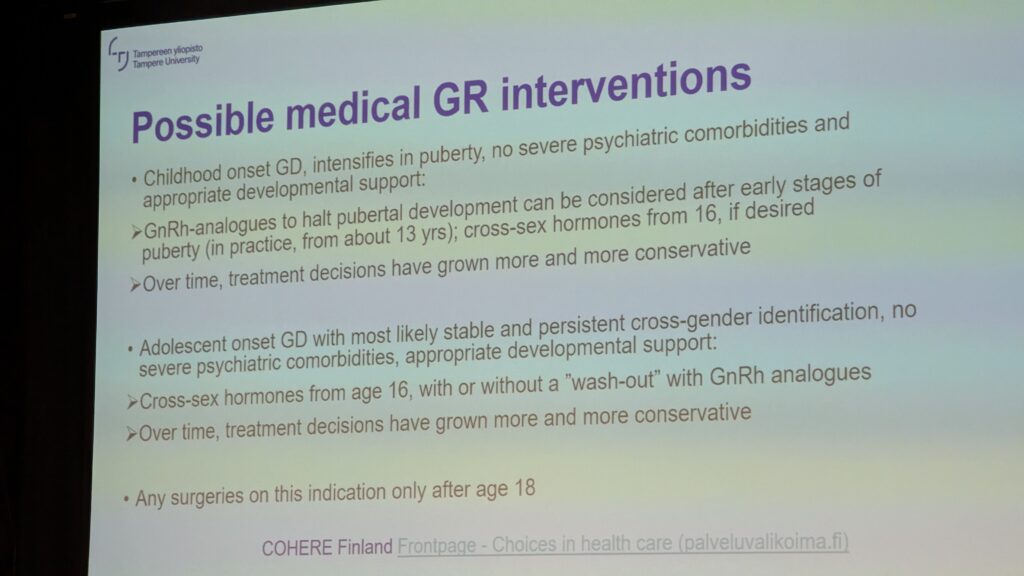
– Childhood onset GD, intensifies in puberty, no severe psychiatric comorbidities and appropriate developmental support:
- GnRH-analogues to halt pubertal development can be considered after early stages of puberty (in practice, from about 13 yrs); cross-sex hormones from 16, if desired
- Over time, treatment decisions have grown more and more conservative
– Adolescent onset GD with most likely stable and persistent cross-gender identification, no severe psychiatric comorbidities, appropriate developmental support:
- Cross-sex hormones from age 16, with or without a “wash-out” with GnRH analogues
- Over time, treatment decisions have grown more and more conservative
– Any surgeries on this indication only after age 18
COHERE Finland Frontpage – Choices in health care (palveluvalikoima.fi)
Slide: Adolescent seeking for gender reassignment present with considerable psychiatric morbidity: Diagnoses set in health care
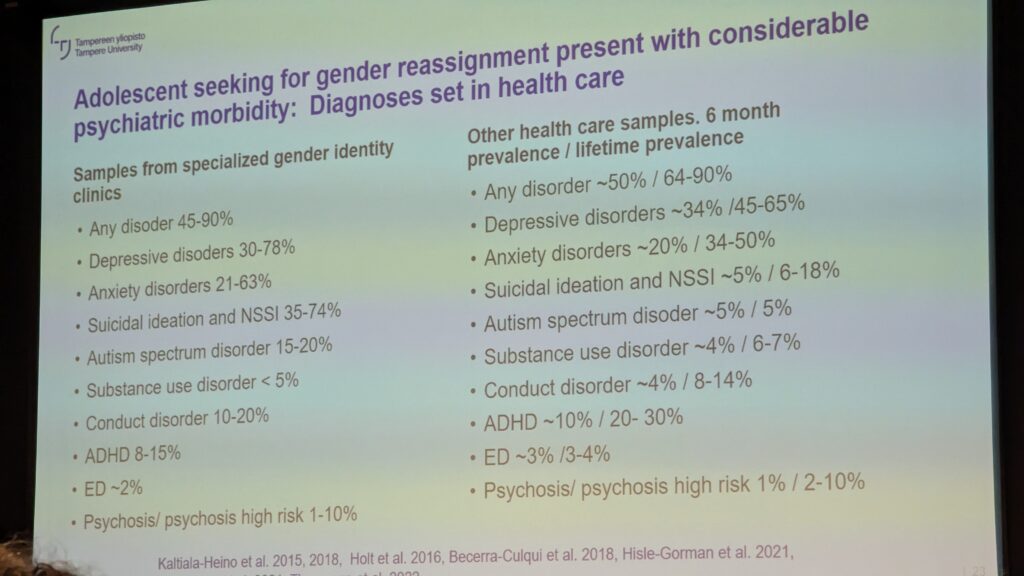
Samples from specialized gender identity clinics
– Any disorder 45-90%
– Depressive disorders 30-78%
– Anxiety disorders 21-63%
– Suicidal ideation and NSSI 35-74%
– Autism spectrum disorder 15-20%
– Substance use disorder <5%
– Conduct disorder 10-20%
– ADHD 8-15%
– ED ~2%
– Psychosis/psychosis high risk 1-10%
Other health care samples. 6 month prevalence / lifetime prevalence
– Any disorder ~50% / 64-90%
– Depressive disorders ~34% / 45-65%
– Anxiety disorders ~20% / 34-50%
– Suicidal ideation and NSSI ~5% / 6-18%
– Autism spectrum disorder ~5% / 5%
– Substance use disorder ~4% / 6-7%
– Conduct disorder ~4% / 8-14%
– ADHD ~10% / 20-30%
– ED ~3% / 3-4%
– Psychosis/psychosis high risk 1% / 2-10%
Citations: Kaltiala-Heino et al. 2015, 2018, Holt et al. 2016, Becerra-Culqui et al. 2018, Hisle-Gorman et al. 2021
Slide: Article
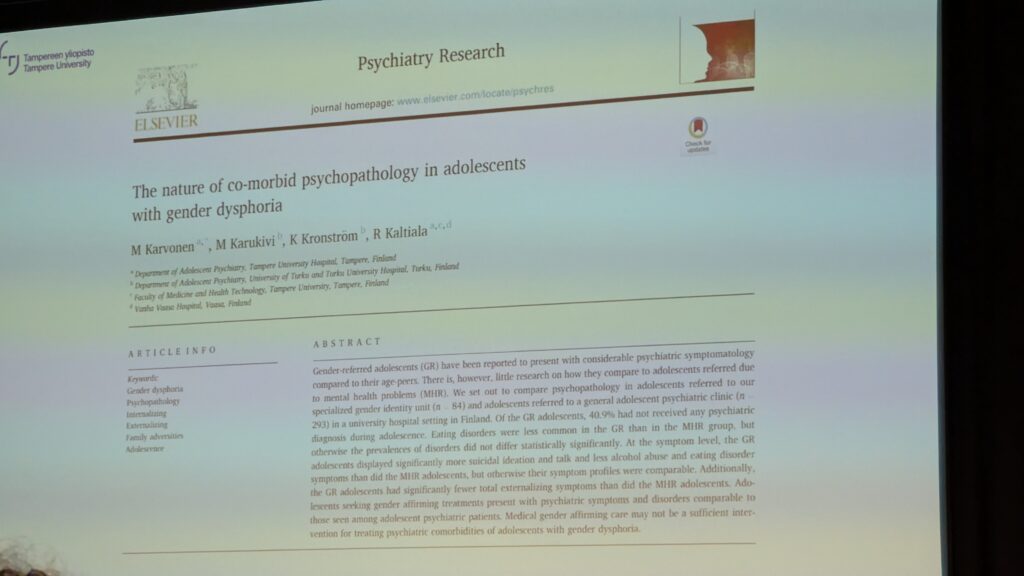
The nature of co-morbid psychopathology in adolescents with gender dysphoria
Karvonen M^a, Karukivi M^b, Kronström K^b, Kaltiala R^a,c,d
^a Department of Adolescent Psychiatry, Tampere University Hospital, Tampere, Finland
^b Department of Adolescent Psychiatry, University of Turku and Turku University Hospital, Turku, Finland
^c Faculty of Medicine and Health Technology, Tampere University, Tampere, Finland
^d Vanhan Vaasa Hospital, Vaasa, Finland
Psychiatry Research
journal homepage: www.elsevier.com/locate/psychres
Abstract
Gender-referred adolescents (GR) have been reported to present with considerable psychiatric symptomatology. There is, however, little research on how they compare to adolescents referred due to their age-peers compared to mental health problems (MHR). We set out to compare psychopathology in adolescents referred to our specialized gender identity unit (n = 84) and adolescents referred to a general adolescent psychiatric clinic (n = 293) in a university hospital setting in Finland. Of the GR adolescents, 40.9% had not received any psychiatric diagnosis during adolescence. Eating disorders were less common in the GR than in the MHR group, but otherwise the prevalences of disorders did not differ statistically significantly. At the symptom level, the GR adolescents displayed significantly more suicidal ideation and talk and less alcohol abuse and eating disorder symptoms than did the MHR adolescents, but otherwise their symptom profiles were comparable. Additionally, the GR adolescents had significantly fewer total externalizing symptoms than did the MHR adolescents.
Conclusion: Adolescents seeking gender affirming treatments present with psychiatric symptoms and disorders comparable to those seen among adolescent psychiatric patients. Medical gender affirming care may not be a sufficient intervention for treating psychiatric comorbidities of adolescents with gender dysphoria.
Keywords: Gender dysphoria, Psychopathology, Internalizing, Externalizing, Family adversities, Adolescence
Slide: Gender-referred vs. mental health referred adolescents
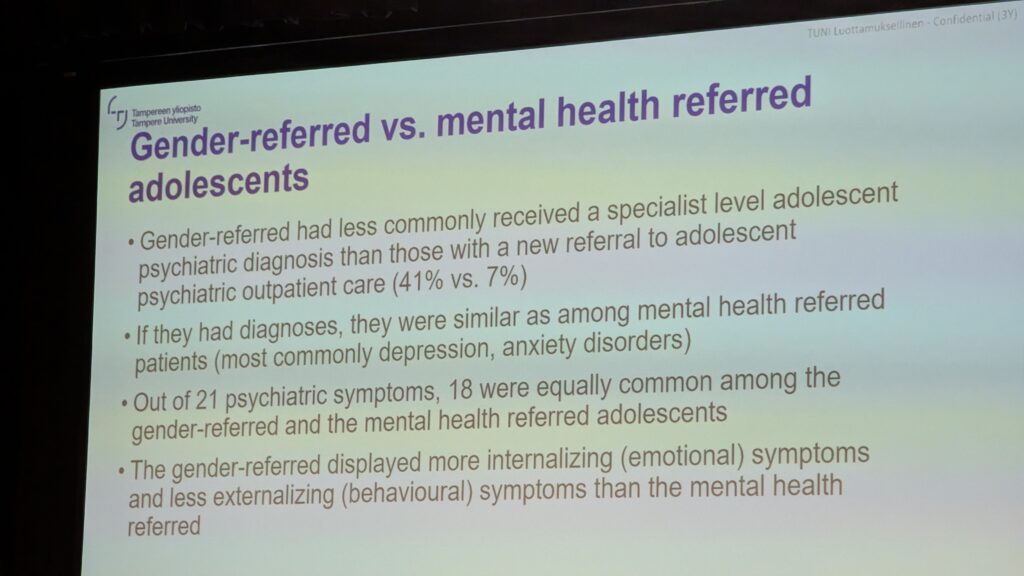
– Gender-referred had less commonly received a specialist level adolescent psychiatric diagnosis than those with a new referral to adolescent psychiatric outpatient care (41% vs. 7%)
– If they had diagnoses, they were similar as among mental health referred patients (most commonly depression, anxiety disorders)
– Out of 21 psychiatric symptoms, 18 were equally common among the gender-referred and the mental health referred adolescents
– The gender-referred displayed more internalizing (emotional) symptoms and less externalizing (behavioural) symptoms than the mental health referred.
Slide: Article
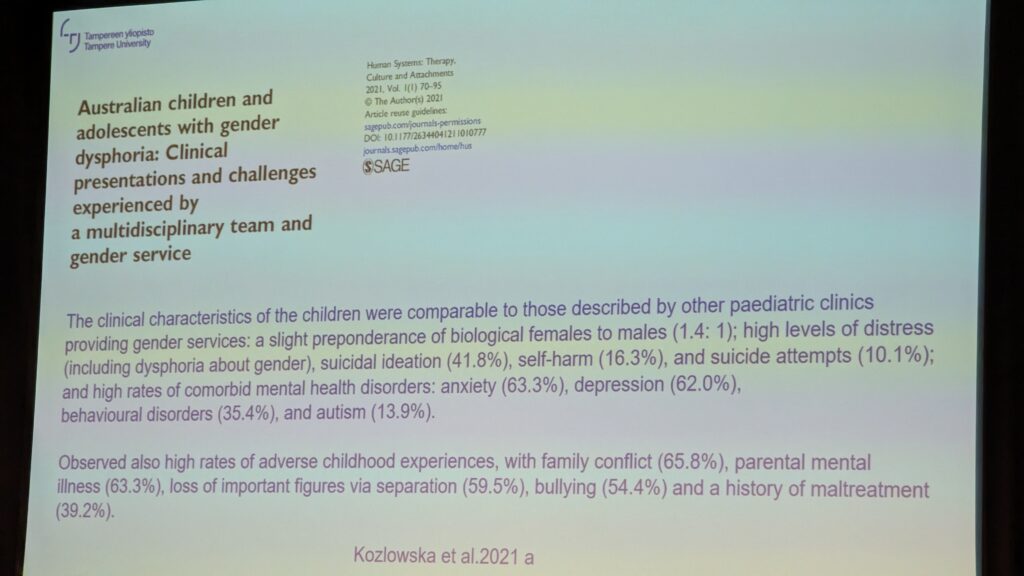
– The clinical characteristics of the children were comparable to those described by other paediatric clinics providing gender services: a slight preponderance of biological females to males (1.4: 1); high levels of distress (including dysphoria about gender), suicidal ideation (41.8%), self-harm (16.3%), and suicide attempts (10.1%); and high rates of comorbid mental health disorders: anxiety (63.3%), depression (62.0%), behavioural disorders (35.4%), and autism (13.9%).
– Observed also high rates of adverse childhood experiences, with family conflict (65.8%), parental mental illness (63.3%), loss of important figures via separation (59.5%), bullying (54.4%) and a history of maltreatment (39.2%).
Slide: Article
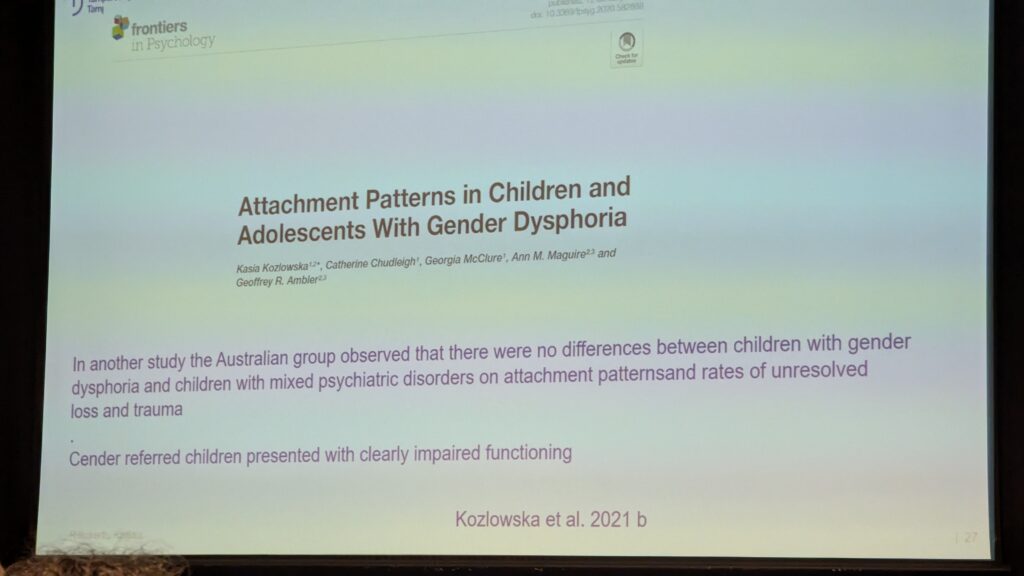
Attachment Patterns in Children and Adolescents With Gender Dysphoria
Kasia Kozlowska^{1,2*}, Catherine Chudleigh^1, Georgia McClure^1, Ann M. Maguire^{2,3} and Geoffroy R. Ambler^{2,3}
journal homepage: www.frontiersin.org/journals/psychology
In another study the Australian group observed that there were no differences between children with gender dysphoria and children with mixed psychiatric disorders on attachment patterns and rates of unresolved loss and trauma
Gender referred children presented with clearly impaired functioning
Kozlowska et al. 2021 b
Slide: Article
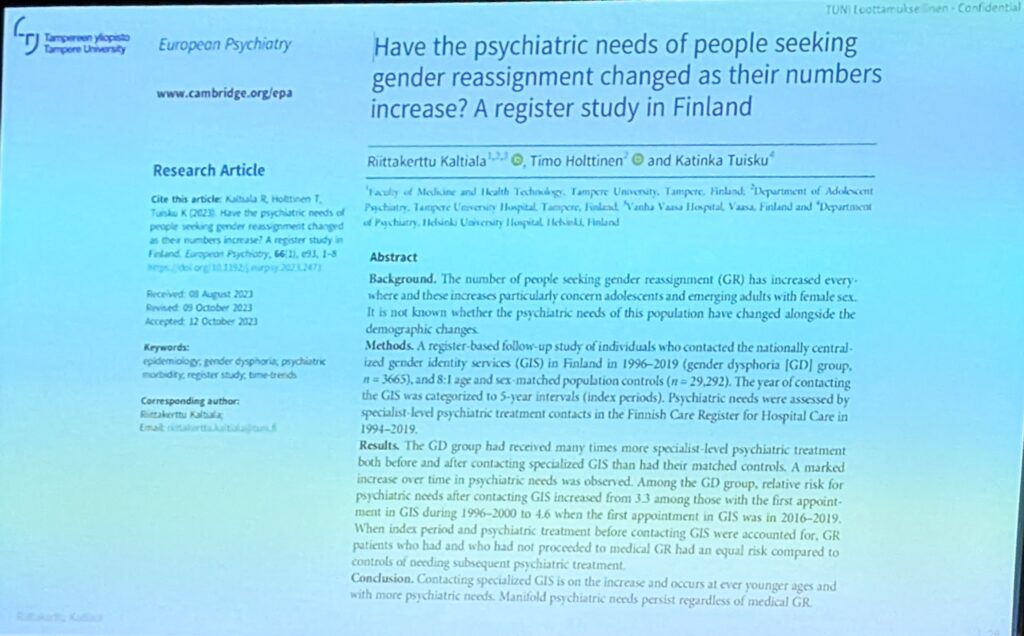
Riittakerttu Kaltiala^{a,b,c} Ø, Timo Holttinen^{d} and Katinka Tuisku^{e}
^a Faculty of Medicine and Health Technology, Tampere University, Tampere, Finland ^b Department of Adolescent Psychiatry, Tampere University Hospital, Tampere, Finland ^c Department of Adolescent Psychiatry, Helsinki University Hospital, Helsinki, Finland ^d Department of Adolescent Psychiatry, University of Turku and Turku University Hospital, Turku, Finland ^e Vanhan Vaasa Hospital, Vaasa, Finland
European Psychiatry
Abstract
Background: The number of people seeking gender reassignment (GR) has increased everywhere and these increases particularly concern adolescents and have changed alongside the demographic changes.
Methods: A register-based follow-up study of individuals who contacted the nationally centralized gender identity services (GIS) in Finland in 1996–2019 (gender dysphoria (GD) group, n=3,665), and 8:1 age and sex matched population controls (n=29,292). The year of contacting the GIS was categorized to 5-year intervals (index periods). Psychiatric needs were assessed by specialist psychiatric contacts in the Finnish Care Register for Health Care in 1996–2019.
Results: The GD group received many times more specialist psychiatric treatment than controls in 1996–2019. Relative increase over time in psychiatric needs was observed. Among the GD group, relative risk (RR) for psychiatric needs after contacting GIS increased from 3.3 among those with first appointment in GIS during 1996-2000 to 4.6 when the first appointment in GIS was in 2016-19. When index period and psychiatric treatment before contacting GIS were accounted for, GR patients who had and who had not proceeded to medical GR had an equal risk compared to controls of needing subsequent psychiatric treatment.
Conclusion: Contacting specialized GIS is on the increase and occurs at ever younger ages and with more psychiatric needs. Manifold psychiatric needs persist regardless of medical GR.
Slide: Among those who contacted GIS at age <23
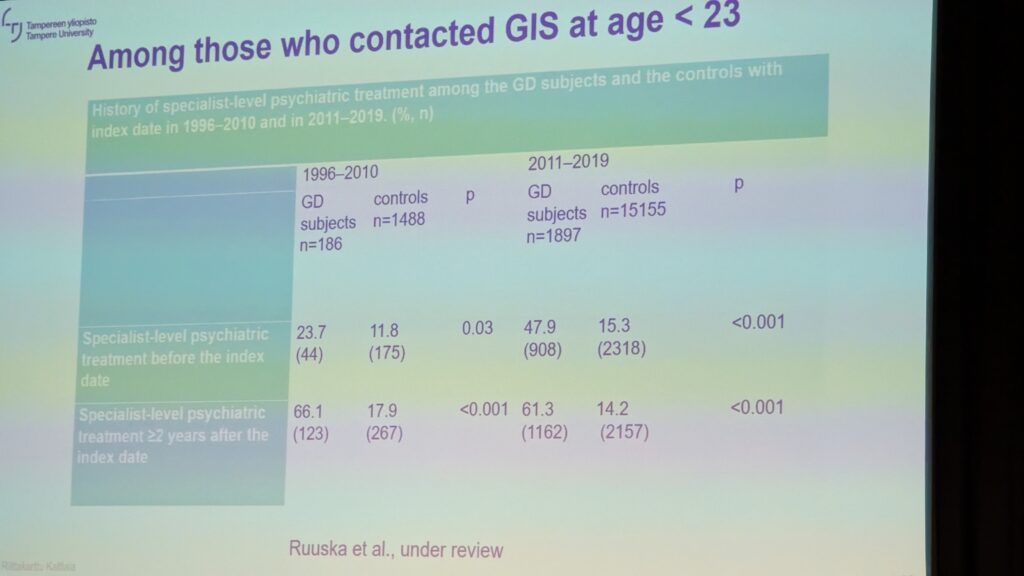
History of specialist-level psychiatric treatment among the GD subjects and the controls with index date in 1996–2010 and in 2011–2019. (%, n)
| Measure | 1996–2010 | 2011–2019 | ||||
| GD subjects n=186 | controls n=1488 | p | GD subjects n=1897 | controls n=15155 | p | |
| Specialist-level psychiatric treatment before the index date | 23.7% (44) | 11.8% (175) | 0.03 | 47.9% (908) | 15.3% (2318) | <0.001 |
| Specialist-level psychiatric treatment ≥2 years after the index date | 66.1% (123) | 17.9% (267) | <0.001 | 61.3% (1162) | 14.2% (2157) | <0.001 |
Ruuska et al., under review
(Note: The table shows p-values for differences between GD and controls in each period. Percentages and n are in parentheses. The slide highlights higher pre- and post-contact treatment in GD groups, with a marked increase in pre-contact treatment in the later period.)
Slide: Medical GR and psychiatric needs
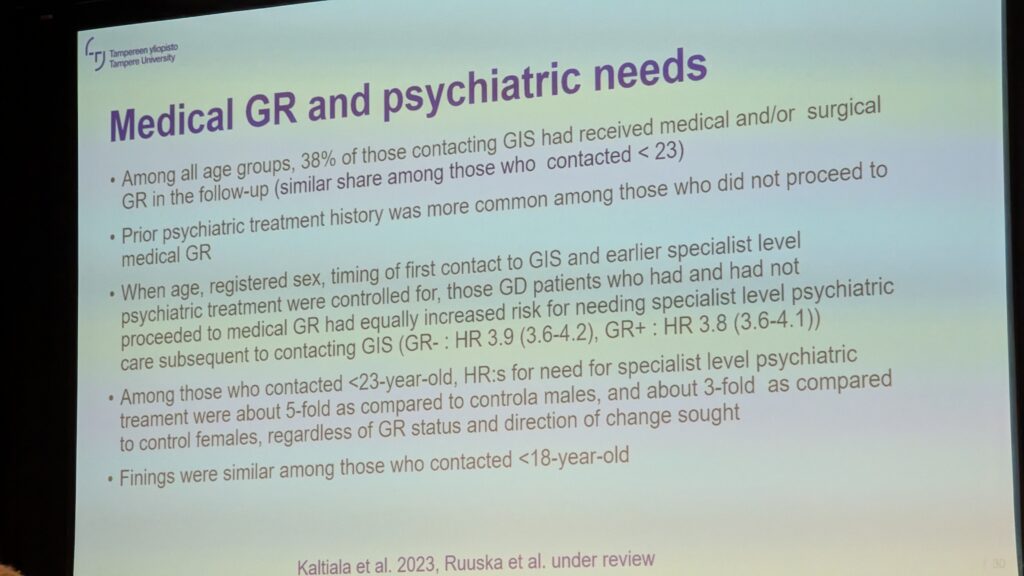
– Among all age groups, 38% of those contacting GIS had received medical and/or surgical GR (similar share among those who contacted <23)
– Prior psychiatric treatment history was more common among those who proceeded to medical GR
– When age, registered sex, timing of first contact to GIS and earlier specialist level psychiatric treatment were controlled for, those GD patients who had and had not proceeded to medical GR had equally increased risk for needing specialist level psychiatric care subsequent to contacting GIS (GR- : HR 3.9 (3.6-4.2), GR+ : HR 3.8 (3.6-4.1))
– Among those who contacted <23-year-old, HRs for need for specialist level psychiatric treatment were about 5-fold as compared to control males, and about 3-fold as compared to control females, regardless of GR status and direction of change sought
– Findings were similar among those who contacted <18-year-old
Kaltiala et al. 2023, Ruuska et al. under review
Slide: Are adolescents presenting with GD at increased risk of suicide?
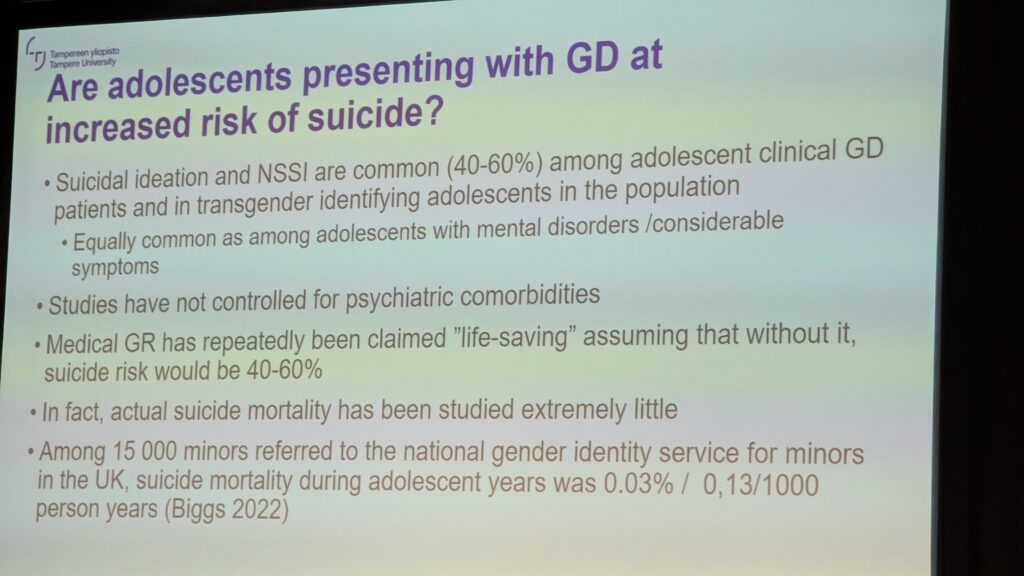
– Suicidal ideation and NSSI are common (40-60%) among adolescent clinical GD patients and in transgender identifying adolescents in the population
- Equally common as among adolescents with mental disorders / considerable symptoms
– Studies have not controlled for psychiatric comorbidities
– Medical GR has repeatedly been claimed “life-saving” assuming that without it, suicide risk would be 40-60%
– In fact, actual suicide mortality has been studied extremely little
– Among 15 000 minors referred to the national gender identity service for minors in the UK, suicide mortality during adolescent years was 0.03% / 0.13/1000 person years (Biggs 2022)
(Note: “NSSI” = Non-Suicidal Self-Injury; “GR” = Gender Reassignment; “GD” = Gender Dysphoria. The slide critiques the extrapolation from ideation rates to mortality without comorbidity controls.)
Slide: Child and Adolescent Mental Health
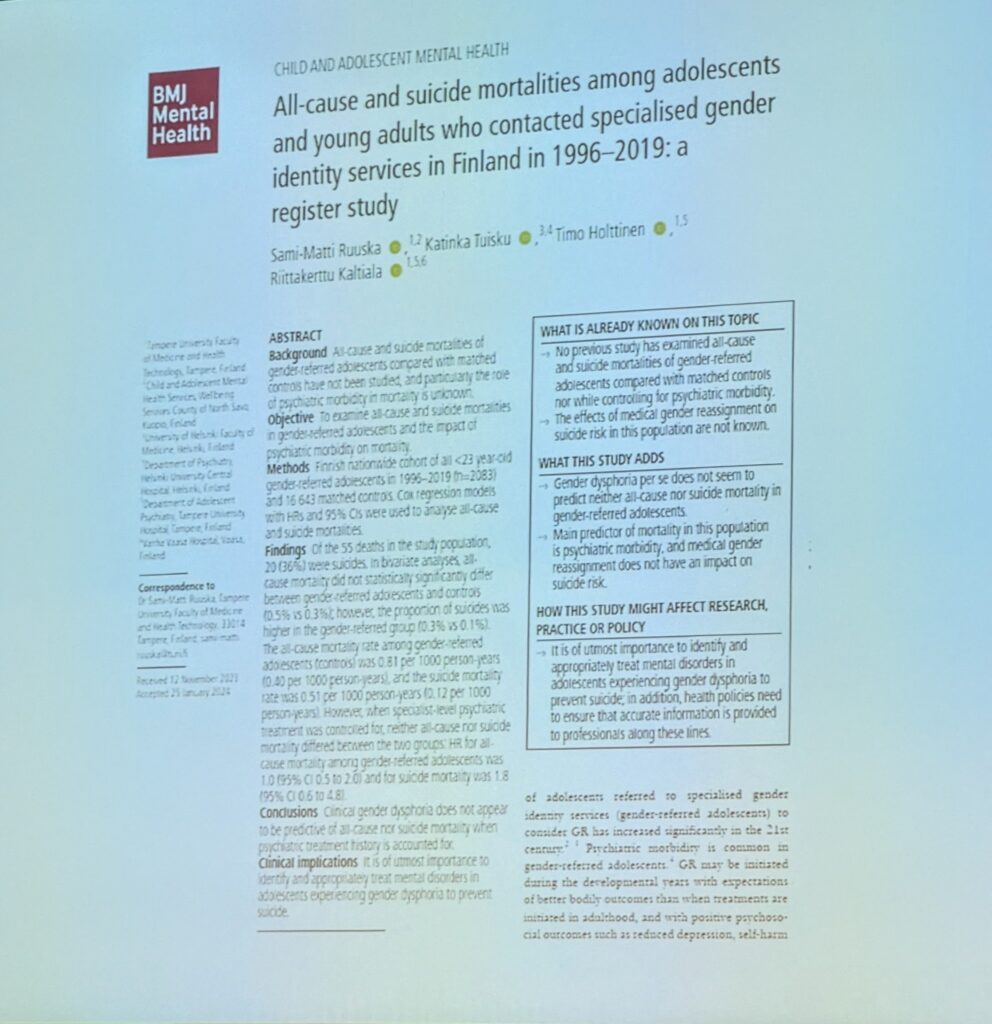
Sami-Matti Ruuska¹, Katinka Tuisku², Timo Holttinen³, Riittakerttu Kaltiala^{1,3,4}
Abstract
Background All-cause and suicide mortalities of gender-referred adolescents compared with matched controls have not been studied, and particularly the role of psychiatric morbidity in mortality is unknown.
Objective To examine all-cause and suicide mortalities in gender-referred adolescents and the impact of psychiatric morbidity on mortality.
Methods Finnish nationwide cohort of all <23 year-old gender-referred adolescents in 1996–2019 (n=2083) and 16 643 matched controls. Cox regression models with HRs and 95% CIs were used to analyse all-cause and suicide mortalities.
Findings Of the 55 deaths in the study population, 20 (36%) were suicides. In bivariate analyses, all-cause mortality did not statistically significantly differ between gender-referred adolescents and controls (0.5% vs 0.3%); however, the proportion of suicides was higher in the gender-referred group (0.3% vs 0.1%). The all-cause mortality rate among gender-referred adolescents (controls) was 0.81 per 1000 person-years (0.40 per 1000 person-years), and the suicide mortality rate was 0.51 per 1000 person-years (0.12 per 1000 person-years). However, when specialist-level psychiatric treatment was controlled for, neither all-cause nor suicide mortality differed between the two groups: HR for all-cause mortality among gender-referred adolescents was 1.0 (95% CI 0.5 to 2.0) and for suicide mortality was 1.8 (95% CI 0.6 to 4.8).
Conclusions Clinical gender dysphoria does not appear to be predictive of all-cause nor suicide mortality when psychiatric treatment history is accounted for.
Clinical implications It is of utmost importance to identify and appropriately treat mental disorders in adolescents experiencing gender dysphoria to prevent suicide.
What is already known on this topic
- No previous study has examined all-cause and suicide mortalities of gender-referred adolescents compared with matched controls nor while controlling for psychiatric morbidity.
- The effects of medical gender reassignment on suicide risk in this population are not known.
What this study adds
- Gender dysphoria per se does not seem to predict neither all-cause nor suicide mortality in gender-referred adolescents.
- Main predictor of mortality in this population is psychiatric morbidity, and medical gender reassignment does not have an impact on suicide risk.
How this study might affect research, practice or policy
- It is of utmost importance to identify and appropriately treat mental disorders in adolescents experiencing gender dysphoria to prevent suicide; in addition, health policies need to ensure that accurate information is provided to professionals along these lines.
Slide: Article in The European Journal of Developmental Psychology
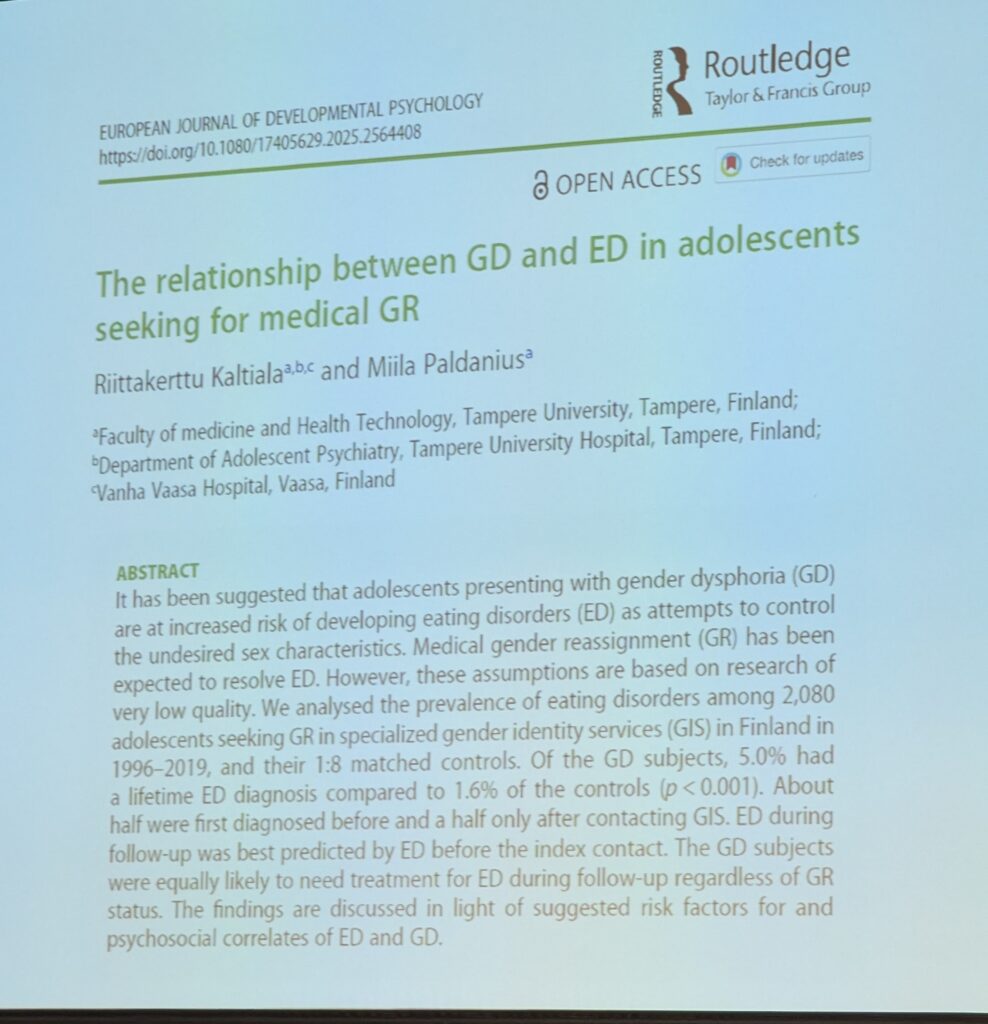
The relationship between GD and ED in adolescents seeking for medical GR
Riittakerttu Kaltiala^{a,b,c} and Miila Paldanius^a ^a Faculty of Medicine and Health Technology, Tampere University, Tampere, Finland ^b Department of Adolescent Psychiatry, Tampere University Hospital, Tampere, Finland ^c Vanha Vaasa Hospital, Vaasa, Finland
ABSTRACT
It has been suggested that adolescents presenting with gender dysphoria (GD) are at increased risk of developing eating disorders (ED) as attempts to control are at increased risk of developing eating disorders (ED) as attempts to control the undesired sex characteristics. Medical gender reassignment (GR) has been expected to resolve ED. However, these assumptions are based on research of very low quality. We analysed the prevalence of eating disorders among 2,080 adolescents seeking GR in specialized gender identity services in Finland in 1996–2019, and their 1.8 matched controls. Of the GD subjects, 5.0% had a lifetime ED diagnosis compared to 1.6% of the controls (p < 0.001). About half were first diagnosed before and a half only after contacting GIS. ED during follow-up was best predicted by ED before the index contact. The GD subjects were equally likely to need treatment for ED during follow-up regardless of GR status. The findings are discussed in light of suggested risk factors for and psychosocial correlates of ED and GD.
(Note: The abstract text has some repetition in the photo—”are at increased risk of developing eating disorders (ED) as attempts to control” appears twice, likely a slide formatting artifact. The content matches the published abstract verbatim.)
Slide: Commentary paper by Abbruzzese et al., published in Journal of Sex & Marital Therapy
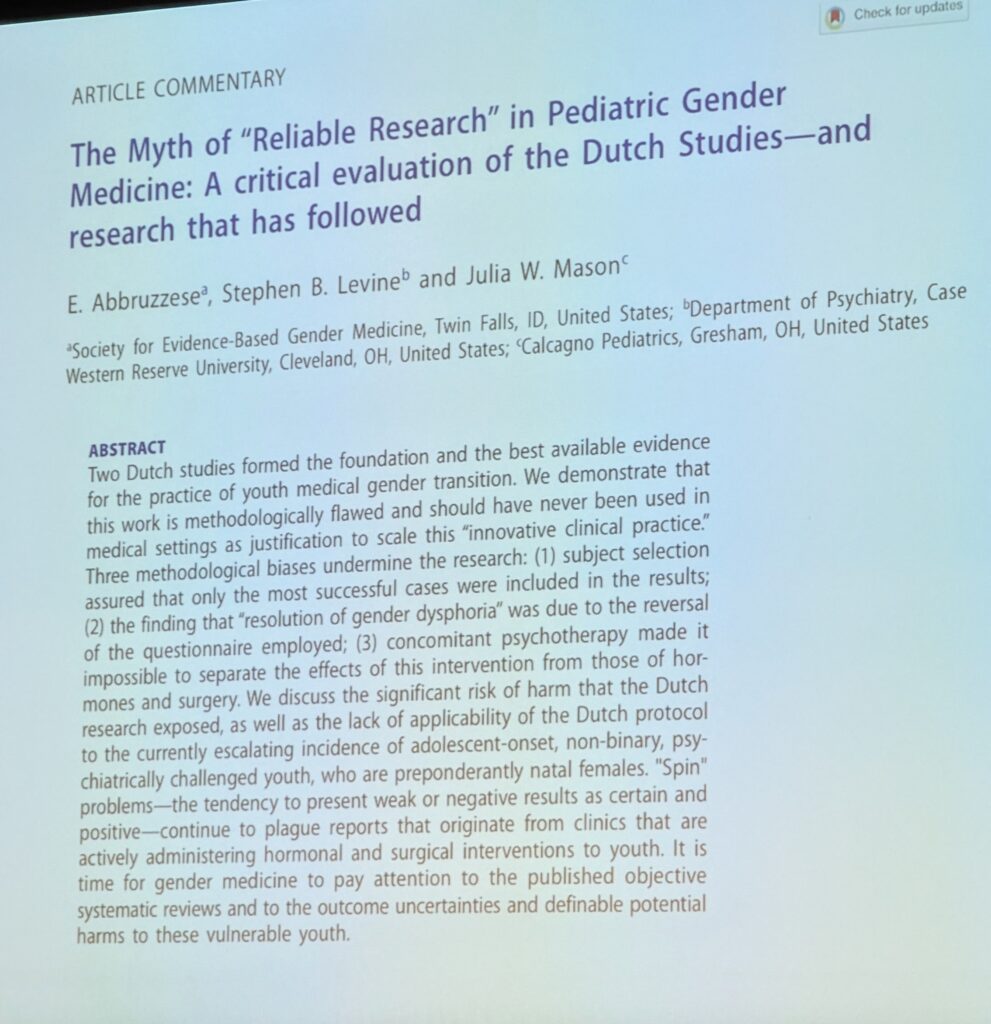
E. Abbruzzese^a, Stephen B. Levine^b and Julia W. Mason^c
^a Society for Evidence-Based Gender Medicine, Twin Falls, ID, United States; ^b Department of Psychiatry, Case Western Reserve University School of Medicine, Cleveland, OH, United States; ^c Independent Pediatrics, Gresham, OH, United States
ABSTRACT
Two Dutch studies formed the foundation and the best available evidence for the practice of youth medical gender transition. We demonstrate that this work is methodologically flawed and should have never been used in medical settings as justification to scale this “innovative clinical practice.” Three methodological biases undermine the research: (1) subject selection assured that only the most successful cases were included in the results; (2) the finding that “resolution of gender dysphoria” was due to the reversal of the questionnaire employed; (3) concomitant psychotherapy made it impossible to separate the effects of this intervention from those of hormones and surgery. We discuss the significant risk of harm that the Dutch research exposed, as well as the lack of applicability of the Dutch protocol to the currently escalating incidence of adolescent-onset, non-binary, psychiatrically challenged youth, who are preponderantly natal females. “Spin” problems—the tendency to present weak or negative results as certain and positive—continue to plague reports that originate from clinics that are actively administering hormonal and surgical interventions to youth. It is time for gender medicine to pay attention to the published objective systematic reviews and to the outcome uncertainties and definable potential harms to these vulnerable youth.
Slide: Research
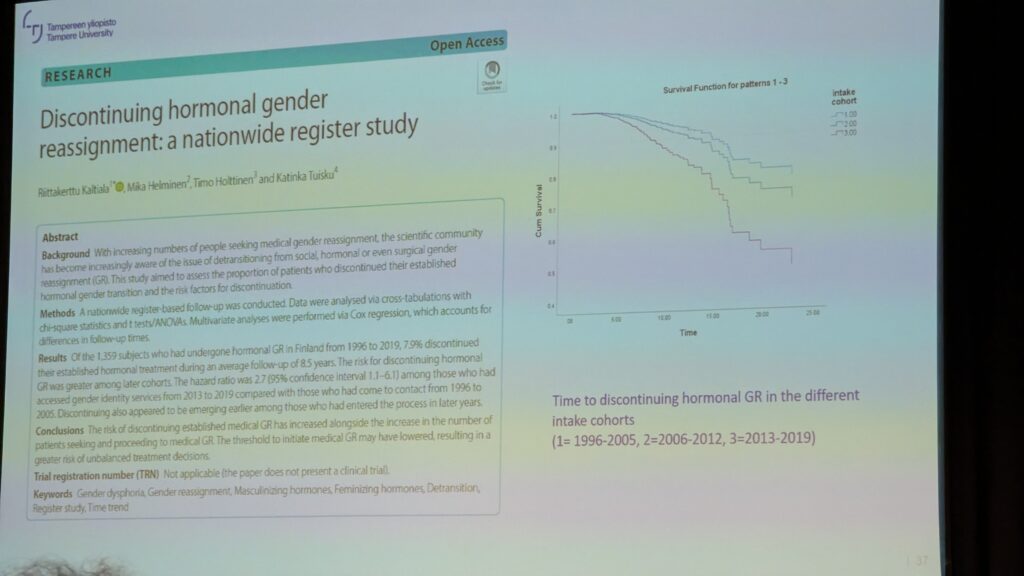
Discontinuing hormonal gender reassignment: a nationwide register study
Authors: Riittakerttu Kaltiala¹, Mika Helminen², Timo Holttinen³ and Katinka Tuisku⁴
Abstract
Background: With increasing numbers of people seeking medical gender reassignment, the scientific community has become increasingly aware of the issue of detransitioning from social, hormonal and surgical gender transition and the proportion of patients who discontinue their established hormonal gender transition and the risk factors for discontinuation.
Methods: A nationwide register-based follow-up was conducted. Data were analyzed via cross-tabulations with chi-square statistics and t tests/ANOVAs. Multivariate analyses were performed via Cox regression, which accounts for differences in follow-up times.
Results: Of the 1,359 subjects who had undergone hormonal GR in Finland from 1996 to 2019, 7.9% discontinued their established hormonal treatment during an average follow-up of 8.5 years. The risk for discontinuing was 2.7 (95% confidence interval 1.1-6.1) among those who had accessed gender identity services from 2013 to 2019 compared with those who had come to contact from 1996 to 2005. Discontinuing also appeared to be emerging earlier among those who had accessed the process in later years.
Conclusions: The risk of discontinuing established medical GR has increased. The threshold to initiate medical GR may have lowered, resulting in a greater risk of unbalanced treatment decisions.
Trial registration number (TRN) Not applicable [the paper does not present a clinical trial].
Keywords: Gender dysphoria, Gender reassignment, Masculinizing hormones, Feminizing hormones, Detransition, Register study, Time trend
Graph/Visual Element:
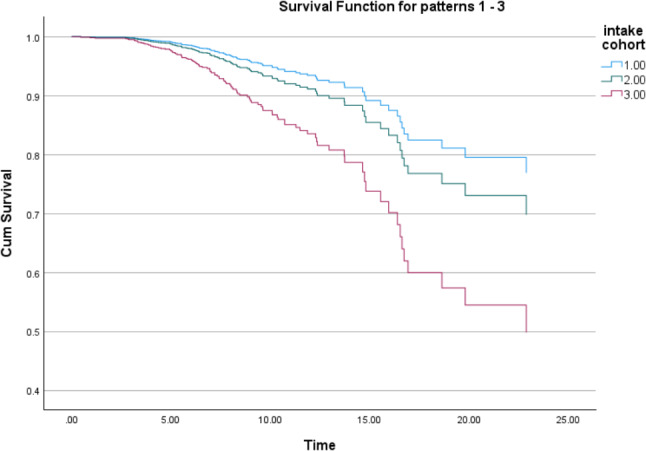
– Title: “Survival Function for patterns 1-3”
– Subtitle: “Intake cohort”
– Y-axis: “Cum Survival” (ranging from 0.0 to 1.0)
– X-axis: “Time” (ranging from 0.00 to 25.00)
– Three stepped lines labeled: “1.00” (highest survival), “2.00” (middle), “3.00” (lowest and steepest drop)
– Caption below graph: Time (in years) to discontinuing hormonal gender reassignment in the different intake cohorts (1 = 1996–2005, 2 = 2006–2012, 3 = 2013–2019). *modeled by Cox regression
Slide: Persistence of GD Diagnoses in Minors
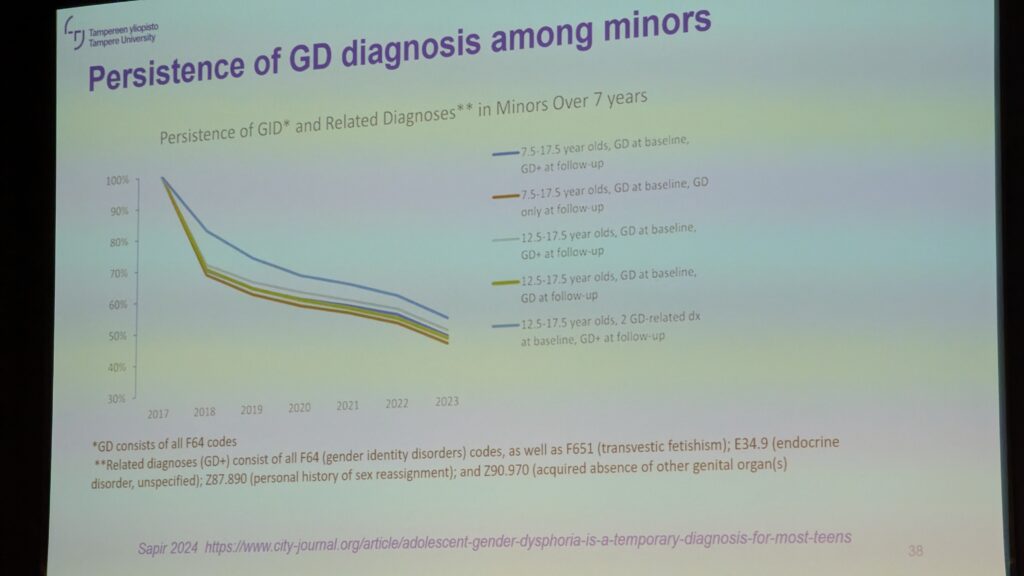
Persistence of GD and Related Diagnoses in Minors Over 7 Years
Graph/Visual Element:
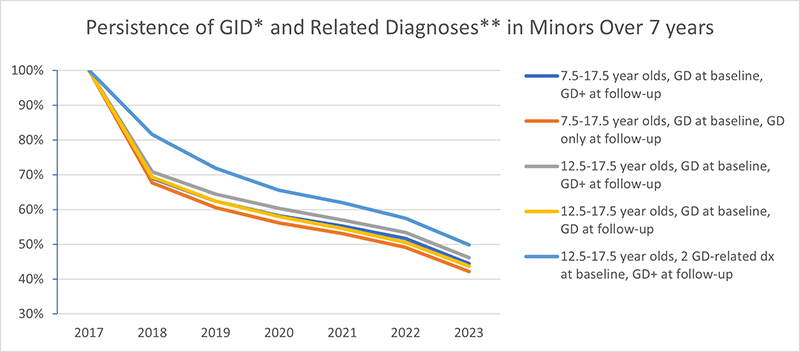
– This is a line graph showing persistence percentages over time.
– Y-axis: Percentage (ranging from 100% down to 30% in 10% increments).
– X-axis: Years (2017, 2018, 2019, 2020, 2021, 2022, 2023).
– Four declining lines starting at 100% in 2017 and dropping gradually:
– Solid blue line: 7.5-17.5 year olds, GD at baseline, GD+ at follow-up
– Solid brown line: 7.5-17.5 year olds, GD at baseline, GD only at follow-up
– Dashed gray line: 12.5-17.5 year olds, GD at baseline, GD+ at follow-up
– Solid yellow line: 12.5-17.5 year olds, GD at baseline, GD at follow-up (text cuts off slightly, but appears to imply “GD only at follow-up” based on pattern).
– All lines show a steeper initial drop (especially from 2017 to 2018) followed by a more gradual decline, ending around 40-50% by 2023.
Footnotes:
- GD consists of all F64 codes, as well as F65.1 (transvestic fetishism); E34.9 (endocrine disorder, unspecified); Z87.890 (personal history of sex reassignment); and Z90.970 (acquired absence of other genital organ(s) disorder, unspecified.
- Related diagnoses (GD+) consist of all F64 (gender identity disorders) codes, as well as F65.1 (transvestic fetishism); E34.9 (endocrine disorder, unspecified); Z87.890 (personal history of sex reassignment); and Z90.970 (acquired absence of other genital organ(s)
Citation/Source at Bottom: Sapir 2024
Slide: The expected benefits from medical GR initiated during adolescent years on mental health, QoL or functioning have not been shown
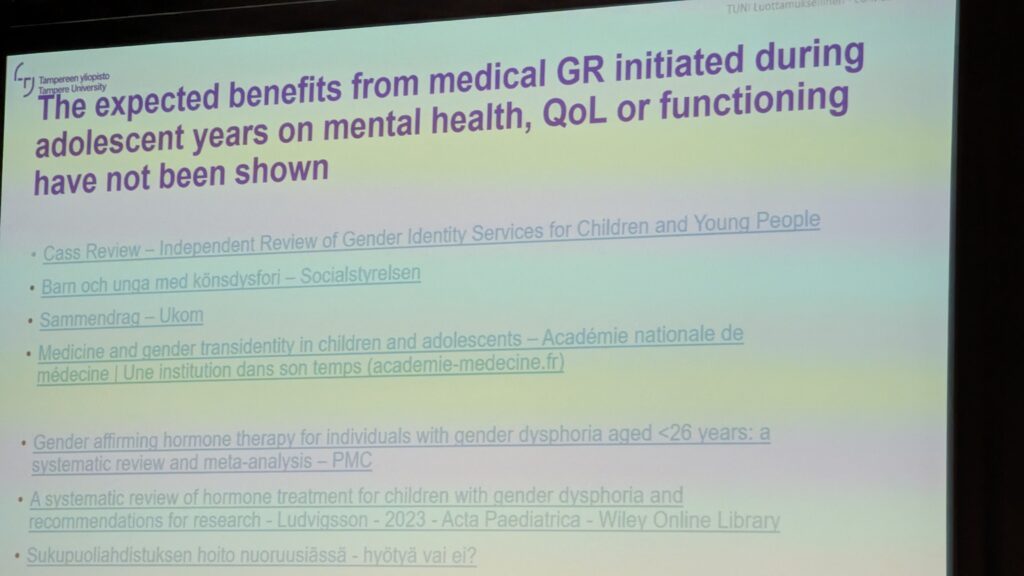
List of References (bullet points with underlines, appearing as hyperlinks or citations):
- Cass Review – Independent Review of Gender Identity Services for Children and Young People
- Barn och unga med könsdysfori – Socialstyrelsen
- Sammandrag – Ukom
- Medicine and gender transidentity in children and adolescents – Académie nationale de médecine | Une institution dans son temps (academie-medecine.fr)
- Gender affirming hormone therapy for individuals with gender dysphoria aged <26 years: a systematic review and meta-analysis – PMC
- A systematic review of hormone treatment for children with gender dysphoria and recommendations for research – Ludvigsson – 2023 – Acta Paediatrica – Wiley Online Library
- Sukupuoliahdistuksen hoito nuoruusiässä – hyötyä vai ei?
Notes: Breakdown of References
Cass Review – Independent Review of Gender Identity Services for Children and Young People** (UK, 2024, led by Dr. Hilary Cass): A 388-page independent NHS-commissioned report with 9 supporting studies (8 systematic reviews). It found “remarkably weak evidence” for puberty blockers and hormones improving mental health or QoL in youth with GD, noting most studies are low-quality with poor follow-up. Recommendations include halting routine blockers outside research, holistic assessments for comorbidities, and regional multidisciplinary hubs. NHS England endorsed it, banning blockers for GD in minors. This has global impact, influencing policies in multiple countries.
Barn och unga med könsdysfori – Socialstyrelsen (Sweden, National Board of Health and Welfare, updated 2022): National guidelines for youth GD care, revised after a 2019 SBU evidence review found insufficient data on long-term effects of blockers/hormones. Recommends restricting them to exceptional cases (e.g., per “Dutch protocol” with no severe mental illness) or research protocols, shifting from “good care” (2015) to caution due to risks and lack of RCTs. Emphasizes psychosocial support first, noting high desistance rates and comorbidities.
Sammandrag – Ukom (Norway, Healthcare Investigation Board, 2023): Summary report on patient safety in youth GD care, deeming blockers/hormones “experimental” with deficient evidence on long-term effects and stability of GD. Triggered by family complaints about inadequate assessments; recommends guideline revisions to prioritize psychological evaluation, differential diagnosis (e.g., ADHD, autism), and informed consent. Notes social media’s role in GD rise and urges evidence-based shifts.
Medicine and gender trans-identity in children and adolescents – Académie nationale de médecine (France, National Academy of Medicine, 2022): Press release cautioning against rapid medicalization amid surging youth GD cases (often socially influenced). Highlights risks like sterility, bone issues, and emotional impacts; advises extending psychological support, multidisciplinary decisions, and research. No genetic predisposition found; emphasizes vigilance on social media’s addictive role in GD.
Gender affirming hormone therapy for individuals with gender dysphoria aged <26 years: a systematic review and meta-analysis – PMC (International, Miroshnychenko et al., 2025, Arch Dis Child/PMC): Analyzed observational studies; found very low-certainty evidence for benefits on mental health, suicidality, or QoL. No significant improvements in depression/anxiety; highlights methodological flaws (e.g., no controls, high bias). Recommends better RCTs, noting potential harms outweigh unproven gains.
A systematic review of hormone treatment for children with gender dysphoria and recommendations for research – Ludvigsson – 2023 – Acta Paediatrica – Wiley Online Library (Sweden, Ludvigsson et al., 2023): Reviewed psychosocial, cognitive, body composition, and metabolic effects; evidence insufficient/low-quality for all outcomes. No clear benefits on mental health or functioning; calls for experimental treatment in individual cases, not standard, and urges RCTs with long-term follow-up.
Sukupuoliahdistuksen hoito nuoruusiässä – hyötyä vai ei? (Finland, Ruuska et al., 2023, Duodecim): Title translates to “Treatment of gender distress in adolescence – benefit or not?” Reviews “Dutch protocol” and finds no firm conclusions on psychosocial benefits of hormones/surgery due to selection bias and weak studies. Questions stability of youth GD, highlights risks, and aligns with Finland’s restrictive stance (therapy first).
Slide: Gender identity, gender dysphoria and health care needs
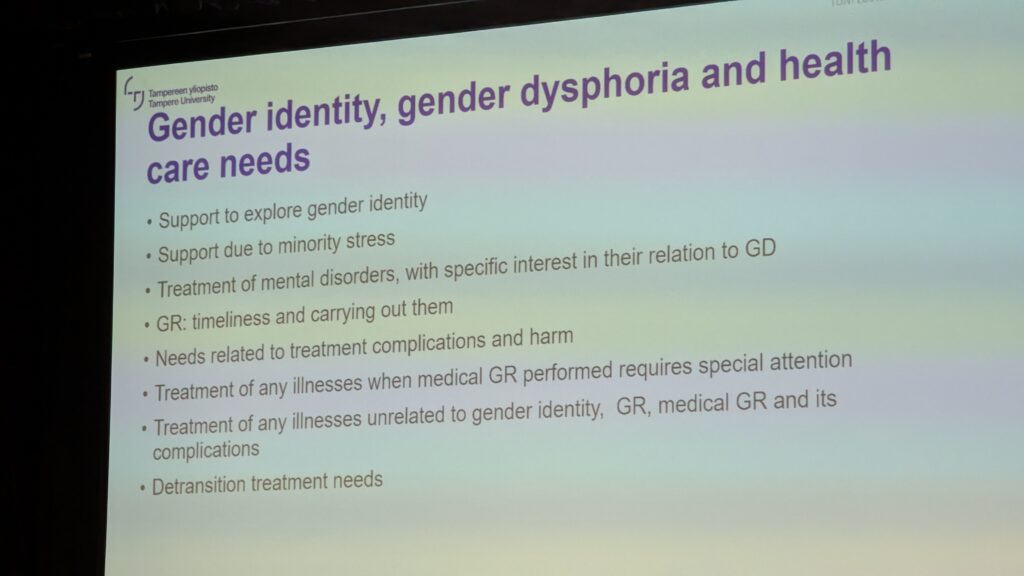
Support to explore gender identity and health care needs
– Support to explore gender identity
– Support due to minority stress
– Support due to mental disorders, with specific interest in their relation to GD
– Treatment of mental disorders, with specific interest in their relation to GD
– GR: timeliness and carrying out them
– GR: timeliness and treatment complications and harm
– Needs related to treatment complications and harm
– Needs related to treatment complications and harm when medical GR performed requires special attention
– Treatment of any illnesses when medical GR performed
– Treatment of any illnesses unrelated to gender identity, GR, medical GR and its complications
– Treatment of any illnesses unrelated to gender identity, GR, medical GR and its complications
– Detransition treatment needs
Slide: All who may benefit of physical treatments
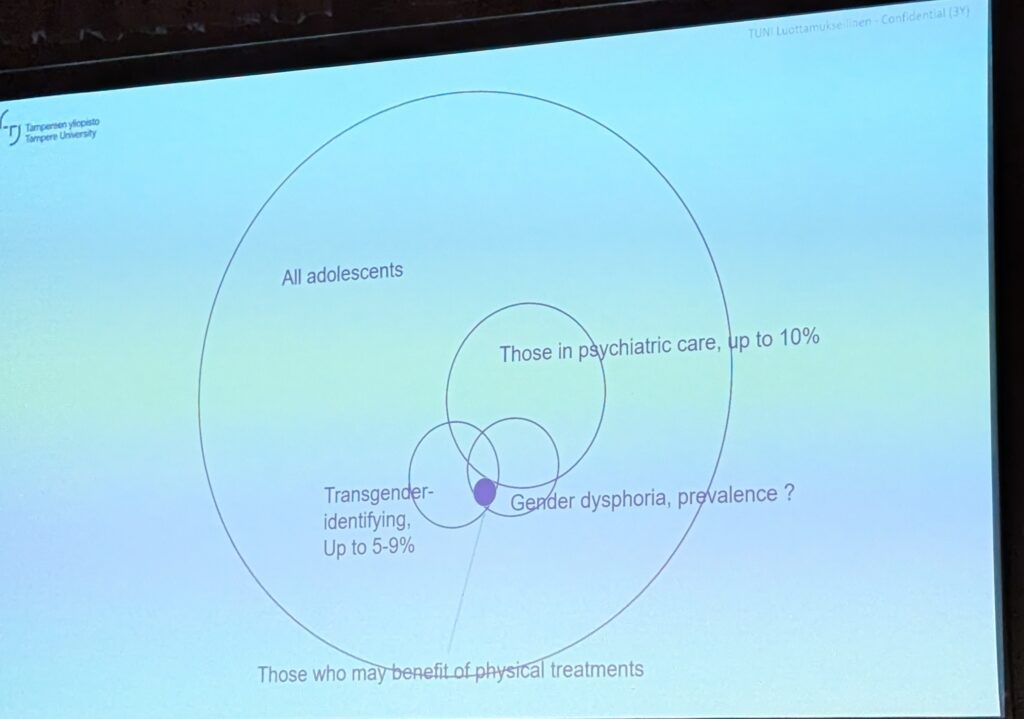
Diagram Description (concentric circles on a light blue-to-green gradient background):
– Largest outer circle (blue outline, labeled inside): “All adolescents”
– Medium circle inside it (blue outline, overlapping partially): “Those in psychiatric care, up to 10%”
– Smaller inner circle (blue outline, heavily overlapping the psychiatric one): “Transgender-identifying, Up to 5-9%”
– Smallest central purple dot/circle (overlapping the transgender-identifying area): “Gender dysphoria, prevalence ?”
– Smallest innermost circle or dot (blue, at the very center, smallest overlap): “Those who may benefit of physical treatments”
The diagram visually shows nested subsets: Most adolescents are the general population → a subset (~10%) need psychiatric care → a smaller subset of those (~5-9% of general? but positioned as overlapping psychiatric) identify as transgender → even smaller overlap for clinical GD → tiniest group potentially benefiting from physical (medical/surgical) gender reassignment treatments.
Slide: Proportions of 18-22-year-olds and <18-year-olds referred to GIS and diagnosed with F64.0 by the end of 2023
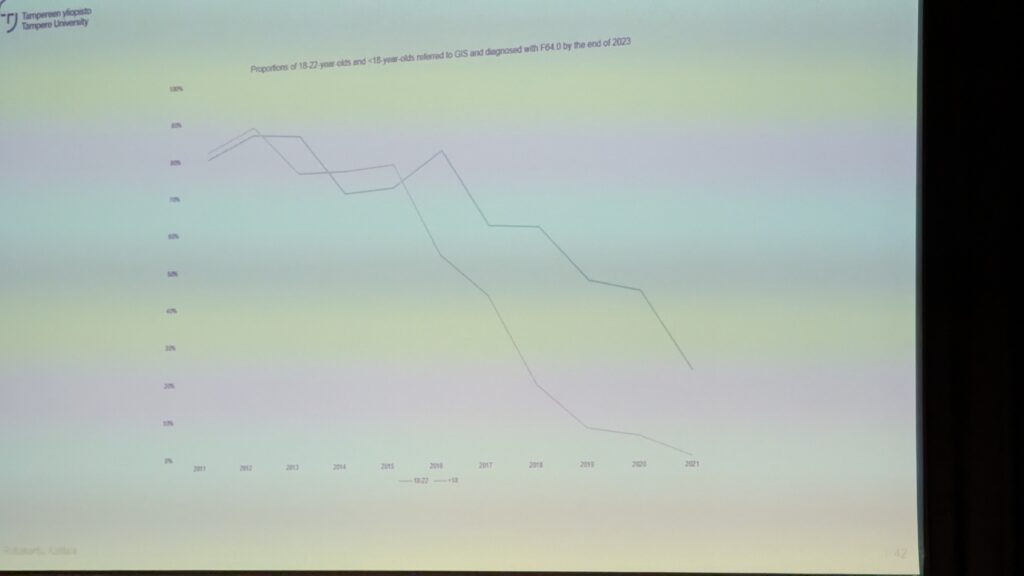
Graph Description (line chart on a light teal-to-yellow gradient background):
– Y-axis: Percentage (from 0% to 100% in 10% increments).
– X-axis: Years (2011 to 2021, labeled at the bottom: 2011, 2012, 2013, 2014, 2015, 2016, 2017, 2018, 2019, 2020, 2021).
– Two lines:
- Solid line (likely purple or dark, labeled “18-22”): Starts around 30-35% in 2011, peaks near 80% around 2012-2013, then declines steadily to ~25-30% by 2021.
- Dashed or lighter line (labeled “<18”): Starts around 30% in 2011, peaks similarly high (~80%) early, but shows a sharper decline from ~2016 onward, dropping to near 0-5% by 2021.
– The lines are close early on (high proportions diagnosed), then diverge with a steeper fall for under-18s, indicating fewer minors receiving the F64.0 diagnosis relative to referrals by later years.
Caption/Subtitle: “Proportions of 18-22-year-olds and <18-year-olds referred to GIS and diagnosed with F64.0 by the end of 2023”
Note: The graph tracks cumulative or annual proportions of those referred to Gender Identity Services (GIS) who ultimately receive a formal F64.0 diagnosis (Transsexualism in ICD-10; core gender dysphoria diagnosis) by end-2023.
The slide visually demonstrates a “declining proportion” of referrals (especially minors) leading to a formal clinical diagnosis of transsexualism/GD over time.
Slide: Trans and non-binary identification is declining on American campuses
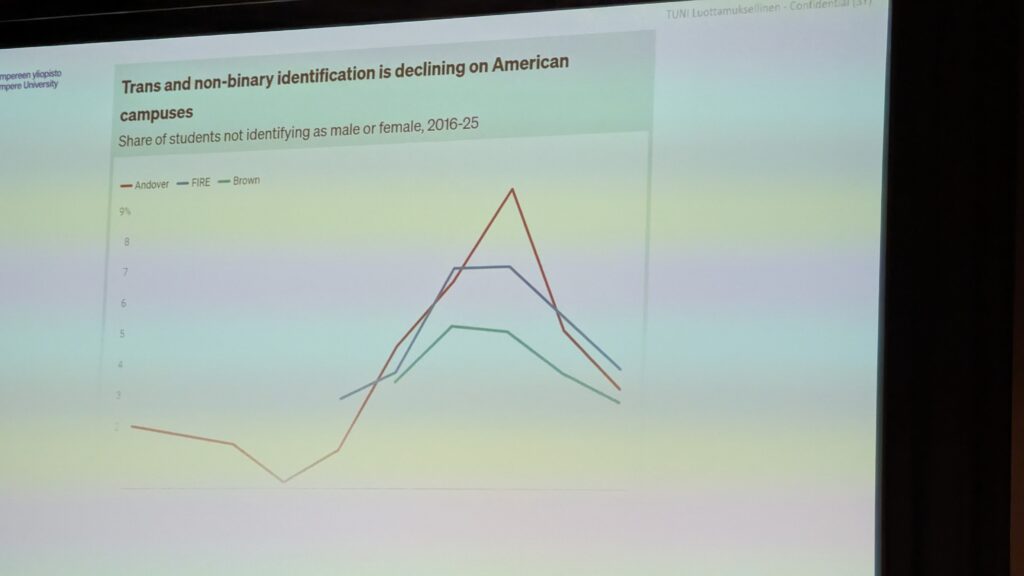
Share of students not identifying as male or female, 2016-25
Graph Description (multi-line chart on a light green-to-yellow gradient background):
– Y-axis: Percentage (from ~0% to 10%, in 1% increments, labeled up to 9%).
– X-axis: Years (2016 to 2025, though not all years may be explicitly marked; the trend spans the period).
– Three colored lines:
- Red line: Andover (peaks sharply around 9% mid-period, then declines to ~3%).
- Blue line: FIRE (rises to ~7% peak, then falls to ~4%).
- Green line: Brown (rises to ~5-6%, then declines to ~3%).
The lines show an overall rise from low levels (~2-3%) in 2016, a peak around 2022-2023 (highest at Andover ~9%), followed by a clear decline by 2025 (to 3-4% range across sources).
Legend: “Andover — FIRE — Brown”
The graph visually depicts a “peak-and-decline” pattern in non-binary (or gender non-conforming/other than binary) identification among students at these institutions/surveys from 2016 to 2025.
Slide: What should be done now?
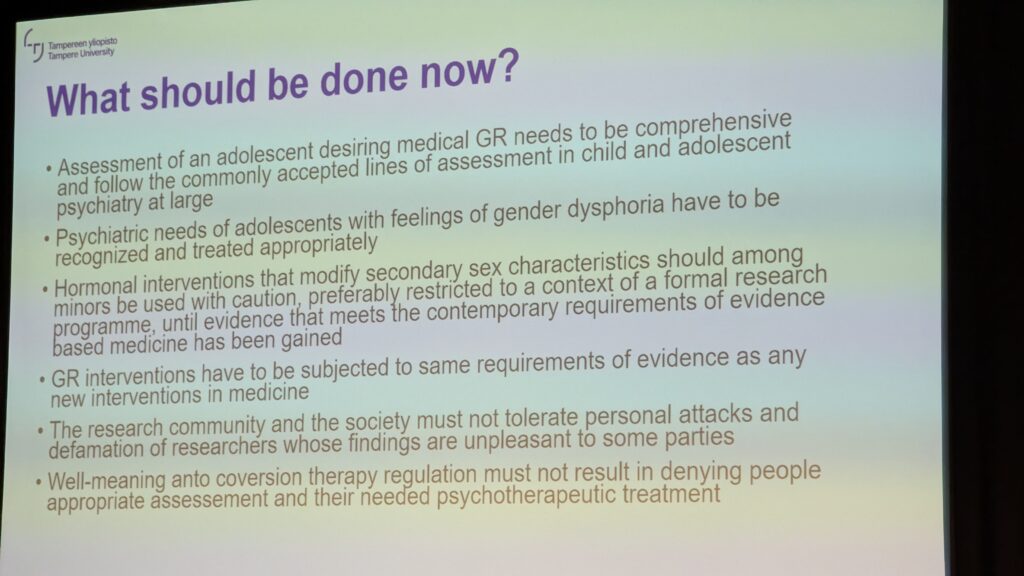
– Assessment of an adolescent desiring medical GR needs to be comprehensive and follow the commonly accepted lines of assessment in child and adolescent psychiatry at large
– Psychiatric needs of adolescents with feelings of gender dysphoria have to be recognized and treated appropriately
– Hormonal interventions that modify secondary sex characteristics should among minors be used with caution, preferably restricted to a context of a formal research programme, until evidence that meets the contemporary requirements of evidence based medicine has been gained
– GR interventions have to be subjected to same requirements of evidence as any new interventions in medicine
– The research community and the society must not tolerate personal attacks and defamation of researchers whose findings are unpleasant to some parties
– Well-meaning anti conversion therapy regulation must not result in denying people appropriate assessment and their needed psychotherapeutic treatment
Slide: Key Publications
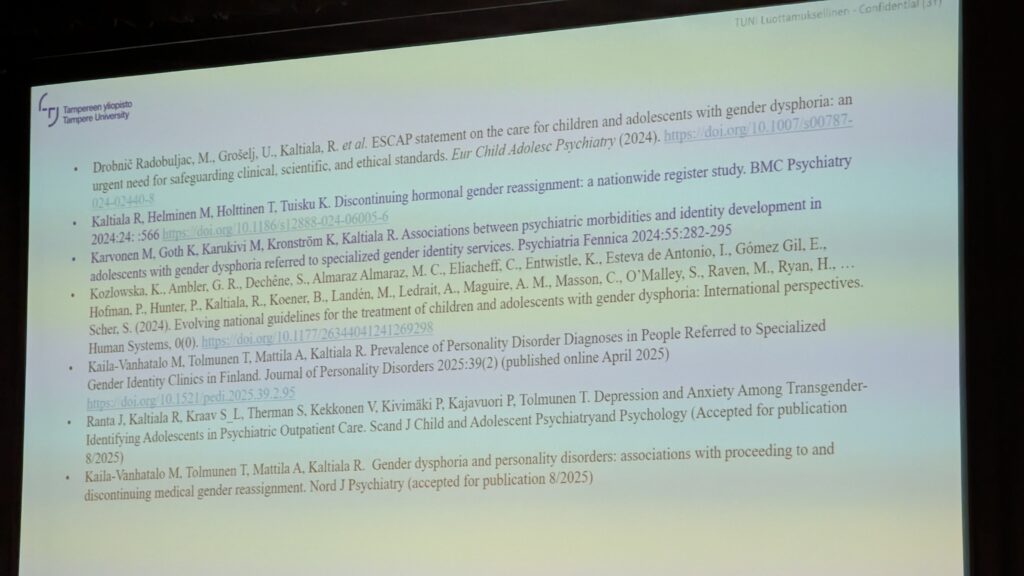
The slide compiles recent (2024–2025) peer-reviewed papers, many co-authored by Kaltiala, focusing on psychiatric comorbidities, discontinuation rates, personality disorders, international guideline evolution, and calls for evidence-based safeguards in youth GD care.
– Drobrnić Radobuljac, M., Grošelj, U., Kaltiala, R. et al. ESCAP statement on the care for children and adolescents with gender dysphoria: an urgent need for safeguarding clinical, scientific, and ethical standards. *Eur Child Adolesc Psychiatry* (2024). https://doi.org/10.1007/s00787-024-02440-8
– Kaltiala, R., Helminen, M., Holttinen, T., Tuisku, K. Discontinuing hormonal gender reassignment: a nationwide register study. *BMC Psychiatry* (2024). https://doi.org/10.1186/s12888-024-06005-6
– Kaltiala, R. et al. Associations between psychiatric morbidities and identity development in adolescents with gender dysphoria referred to specialized gender identity services. *Psychiatria Fennica* (2024):55:282-295.
– Karvonen, M., Goth, K., Karukivi, M., Kronström, K., Kaltiala, R. et al. (various co-authors including international perspectives). *Human Systems* or similar (2024/2025 references on evolving guidelines and international views).
– Kozlowska, K., Ambler, G.R., … Kaltiala, R. et al. Evolving national guidelines for the treatment of children and adolescents with gender dysphoria: International perspectives. *Human Systems* (2024). https://doi.org/10.1177/26344041241269298
– Kaila-Vanhatalo, M., Tolmunen, T., Mattila, A., Kaltiala, R. Prevalence of Personality Disorder Diagnoses in People Referred to Specialized Gender Identity Clinics in Finland. *Journal of Personality Disorders* (2025):39(2) (published online April 2025). https://doi.org/10.1521/pedi.2025.39.2.95
– Additional entries on depression/anxiety, personality disorders, and associations with proceeding/discontinuing medical GR (Nord J Psychiatry, accepted 8/2025; Scand J Child Adolesc Psychiatry Psychol, accepted 2025)