
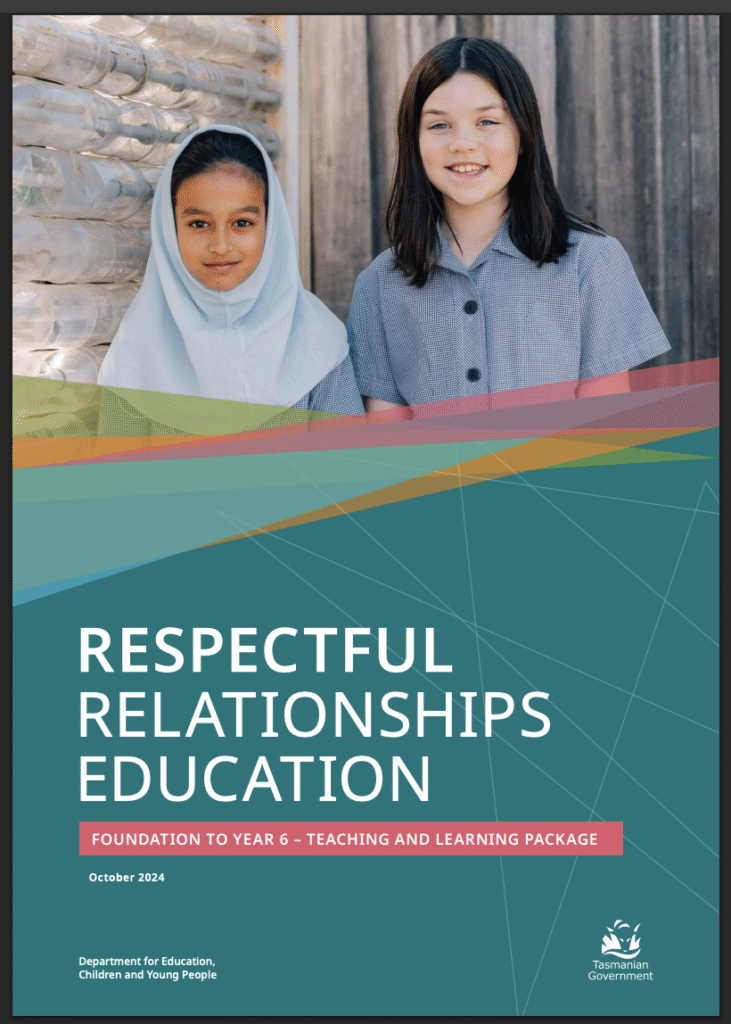
Analysis and summary of Foundation to Year 6 “Respectful Relationships Education: Teaching & Learning Package” with focus on any safeguarding risks for children.
What the document does well
- Age-appropriate focus on safety and respect
- Lessons for F–6 emphasise empathy, kindness, recognising unsafe behaviour, saying no, and knowing when to seek adult help.
- Scaffolds like the “Say No / Leave / Get Help” framework are simple, memorable protective behaviours.
- Challenging gender stereotypes in a healthy way
- Handouts with examples like “boys shouldn’t cry” or “girls can’t play soccer” help children understand that activities and emotions aren’t restricted by sex.
- This dismantling of stereotypes encourages wider opportunities for girls and boys without forcing identity labels.
- Digital safety awareness
- Modules on online safety and scenarios about sharing photos (handout reflect real-world risks children face.
- Use of eSafety Commissioner materials is positive, as it ties classroom teaching to national legal and practical advice.
- Ground rules and safeguarding intentions
- Guidance on setting class rules, respecting privacy, and encouraging children to talk to trusted adults shows awareness of safeguarding needs.
- The resource acknowledges teachers’ role in managing disclosures of harm.
Where the document goes wrong / risks
- Blurred boundaries with role-plays
- Activities where children role-play victims, perpetrators, or bystanders can unintentionally normalise abusive interactions, trigger distress, or encourage inappropriate disclosures.
- Without strict teacher guidance, children could act out harmful dynamics rather than simply learning protective strategies.
- Online safety scenarios risk oversharing
- The handout with examples like “you sent a photo of yourself to a friend and they shared it” is realistic but risky for younger students. Children may share personal stories or see the activity as modelling behaviour rather than a warning.
- Reliance on external links
- The program directs teachers to outside resources (eSafety, APS, etc.) without age filters or vetting guidance. This opens the door to contested ideological framings (e.g., gender identity) slipping in through third-party content, outside the official curriculum.
- Potential ideological drift
- While this F–6 resource mainly focuses on stereotypes (not explicit gender identity lessons), the consistent emphasis on “inclusive identities” and external references means that, in practice, some teachers may bring in contested “gender identity” teaching prematurely.
- For children in Piaget’s preoperational/concrete operational stages (5–12), introducing abstract, relativist ideas about identity risks confusion.
- Neutral / de-sexed language (emerging, not as extreme as Early Years)
- Although not as explicit as the Early Years resource, there are early signs of “neutral” body/family language creeping in (e.g., avoiding “mothers/women” in favour of “a person with a baby in their tummy”).
- This is misleading scientifically, and developmentally inappropriate for children who need clear, concrete categories to make sense of the world.
Overall Evaluation
- Strengths: The program has solid foundations in teaching respect, consent, safety, and anti-stereotyping, with practical protective-behaviours frameworks and links to legal/online safety resources.
- Weaknesses: Safeguarding risks arise from role-play methods, explicit photo-sharing scenarios, and unvetted external content. There is also creeping use of neutralised or ideological language that undermines clear scientific teaching about sex and bodies.
Conclusion:
This document succeeds when it focuses on respect, empathy, and dismantling harmful stereotypes. It fails when it drifts toward abstract identity claims, unscientific wording, and risky classroom activities that blur safeguarding lines.