
This International Women’s Day (8 March 2026), Women Speak Tasmania focused our advocacy on a clear and urgent goal: restoring the recognition of ‘sex’ in Tasmania’s Anti-Discrimination Act 1998.
Women’s equality in law has always depended on the clear recognition of sex as a protected attribute. Without it, sex-based protections become difficult to enforce in practice, leaving women and girls vulnerable.
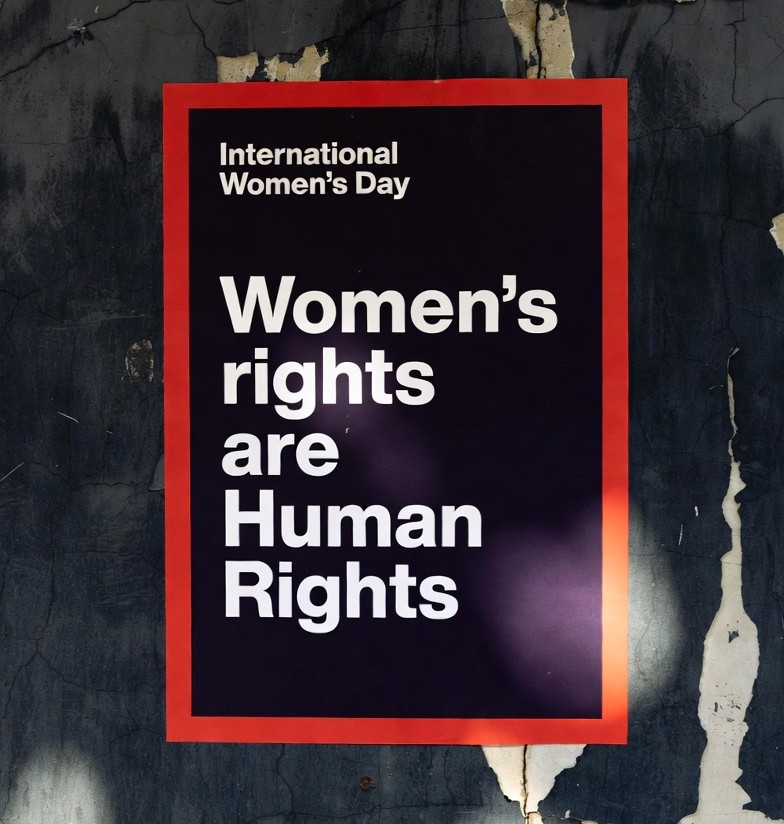
Over the days surrounding International Women’s Day, we launched a multi-pronged campaign of writing actions, grassroots awareness, and public commentary highlighting the importance of protecting women as a sex class.
Here is how we marked the day with purposeful activism rather than empty celebration.
Launching the Writing Campaign
We launched a targeted letter-writing campaign, urging supporters to contact key decision-makers:
- Attorney-General Guy Barnett ([email protected])
- Minister for Women Jane Howlett ([email protected])
Our message was simple and direct: review and amend the Anti-Discrimination Act 1998 to clearly define and protect sex (female and male) as a protected attribute.
We provided simple templates so anyone could participate in minutes. Supporters were encouraged to personalise their messages and call on the Tasmanian Government to ensure that women’s legal protections remain clear and enforceable.
Sticker Campaign – Raising Visibility
The following day we shifted to grassroots awareness with a simple message:
“On International Women’s Day, let’s raise awareness that women are a sex class.”
We encouraged supporters to place or photograph stickers and posters highlighting that women are a sex class across Hobart and beyond.
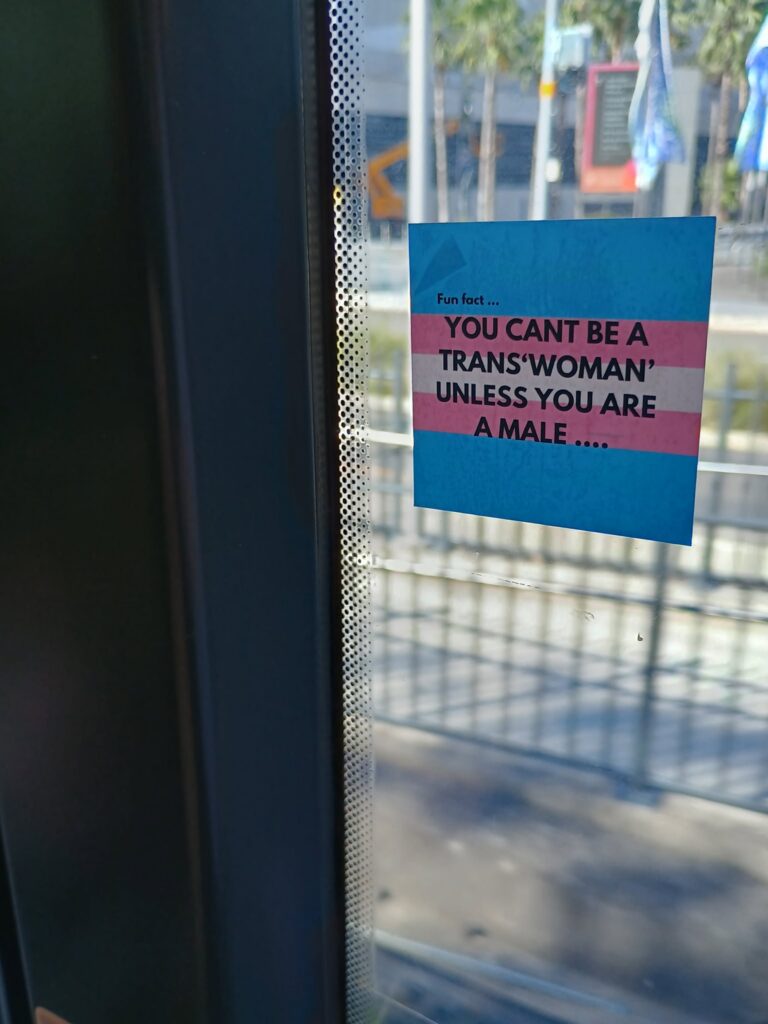
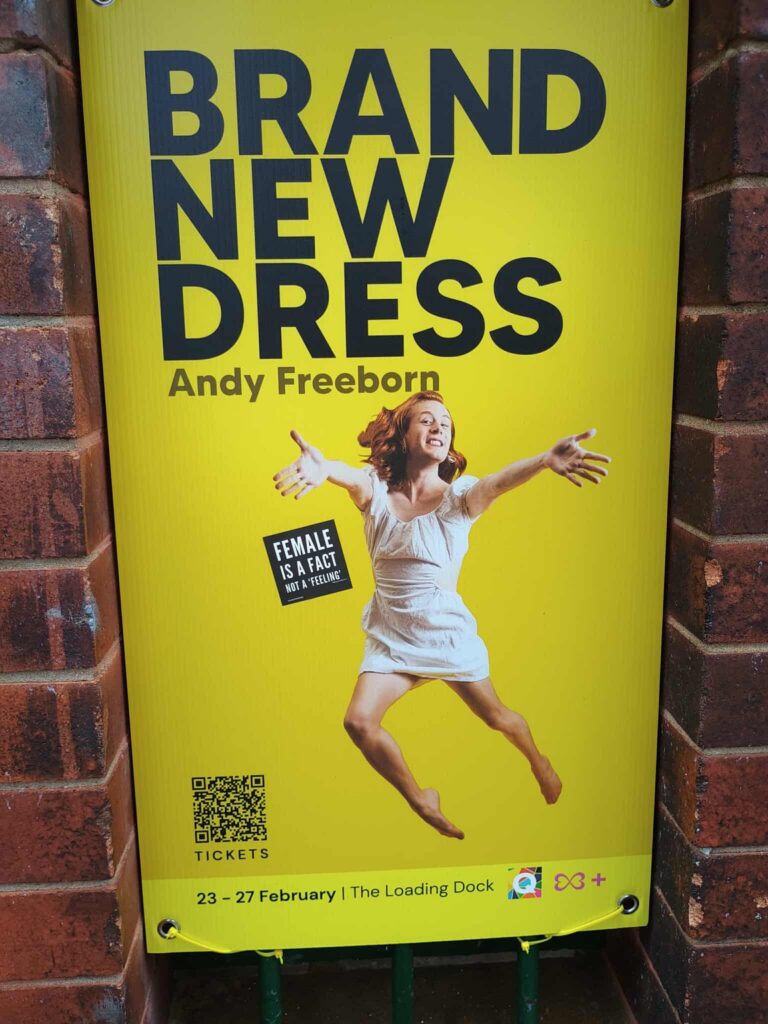
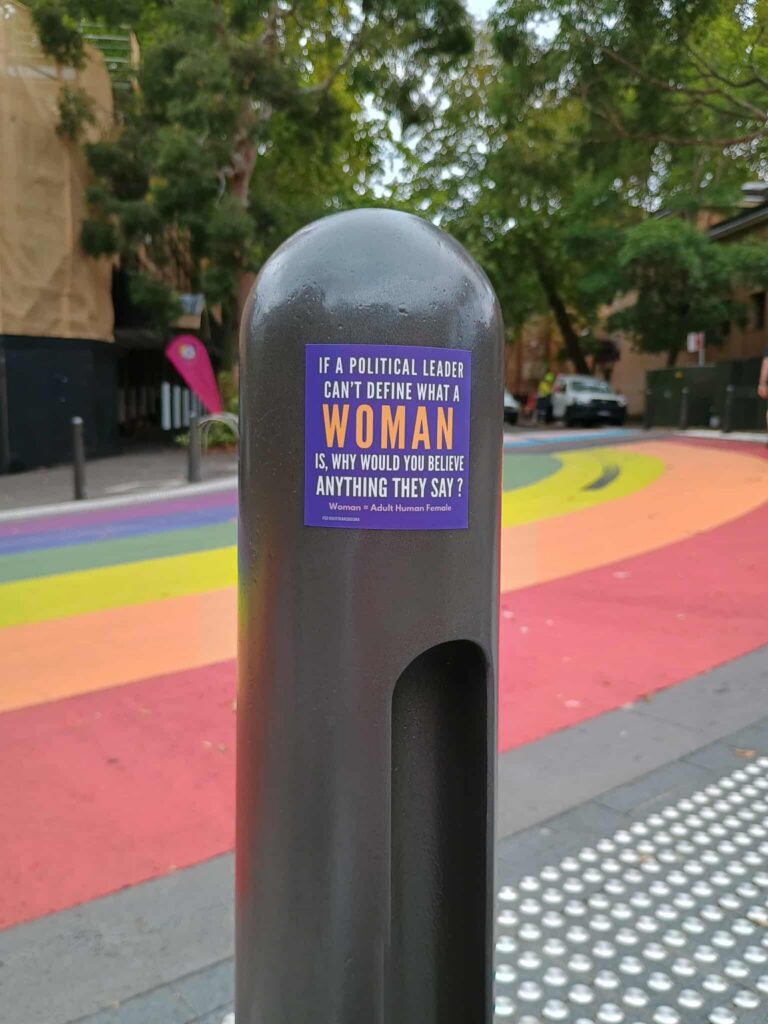
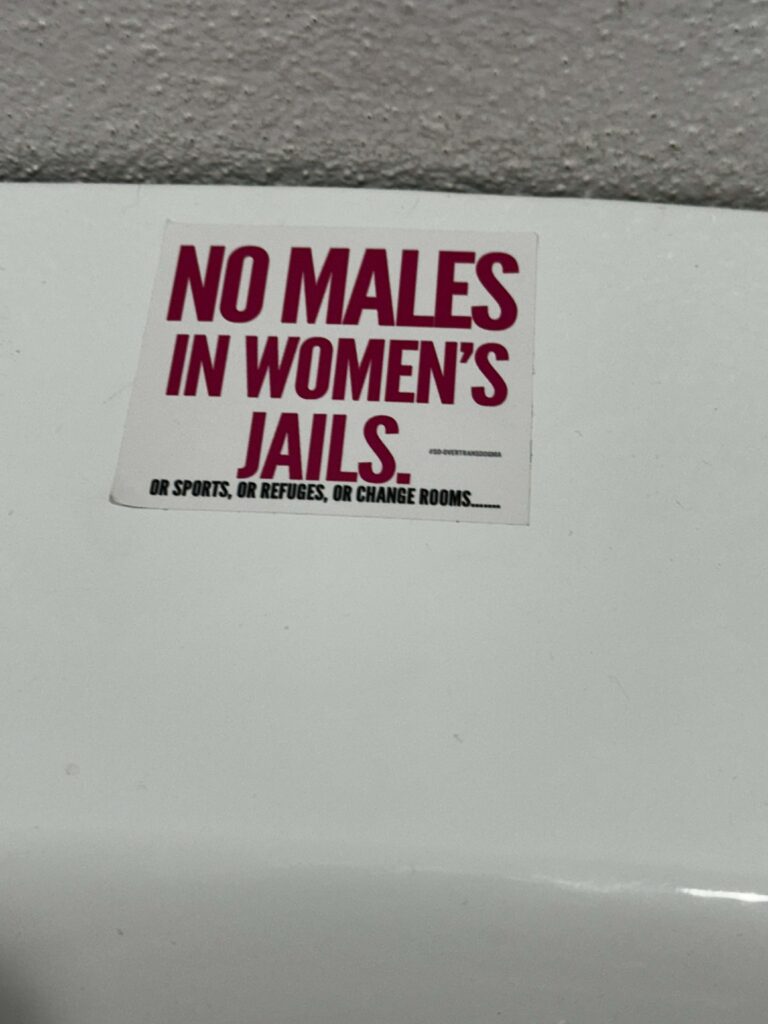
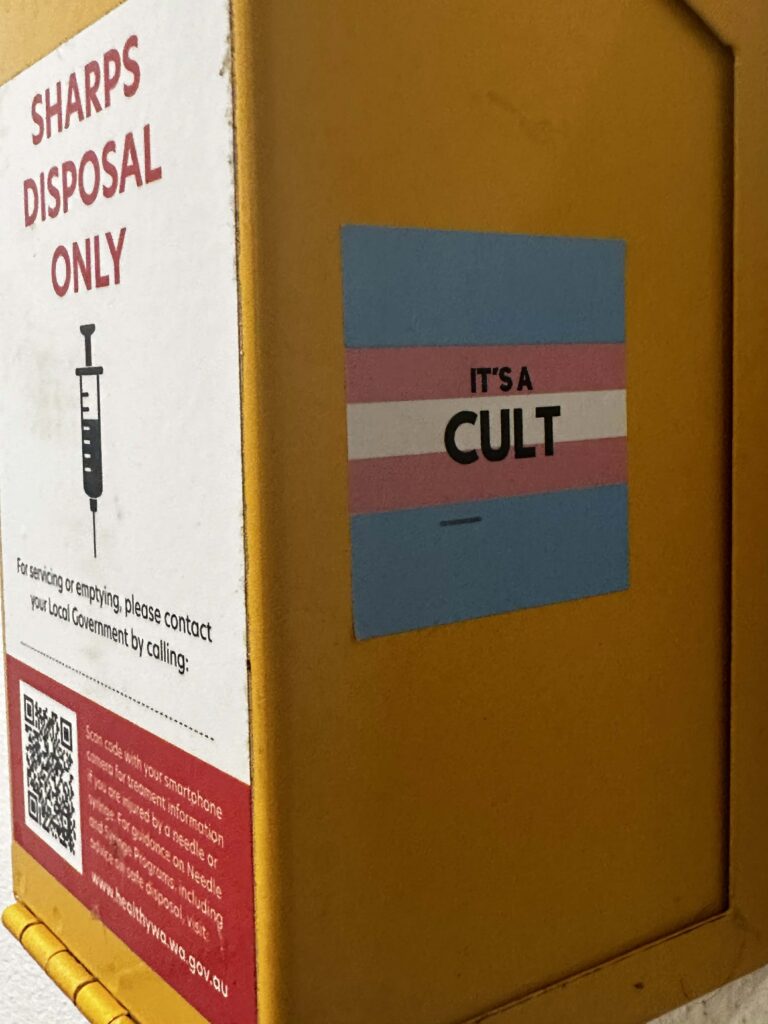
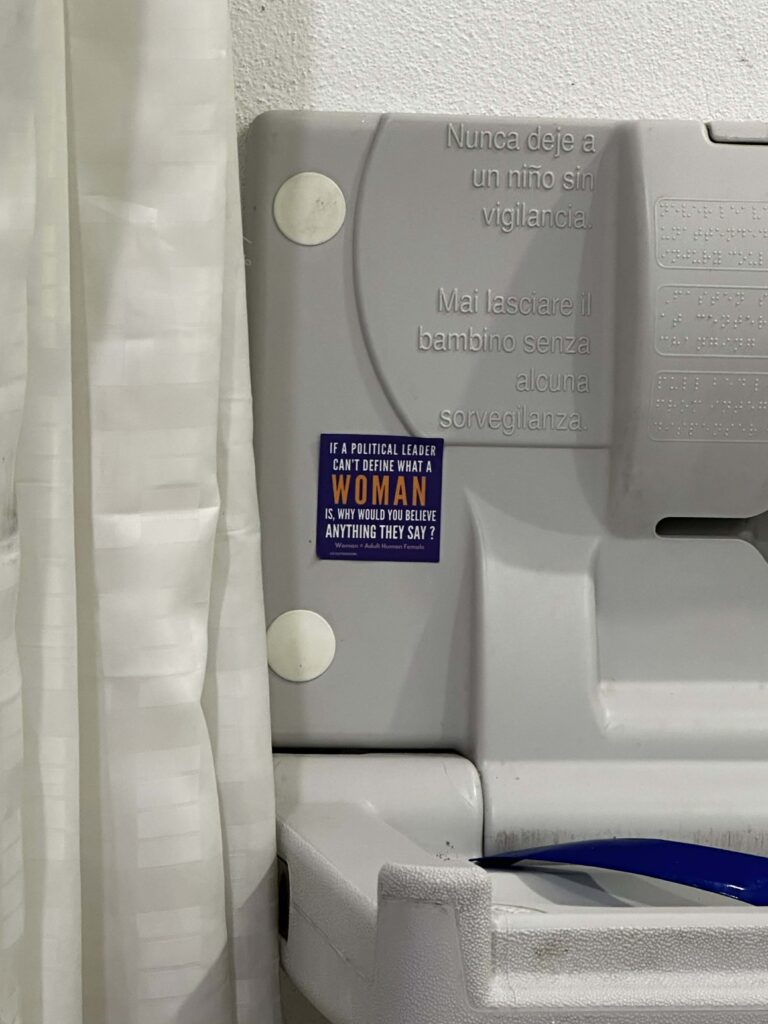
Supporters sent in fantastic photos of their efforts, and we shared information about how others could order stickers and take part. The response was inspiring and demonstrated that many ordinary women are ready to make this message visible in their communities.
Highlighting Hypocrisy in Women’s Spaces
We also highlighted what many saw as a double standard surrounding women’s events.
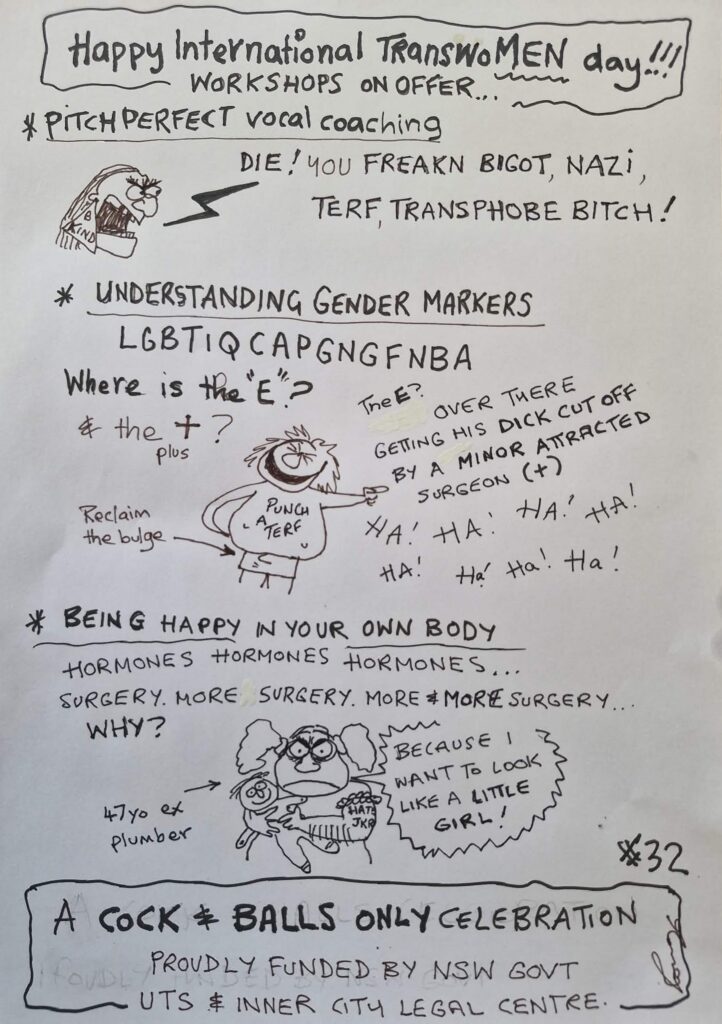
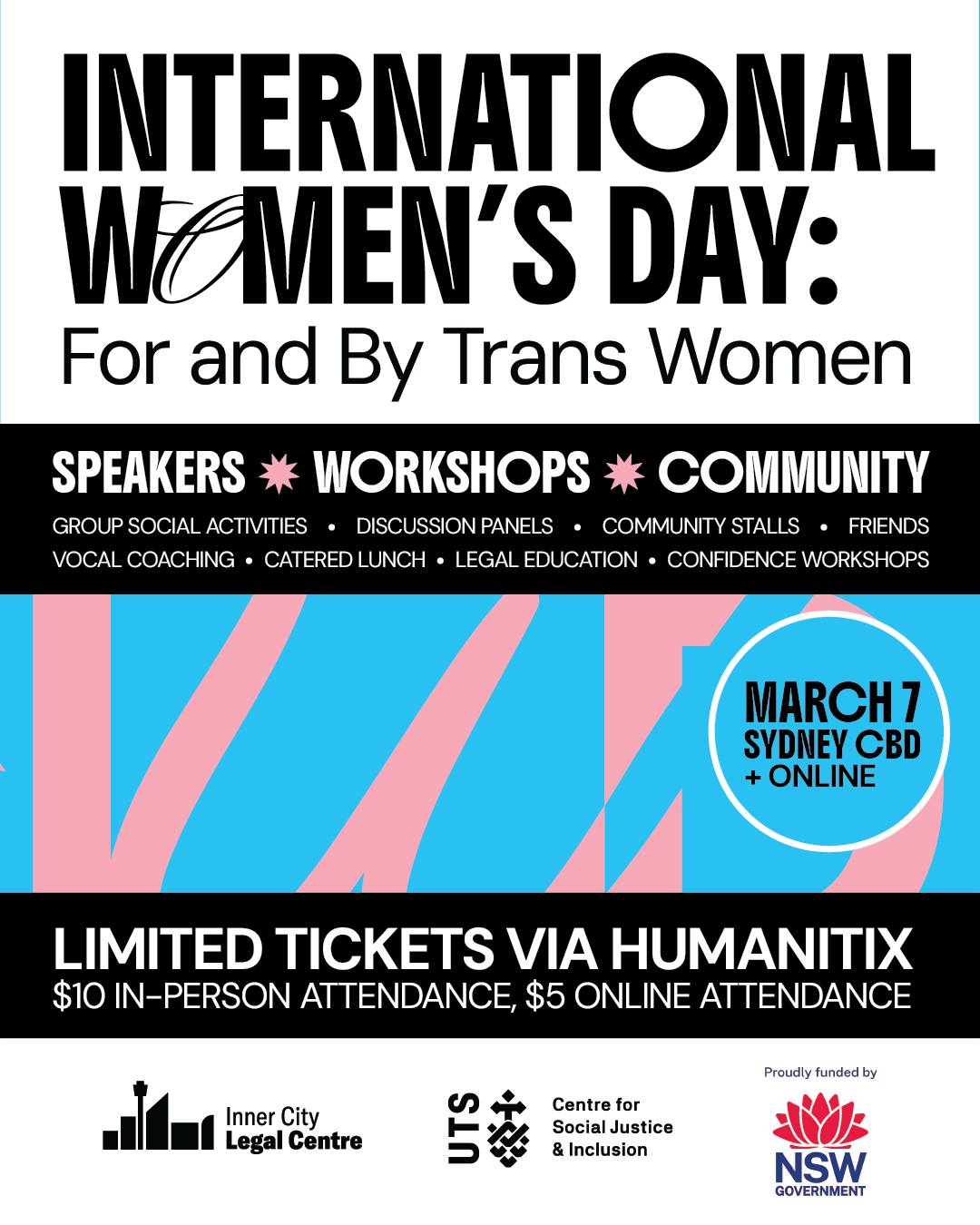
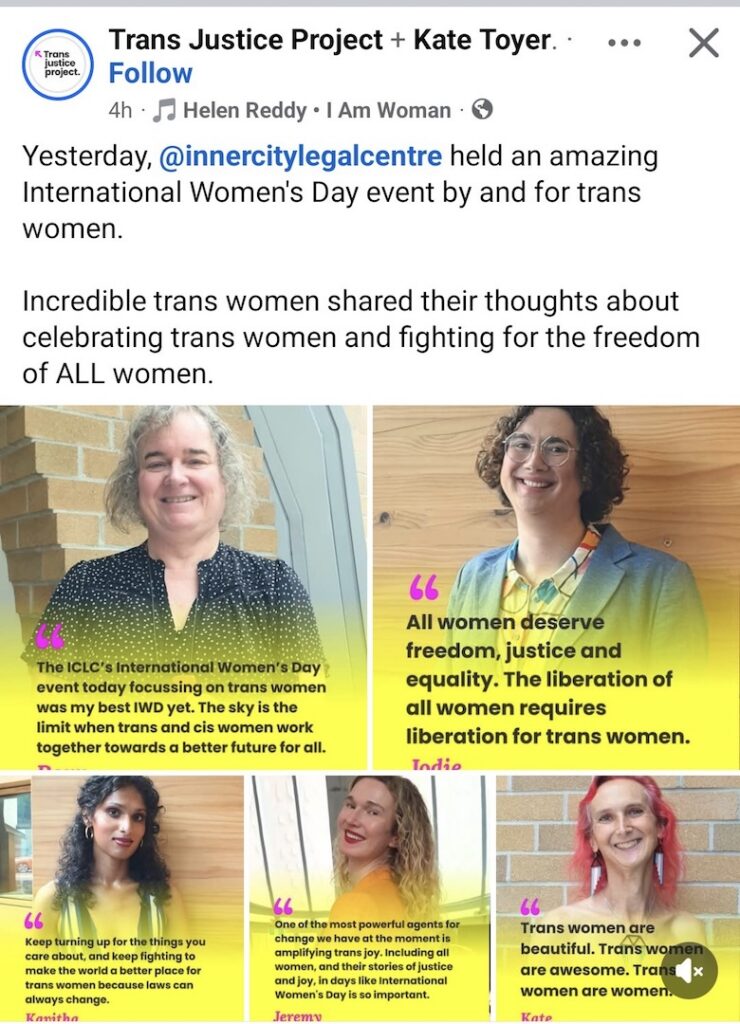
Businesswoman and women’s-rights advocate Sall Grover had her ticket to an International Women’s Day event organised by the Inner City Legal Centre in New South Wales cancelled and refunded.
At the same time, many women have raised concerns that trans-identified males are increasingly permitted to enter women’s spaces, while women who question these policies may be excluded.
Our favourite cartoonist, Rona, captured the absurdity of the situation perfectly in a powerful illustration. The incident sparked discussion about the importance of maintaining genuine spaces where women can speak freely.
Our Core Call on IWD
We concluded our campaign with an official statement on International Women’s Day, calling on the Tasmanian Government to address a significant gap in the Anti-Discrimination Act 1998.
In the statement, Women Speak Tasmania emphasised that International Women’s Day recognises women as a distinct sex class, shaped by a long history of struggle for rights, safety, and equality.
As the release stated:
“Women worldwide and here in Tasmania are a distinct sex class—adult human females—whose biological reality has shaped centuries of struggle for rights, safety, and equality.”
The statement also highlighted that Tasmania’s anti-discrimination law currently does not explicitly recognise sex as a protected attribute, creating uncertainty around the protection of women’s sex-based rights.
Women Speak Tasmania therefore called for a straightforward legislative amendment to ensure that sex is clearly recognised in law:
“On this important occasion, we call on the Tasmanian Government to amend the Anti-Discrimination Act 1998 to add ‘sex’ as a protected attribute.”
The organisation stressed that recognising sex in law is not controversial, but rather essential for ensuring that protections against sex-specific harms remain effective.
Women Speak Tasmania reaffirmed its commitment to respectful, evidence-based dialogue while advocating for the legal recognition of women’s sex-based rights in Tasmania.
A Broader Sense of Disquiet in 2026
International Women’s Day 2026 was marked by growing unease among many women’s advocates in Australia and internationally.
Around the world, women’s organisations continued to raise concerns about rising levels of violence against women, the erosion of single-sex spaces, and the increasing reluctance of policymakers to recognise sex-based protections in law.
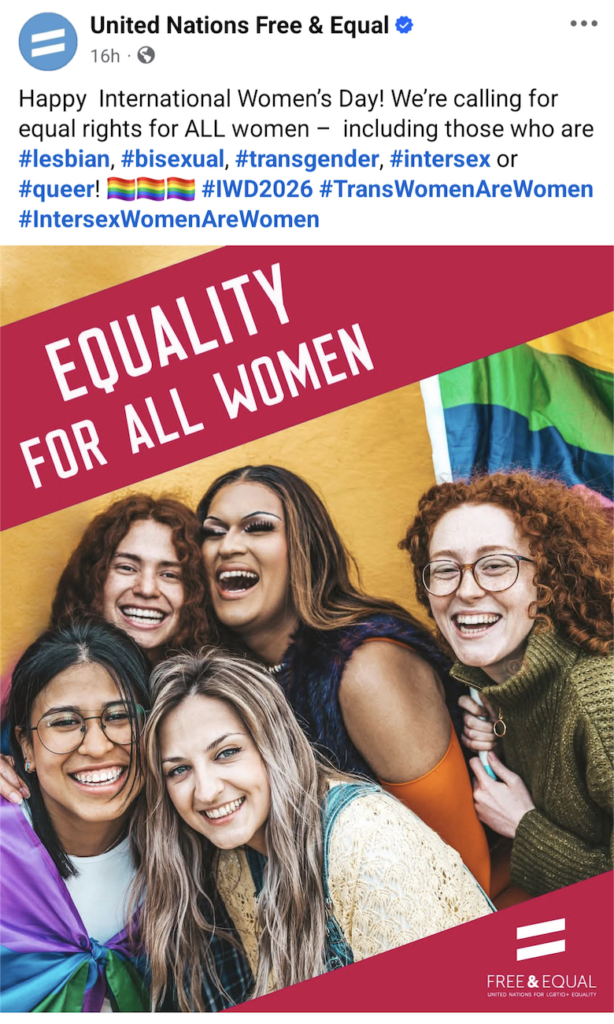
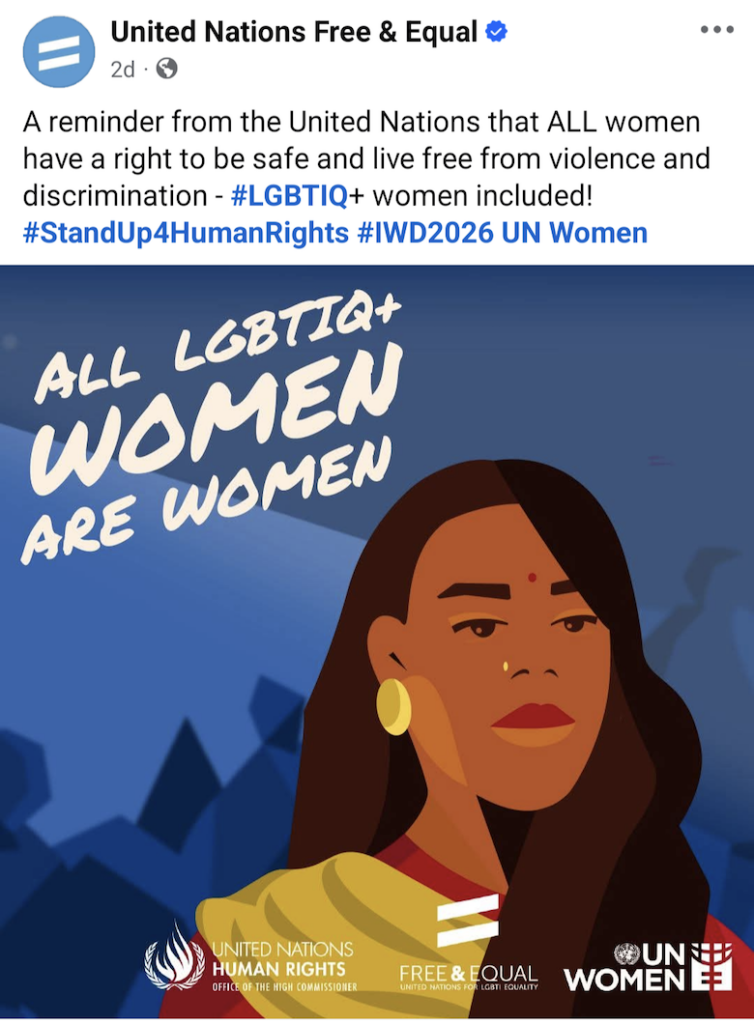
While some international organisations—including UN Women—emphasised inclusive language that extends the category of “women” beyond biological sex, many women’s advocates focused their efforts on defending the legal recognition of women as a distinct sex class.
For many of us, International Women’s Day was therefore less about celebration and more about continuing the unfinished work of protecting women’s rights.
A Simple Question
To the virtual-signalling politicians, activists, and commentators this International Women’s Day:
It is deeply concerning that some politicians who happily attend and celebrate International Women’s Day events are also quick to dismiss women advocating for sex-based rights by labelling them “TERFs” or subjecting them to insults.
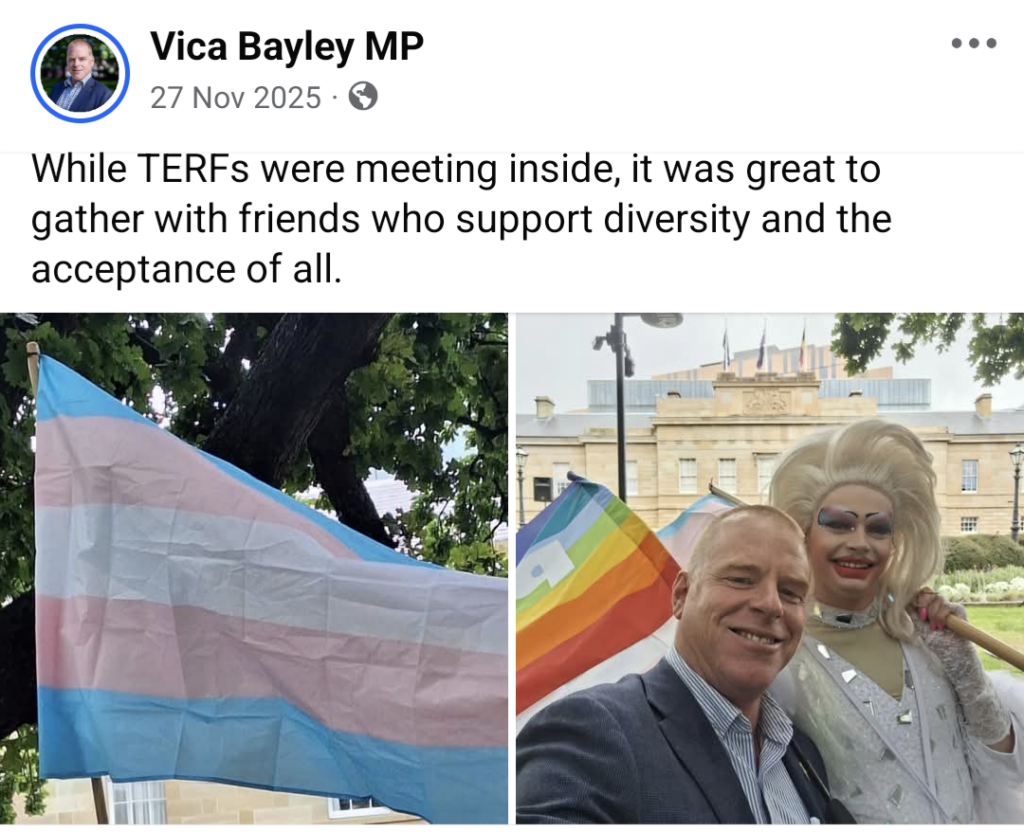
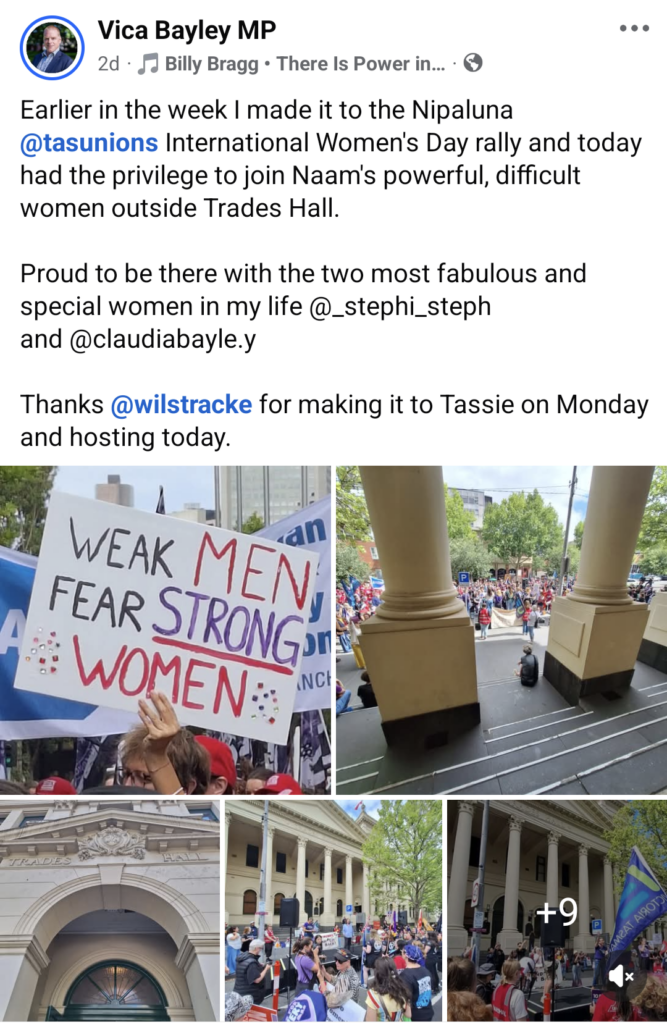
This behaviour sits uneasily with the history of the day they claim to celebrate. The suffragists fought for women to be recognised as a political and legal class, deserving of rights, representation, and the freedom to speak.
Yet today, women who advocate for those same sex-based rights are sometimes mocked, dismissed, or publicly attacked by the very politicians who appear at International Women’s Day events claiming to support women.
We therefore have to ask: what exactly are these politicians celebrating?
The question “What is a woman?” is the simplest reality test.
If you cannot—or will not—give a clear, coherent answer to something so basic, then nothing else you say carries weight.
So, what is a woman?
Women are adult human females.
Standing Up for Women’s Rights
Women Speak Tasmania will continue advocating for the clear recognition of women’s sex-based rights in Tasmania’s laws and public policy.
If you would like to support our work—send a letter, share a sticker photo, or help raise awareness—visit our website or connect with us through our social media channels.
Together, we will continue speaking clearly and respectfully about the importance of protecting women as a sex class.