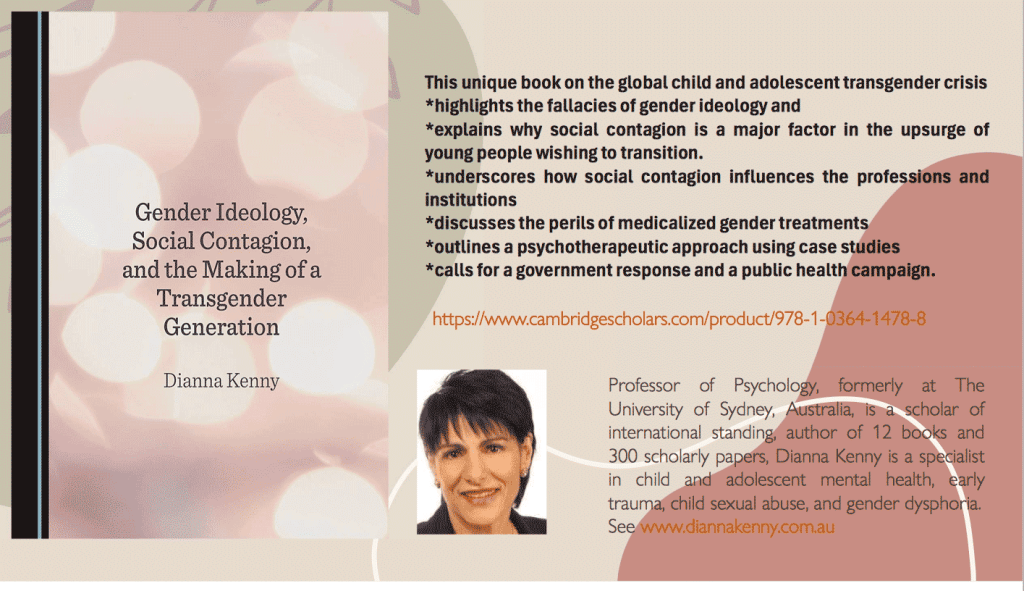
Overview of the Book
Title: Gender Ideology, Social Contagion, and the Making of a Transgender Generation
Author: Dr. Dianna (Theadora) Kenny, former Professor of Psychology at the University of Sydney, now a clinical psychologist specialising in child and adolescent mental health and gender dysphoria.
Publication: Released late 2024 by Cambridge Scholars Publishing (370 pages).
Purpose: Addresses what the author frames as a global crisis—an alarming rise in gender dysphoria among children and adolescents. Kenny critiques prevailing gender ideology, emphasising social contagion as a key driver behind the surge of young people seeking gender transition.
Key Themes and Arguments
1. Social Contagion as Central Mechanism
- Kenny defines social contagion as the spread of beliefs and behaviors across social networks—drawing on epidemiological models and public health insights.
- She argues that adolescent gender dysphoria behaves like an epidemic, proliferated via peer networks, social media, schools, and other institutions. This includes phenomena such as rapid-onset gender dysphoria (ROGD), which she considers a manifestation—not a cause—of social contagion.
- Mechanisms like peer contagion, deviancy training, and co-rumination are explored in detail as ways young people influence each other toward gender affirmation.
2. Critique of Medicalized “Gender-Affirming Care”
- Kenny critiques the medical affirmation model, including social transition, puberty blockers, cross-sex hormones, and surgeries, as experimental and potentially harmful.
- She strongly warns of the lifelong consequences stemming from irreversible medical interventions, which she argues have weak evidence in support, especially for adolescents.
3. Clinical and Therapeutic Alternatives
- Drawing on her clinical practice, Kenny presents psychotherapy as a safer starting point—one that attends to underlying mental health triggers of gender distress, such as trauma, neurodivergence, or family issues.
- Case studies in the book suggest that gender dysphoria can resolve once other psychological needs are addressed.
4. Call for Governing and Public Health Reform
- In the epilogue, Kenny calls for a public health response, revised government guidelines, and broader policy reform to curb what she terms the “medical madness” of unchecked affirmation models.
Reception & Context
- Book reviewers and advocacy groups describe Kenny’s work as “comprehensive,” “unique,” and impactful for professionals in medicine, psychology, law, and education.
- The Australian featured commentary drawing parallels between the rise of trans identity and social contagion, highlighting the book’s alignment with broader critiques of medical affirmation practices.
Strengths & Considerations
| Strengths | Considerations |
|---|---|
| Draws on clinical experience and detailed case studies. | Social contagion models remain debated in academic psychology. |
| Offers therapeutic alternatives focusing on mental health first. | May be perceived as ideologically framed. |
| Provides comprehensive critique of current medical pathways. | Lacks endorsement from mainstream medical or psychological institutions. |
| Calls for policy reform and nuanced debate. | Risk of simplification when compared to broader, more inclusive approaches. |
Summary
Dr. Dianna Kenny’s Gender Ideology, Social Contagion, and the Making of a Transgender Generation presents a clinical and critical examination of the surge in adolescent gender dysphoria. She emphasizes social contagion rather than innate identity, questions medicalized “affirming” care, and advocates for psychotherapy-centered intervention paired with systemic reform.
This unique, comprehensive book on the global child and adolescent transgender crisis highlights the fallacies of gender ideology and explains why social contagion is a major factor in the upsurge of young people wishing to transition.
It underscores for the first time how social contagion also influences the many professions involved in treatment of gender dysphoric young people. The book includes a discussion of the many perils of medicalized gender treatments, including puberty blockade, cross sex hormones, and genital surgeries that create lifelong patienthood.
The book concludes with a detailed discussion of psychotherapeutic management of gender dysphoric young people and their families. Drawing on years of clinical experience, the author offers new insights and many case studies from her own practice that delve into the complex factors that contribute to the desire to change sex. In an epilogue, the author calls for an informed government response and a public health campaign to curtail the medical madness of “gender affirming care.”
This book has international appeal and will be an invaluable resource for paediatricians, endocrinologists, psychiatrists, general practitioners, psychologists, sociologists, legislators, politicians, educators, and parents.