Why Biological Males Competing Undermines Child Safeguarding and Female Empowerment
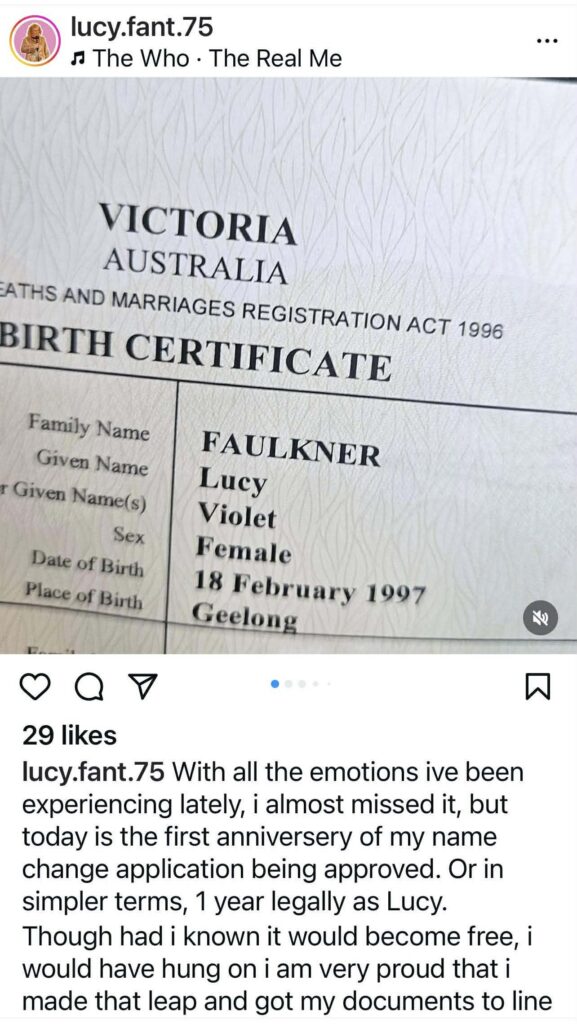
In February 2026, Mini Miss Pageants announced Lucy Violet Faulkner — a trans-identified man from Geelong, Victoria — as a 2026 Miss Tasmania contestant. The original social media post was quickly removed after strong community backlash. The Tasmanian papers focused heavily on claims of “hatred” and “online targeting” directed at the trans-identified contestant, while largely ignoring the legitimate safety and wellbeing concerns raised by Tasmanian women, girls, and parents.
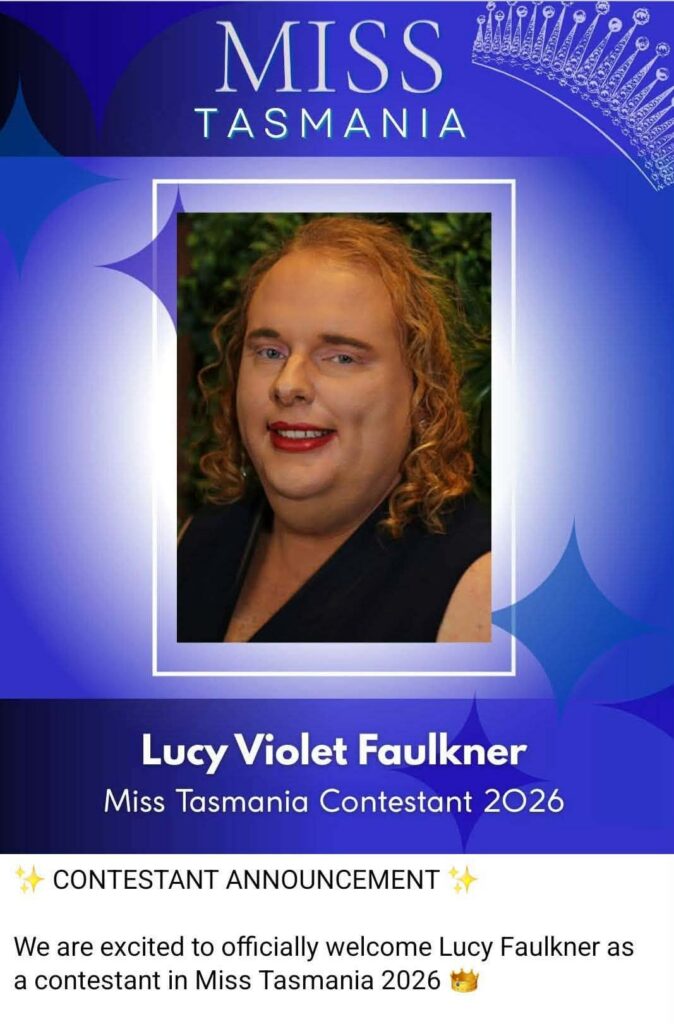
Miss Tasmania 2026 was scheduled for November in Hobart. The event includes categories from Little Miss (0–5 years) through to adult divisions. Entry costs $300 per contestant, and the pageant markets itself as a space for “confidence, empowerment, and community” where every participant receives a tiara and sash.
Complete Absence of Sex-Based Safeguarding and Facilities Policies
The official Mini Miss Pageants rules and contestant handbook provide no public information on:
- Changing rooms or backstage privacy arrangements
- Separation of age groups or sexes
- Any child safeguarding protocols for adult contestants sharing prep spaces with toddlers and primary-school girls
Contestants are required to organise their own outfits, hair, and makeup, with organisers explicitly stating they take no responsibility for these arrangements. All age groups prepare in the same shared venue space. This means young girls (including babies and infants in the Little Miss category) could be expected to share changing and backstage areas with adult biological males.
Parents have publicly asked:
- Did previous little girls have to share change rooms with adult contestants?
- If a parent raises a complaint, does the child face any consequences?
To date, founder Grace Morton and the organisers have not answered these questions. Instead, criticism has been dismissed as “hatred” that harms trans people’s wellbeing. Tasmania’s strict Child and Youth Safe Organisations standards require clear safeguarding measures, yet no specific policies addressing mixed-sex backstage access have been published for parents.
The Psychological Impact on Girls and the Broken “Empowerment” Promise
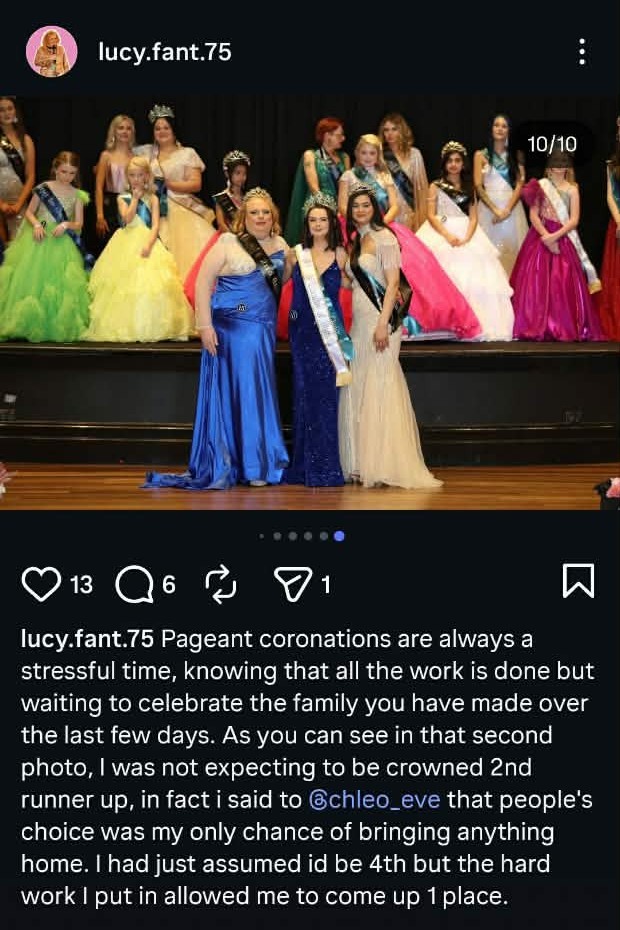
The pageant repeatedly promotes itself as building confidence and self-esteem for girls and young women through feminine presentation categories. Yet when a biological male competes in the same female categories — and has already received awards (second runner-up and co-Ultimate Rising Star in 2025) — it sends a clear message that female bodies and presentation are secondary.
Research on beauty pageants consistently shows increased body dissatisfaction, dieting pressure, and distorted self-image among participants and viewers, particularly during puberty. Introducing male physiology (height, shoulder width, jawline, and limb proportions) into female categories intensifies this effect. Girls learn that their natural female development may not be “enough” to compete or be celebrated in a space marketed as theirs.
Lucy Faulkner has described the experience on Instagram as “success — the only way to silence the haters” and a win “for the whole Trans Community.” The focus remains almost entirely on the adult contestant’s feelings, while the voices of biological female contestants — especially the youngest girls and their parents — are sidelined.
A Failure of Balanced Reporting
Mainstream coverage, including The Mercury, has emphasised the trans contestant’s experience and labelled community concerns as “hostile” or “hateful.” Little space has been given to asking:
- How do young girls and their parents feel sharing intimate prep spaces with an adult male?
- Does the pageant’s “everyone welcome, no questions” policy truly protect the safety and mental health of the very children it claims to empower?
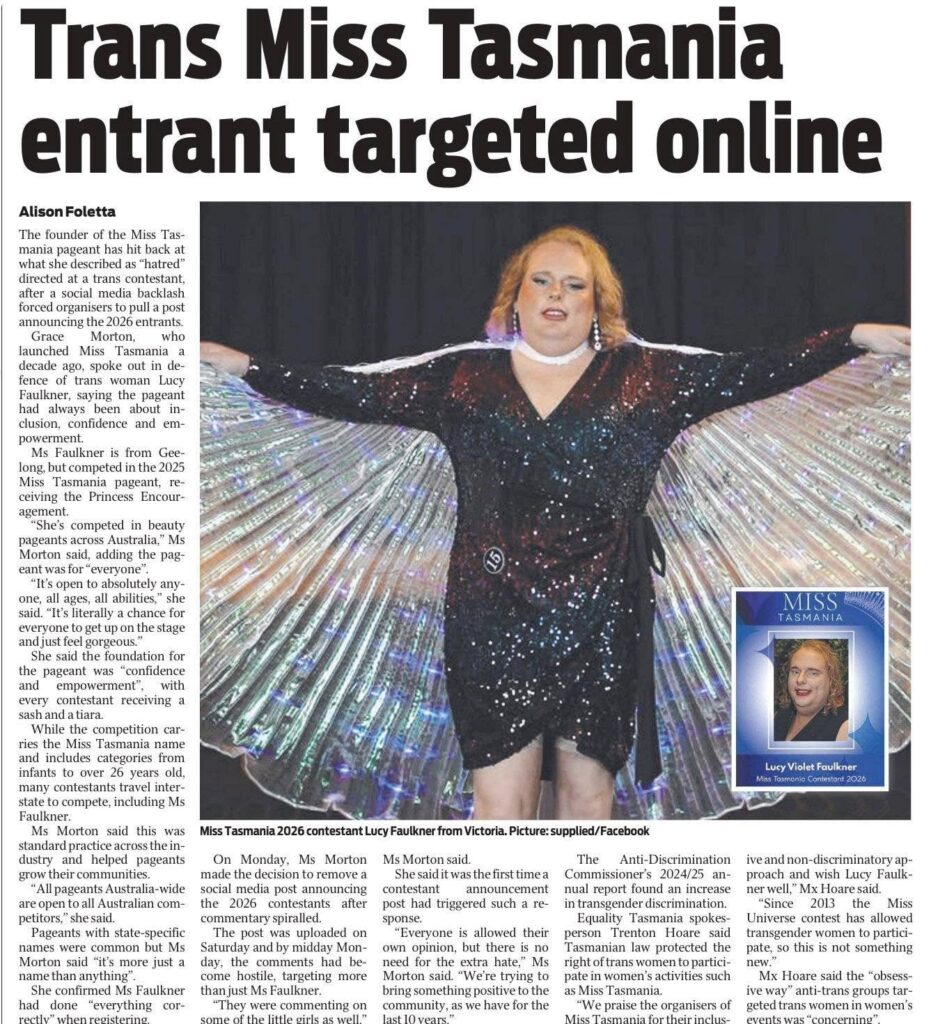
Women Speak Tasmania and many Tasmanian parents believe this is not about hatred, but about basic safeguarding and fairness. Biological sex matters in spaces involving undressing, vulnerability, and body image — especially when toddlers and primary-school girls are involved.
Tasmanian girls and women deserve events that genuinely centre and protect them. Prioritising adult ideology over child safety and female-only spaces undermines the very confidence and empowerment the pageant promises.
We invite any parents with direct experience from previous Miss Tasmania or Mini Miss events to share their anonymous feedback. Questions about changing facilities, complaints processes, or impacts on young contestants are welcome.