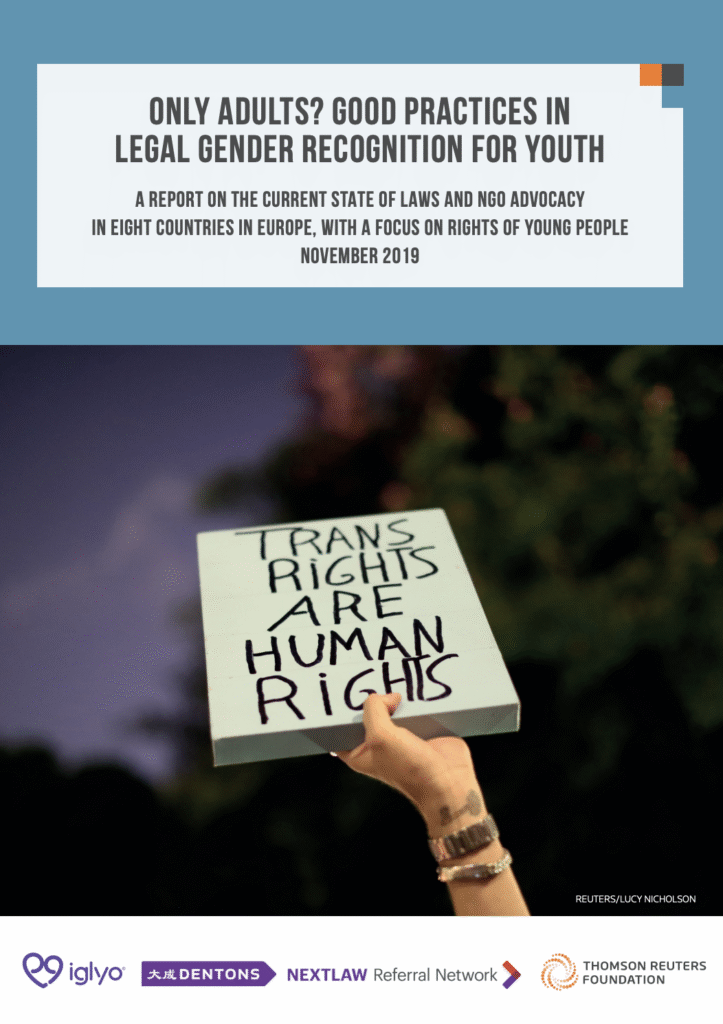
In 2019, a guide produced by global law firm Dentons with activist partners revealed how trans rights were advanced across Europe. The strategy? Incremental reforms, political gatekeepers, friendly media, and avoiding open debate on controversial issues like children, prisons, and sport.
Far from grassroots change, the document shows a carefully managed campaign designed to frame self-ID laws as harmless “paperwork updates” while sidelining public scrutiny.
Techniques to Promote Trans Rights in Europe
The document frames itself as a “how-to” playbook. Some key techniques it recommends:
- Incremental change: Introduce reforms step by step rather than all at once, to avoid backlash.
- Piggybacking on other causes: Attach trans rights to broader equality, diversity, or anti-discrimination initiatives to normalise them.
- Strategic framing: Use language that resonates positively (e.g., “equality,” “human rights”) and avoid terms that may provoke opposition.
- Youth mobilisation: Position young people as the face of reform efforts, emphasising innocence and urgency to gain public sympathy.
- Litigation and legal tools: Where possible, bring test cases to courts to compel governments to adapt laws.
The Role of Politicians
Politicians are described as both gatekeepers and allies:
- The strategy encourages cultivating political “champions” who can push reforms from within governments and parliaments.
- It suggests working with sympathetic parties (often progressive or Green/left parties) while framing opposition as “out of touch” or discriminatory.
- Politicians are advised to present reforms as minor or technical to reduce scrutiny, even when the reforms are far-reaching (e.g., self-ID laws).
Media Censorship and Narrative Control
The document acknowledges that media framing is critical:
- Activists are encouraged to work with friendly journalists to secure sympathetic coverage and to avoid giving oxygen to opponents.
- The text suggests downplaying or even avoiding open debate on controversial issues such as medicalisation of children or prison placements, because debate risks raising awareness of counterarguments.
- “Do not feed the opposition”: The guidance essentially warns against drawing attention to dissenting voices, which can be interpreted as a form of narrative control or censorship by omission.
How the Landscape of Rights Has Changed
The manual situates its advice in the context of rapid legal changes:
- By the mid-2010s, many European countries had already introduced anti-discrimination protections for sexual orientation; trans rights advocates sought to “catch up” and expand the legal framework to cover gender identity and expression.
- The document notes that self-ID laws (allowing people to change legal sex without medical evidence) were successfully passed in some countries by framing them as administrative reforms rather than cultural upheavals.
- In recent years, there has been growing resistance (e.g., in the UK and parts of Eastern Europe), which the guide acknowledges as a challenge, urging activists to adjust tactics to be less confrontational and more incremental.
Big Picture Takeaway
The Dentons/IGLYO manual is not a neutral academic text but an advocacy strategy guide. It reveals:
- A conscious effort to shape political debate quietly, using sympathetic politicians and carefully managed messaging.
- A deliberate choice to avoid transparency on controversial issues, especially around children, sport, and prisons, in order to limit public scrutiny.
- A recognition that the “rights landscape” has shifted significantly, with trans rights moving from marginal activism into mainstream legislative agendas in many European countries — though the guide shows activists were aware of the fragility of these gains and the potential for backlash.
Conclusion
The Dentons/IGLYO playbook shines a light on how Europe’s legal and cultural landscape shifted so rapidly on gender identity. It was not simply the result of grassroots demand, but of a carefully coordinated strategy that relied on political gatekeeping, media management, and incremental legal reform.
As debates about gender identity continue in Australia and worldwide, communities should be alert to these tactics — and insist that any future reforms are made openly, transparently, and with full consideration of their impact on women, children, and society.
Access the Dentons Document HERE
https://gendercriticalwoman.blog/wp-content/uploads/2020/07/iglyo_v3-1.pdf