Introduction
In late 2018, Women Speak Tasmania (WST) became involved in a public controversy that raised questions about freedom of expression, political disagreement, and the participation of women in debates surrounding proposed gender law reforms in Tasmania.
The dispute began after former Tasmanian Anti-Discrimination Commissioner Robin Banks contacted the Women’s International League for Peace and Freedom (WILPF) regarding a Human Rights Week event at which Women Speak Tasmania representatives Bronwyn Williams and Isla MacGregor had been invited to speak.
What followed was a public controversy, media coverage, cancellation of the planned event, formal discrimination complaints, and the referral of those complaints to the Tasmanian Ombudsman.
Despite the significance of the matter, no publicly reported determination or resolution of the complaints has been located.
This article documents the events as reported at the time.
Background: Tasmania’s Gender Law Reform Debate
During 2018, Tasmania was engaged in intense public debate over proposed reforms relating to legal sex and gender recognition.
Women Speak Tasmania was among a number of groups expressing concerns about proposed legislative changes that would make it easier for individuals to change the sex recorded on official documents and expand protections relating to gender identity and gender expression.
Supporters of the reforms argued the changes would improve legal recognition and protections for transgender and gender-diverse people.
Critics, including Women Speak Tasmania, argued that some proposals could have implications for sex-based rights, female-only services, sports, and spaces.
It was against this backdrop that Women Speak Tasmania was invited to address a Human Rights Week event organised by WILPF Tasmania.
The Invitation to Speak
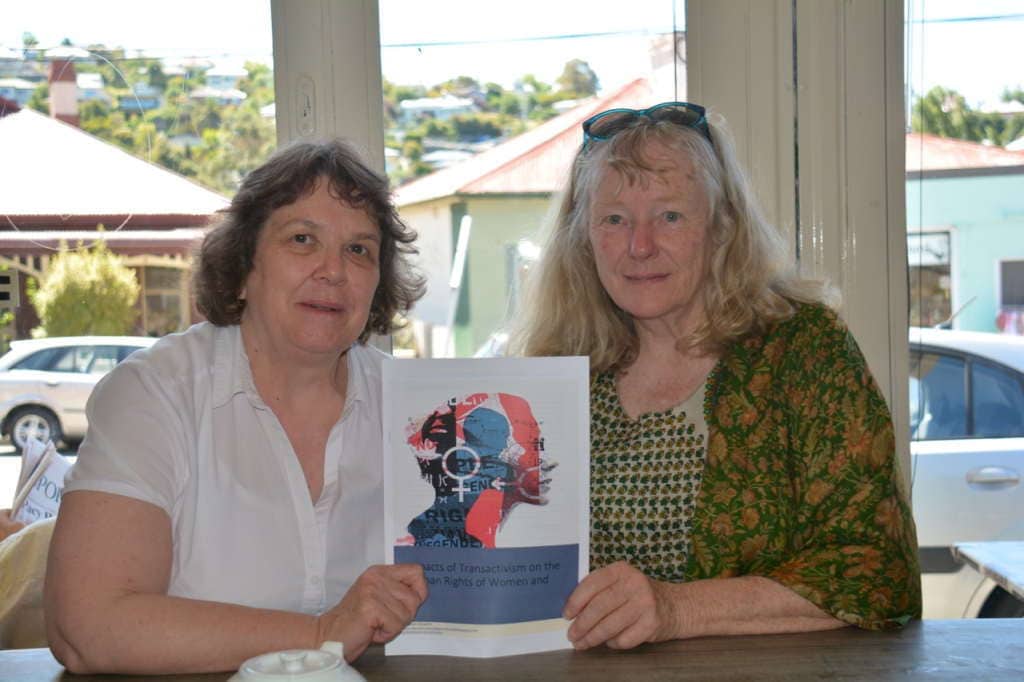
Women Speak Tasmania representatives Bronwyn Williams and Isla MacGregor were invited to speak at a WILPF Human Rights Week event scheduled for 12 December 2018 in Hobart.
The advertised topic was:
“Transgenderism and the impact on the human rights of women and girls.”
At the time, both women were publicly involved in advocacy concerning the proposed Tasmanian law reforms.
The Email From Robin Banks
On 30 November 2018, former Anti-Discrimination Commissioner Robin Banks emailed members of WILPF expressing concern about the invitation extended to Women Speak Tasmania.
According to contemporaneous reporting and later publication of the email, Banks stated that Women Speak Tasmania was engaged in what she described as a “nasty and untruthful campaign” targeting members of Tasmania’s gender-diverse community.
She further argued that providing the organisation with a platform could be viewed by many within the LGBTIQ community as an endorsement of views they considered harmful.
Banks warned that hosting the speakers had the potential to damage WILPF’s reputation as a longstanding human rights organisation and offered assistance in helping the organisation navigate what she described as a difficult situation.
The email would become the central focus of the controversy that followed.
Public Reporting
On 4 December 2018, journalist Matthew Denholm reported on the dispute in The Australian.
The article reported that Women Speak Tasmania representatives Bronwyn Williams and Isla MacGregor regarded Banks’ intervention as an attempt to “no-platform” them because of their views on transgender law reform.
MacGregor told the newspaper that the intervention represented an attack on freedom of speech and on women’s ability to participate in public debate concerning issues affecting their rights.
Robin Banks rejected that characterisation.
She stated that it had not been her intention to prevent Women Speak Tasmania from speaking, but rather to encourage WILPF to ensure that alternative viewpoints were also represented.
WILPF representatives indicated at the time that the Women Speak Tasmania speakers would still be appearing at the event, although the organisation was considering whether additional speakers should be invited.
Cancellation of the Event
Shortly after the controversy became public, the Human Rights Week event was cancelled.
Women Speak Tasmania subsequently published correspondence from WILPF advising that concerns regarding media involvement surrounding the event had contributed to the decision.
Women Speak Tasmania argued that pressure generated by criticism of the event and the intervention by Robin Banks had effectively resulted in the cancellation.
WILPF’s public explanation focused on concerns regarding media attention rather than disagreement with the proposed speakers themselves.
No publicly available evidence has been located establishing precisely which factors ultimately led to the cancellation.
Nevertheless, the cancellation significantly escalated the dispute and attracted further media attention.
Formal Complaints Against Robin Banks
Following cancellation of the event, Bronwyn Williams and Isla MacGregor lodged anti-discrimination complaints against Robin Banks.
According to reporting in The Australian, the complaints alleged that Banks had encouraged discrimination against them because of their political beliefs and political activities.
The complaints also alleged that Banks’ characterisation of Women Speak Tasmania’s views as hateful had humiliated, insulted, ridiculed, and intimidated them.
Banks publicly stated that she supported the right of individuals to utilise discrimination complaint processes and indicated that she would respond through the appropriate legal channels if required.
Referral by the Anti-Discrimination Commissioner
The complaints were lodged with Equal Opportunity Tasmania.
However, in January 2019, Anti-Discrimination Commissioner Sarah Bolt determined that she would not personally assess the complaints.
According to reporting at the time, Bolt advised that because Robin Banks had previously held the office of Anti-Discrimination Commissioner, and because staff within the office had worked closely with her, referral to an independent authority was necessary to avoid any perception of bias or conflict of interest.
The matter was subsequently delegated to Tasmanian Ombudsman Richard Connock.
For Women Speak Tasmania, the referral was viewed with concern, partly because of fears that the Ombudsman’s existing workload could delay consideration of the complaint.
Nevertheless, the referral represented official recognition that the complaint involved circumstances requiring an independent decision-maker.
The Public Record Ends
After the referral to the Ombudsman in early 2019, the public record becomes significantly less clear.
Despite extensive searches of publicly available sources, no published Ombudsman determination, anti-discrimination finding, conciliation outcome, tribunal decision, court judgment, or official report relating to the complaint has been located.
Similarly, no publicly reported resolution of the dispute between Women Speak Tasmania and Robin Banks has been identified.
As a result, the ultimate outcome of the complaint process remains unclear from the publicly available record.
Conclusion
The events of late 2018 remain a notable chapter in Tasmania’s debate over sex, gender identity, women’s rights, and freedom of expression.
What remains unclear is the ultimate resolution of those complaints.
No publicly reported determination, Ombudsman finding, conciliation outcome, tribunal decision, or court judgment has been located.
As a result, the matter remains unresolved in the public historical record.
Years later, the controversy continues to provide insight into the tensions that characterised Tasmania’s debate over gender law reform and the challenges surrounding freedom of expression, public participation, and disagreement on matters of public policy.