Australia’s peak health regulator, AHPRA, is facing growing parliamentary scrutiny after Senator Sarah Henderson directly challenged CEO Justin Untersteiner during recent Senate Estimates hearings.
In the exchange, Senator Henderson questioned whether AHPRA is truly protecting patients — or policing doctors who raise legitimate concerns about gender-affirming care for children.
The Cases That Sparked the Questions
In late February 2026, AHPRA and the Medical Board of Australia took “immediate action” against Queensland psychiatrist Dr Andrew Amos. They imposed strict conditions on his registration, including a ban on him posting any comments on social media about gender medicine, gender identity, or transgender issues. He was also restricted from having direct clinical contact with patients. Importantly, these actions were taken without any finding that he had harmed a patient.
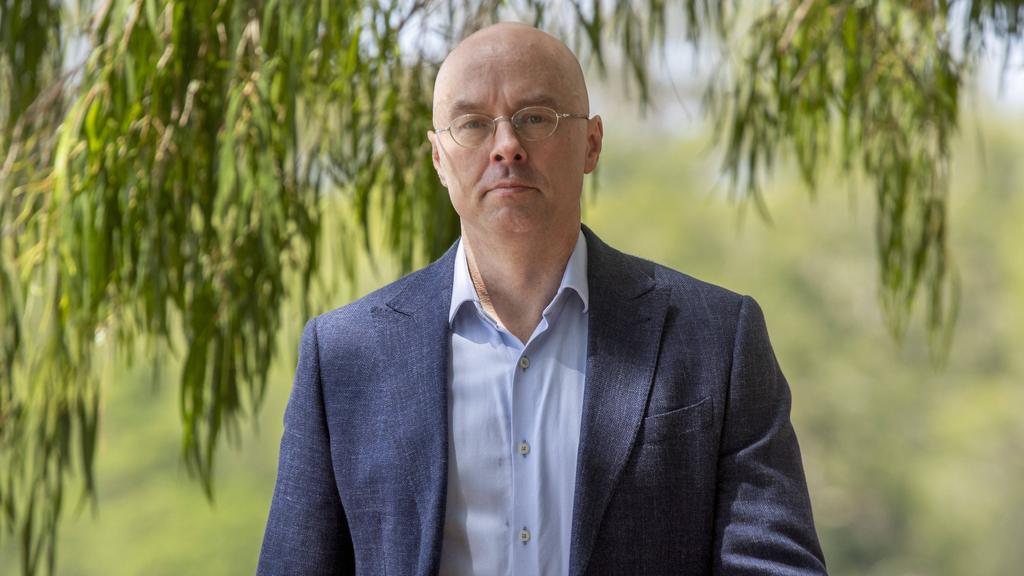
Shortly after, child and adolescent psychiatrist Dr Jillian Spencer became the subject of a formal AHPRA complaint. The complaint was triggered after she reposted an article from The Australian newspaper on X (formerly Twitter). The article reported on the regulatory action taken against Dr Amos. In her repost, Dr Spencer criticised AHPRA’s treatment of Dr Amos and raised broader concerns about gender-affirming care for minors. The notifier reportedly claimed the post caused them “fear for their safety”.
Women Speak Tasmania’s Direct Engagement
Women Speak Tasmania has been actively involved in raising concerns with AHPRA about these cases.
On 2 March 2026, we lodged a formal complaint with AHPRA regarding the disproportionate conditions imposed on Dr Andrew Amos. We argued that the broad restrictions on his social media speech and clinical practice were unjustified, given the absence of any patient harm findings, and represented an overreach of regulatory power.
AHPRA’s response was a generic reply citing confidentiality provisions under the National Law. They declined to address the substance of our concerns. We then escalated the matter to the National Health Practitioner Ombudsman. The Ombudsman rejected our complaint, stating that only the affected practitioner (or their formal representative) could pursue the matter. Our complaint was closed without investigation.

On 4 April 2026, we made a Public Interest Disclosure to AHPRA concerning the handling of Dr Jillian Spencer’s case. We raised serious concerns about alleged maladministration and substantial waste of public resources in continuing an investigation against Dr Spencer — triggered after she reposted a legitimate The Australian news article criticising AHPRA’s actions against Dr Amos.
AHPRA rejected our disclosure on 11 May 2026, deciding it did not qualify as a Public Interest Disclosure. We subsequently lodged a formal complaint with the National Health Practitioner Ombudsman on 19 May 2026, arguing that AHPRA had failed to properly assess the risks to children and the broader implications for evidence-based medicine. At the time of writing, we have not received a substantive outcome from the Ombudsman.
These experiences highlight a troubling pattern: complaints from organisations like Women Speak Tasmania questioning AHPRA’s approach to gender medicine appear to be routinely dismissed or not properly investigated.
The Senate Estimates Exchange
During the Senate Community Affairs Legislation Committee estimates hearing on 3 June 2026, Senator Sarah Henderson directly challenged AHPRA CEO Justin Untersteiner.
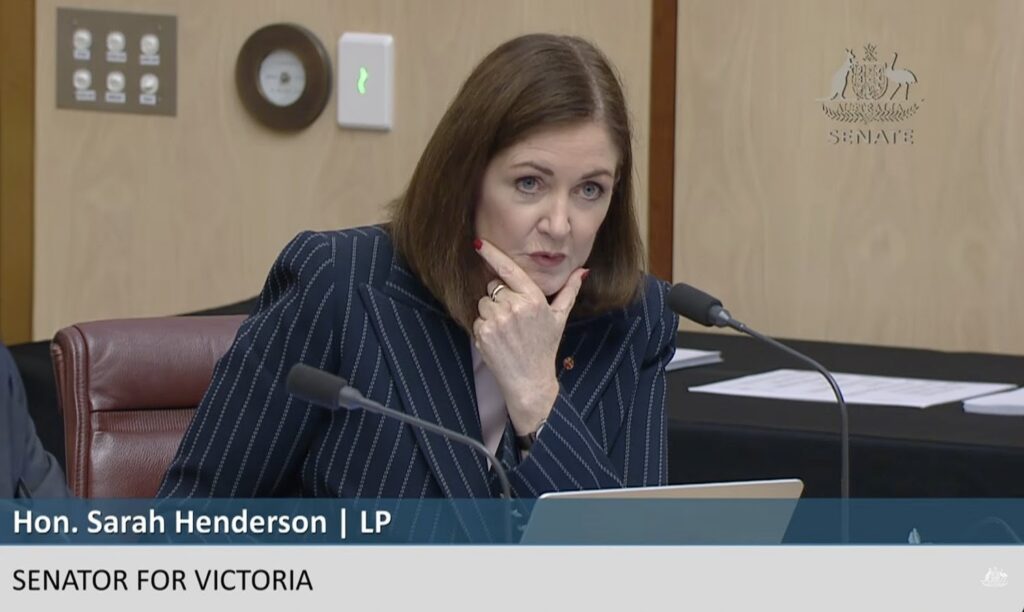
Senator Henderson opened by asking:
“What patient harm did Dr. Andrew Amos or Dr. Jillian Spencer actually cause that justified AHPRA’s dramatic intervention?”
She pressed further on the apparent targeting of dissenting doctors:
“I’m asking about why AHPRA has taken regulatory action against doctors who’ve raised serious concerns about gender-affirming treatment, including the use of puberty blockers and cross-sex hormones, in light of increasing evidence around the world that these are causing harm to children. So I put to you that… why are they being shut down?”
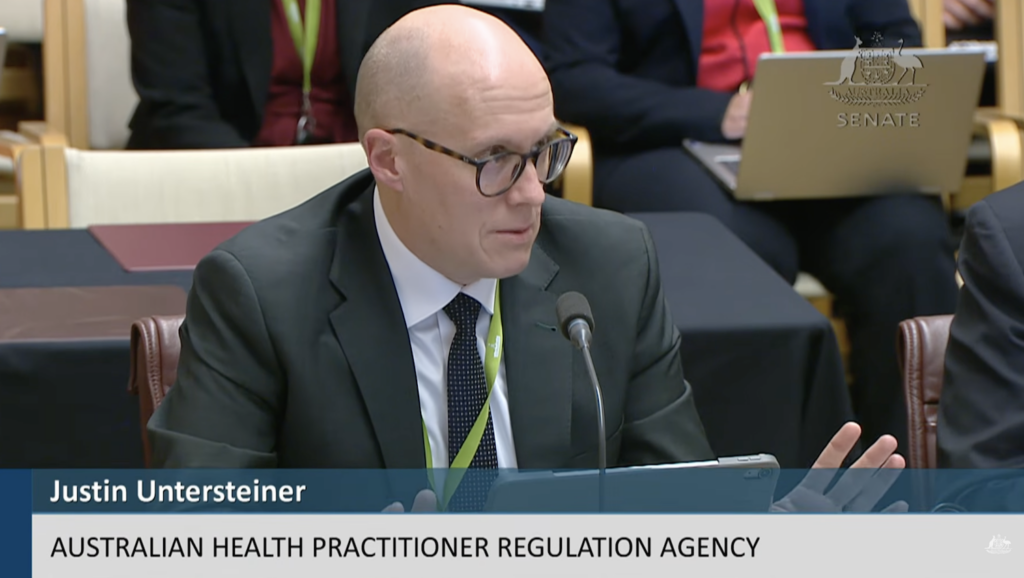
Mr Untersteiner repeatedly cited confidentiality provisions and defended AHPRA’s position, stating:
“I can confirm we have not taken action against any practitioner because they are raising legitimate concerns that they have… We will not take action against a practitioner because they are sharing views that they might have about hormone blockers or about gender affirming treatment. That’s not our role.”
He added that intervention only occurs when speech “moves into discrimination and hateful conduct that can harm the broader community.”
Dr Jillian Spencer later shared a video clip of this exchange on X, writing:
“Watch the CEO of @Ahpra Justin Untersteiner cast aspersions that there is ‘more to the story than has been reported’… He owes Dr Amos a public apology. Thank you to @SenSHenderson for questioning Ahpra about our cases.”
Pattern of Concern: Regulatory Capture and Conflicts of Interest
The cases of Drs Amos and Spencer do not appear in isolation. They sit within a broader pattern of concern about AHPRA’s close relationship with transgender advocacy organisations, particularly ACON.
AHPRA has formally partnered with ACON through its Australian Workplace Equality Index (AWEI) and Pride in Diversity programs. These partnerships have influenced the regulator’s internal policies, including its LGBTIQA+ Equity and Inclusion Strategy. Critics argue this creates a clear apprehension of bias when AHPRA is required to impartially regulate debates over gender medicine.
This concern intensified in May 2026 when formal complaints were lodged with both AHPRA and the Australian Competition and Consumer Commission (ACCC) regarding ACON’s own gender clinic, Kaleido Health Centre in Sydney. The complaints allege that Kaleido engages in misleading advertising by promoting gender-affirming hormone treatments as “safe”, “high-quality” and “evidence-based” while omitting serious known risks — particularly for minors — such as infertility, loss of sexual function, bone density issues, and cardiovascular complications.
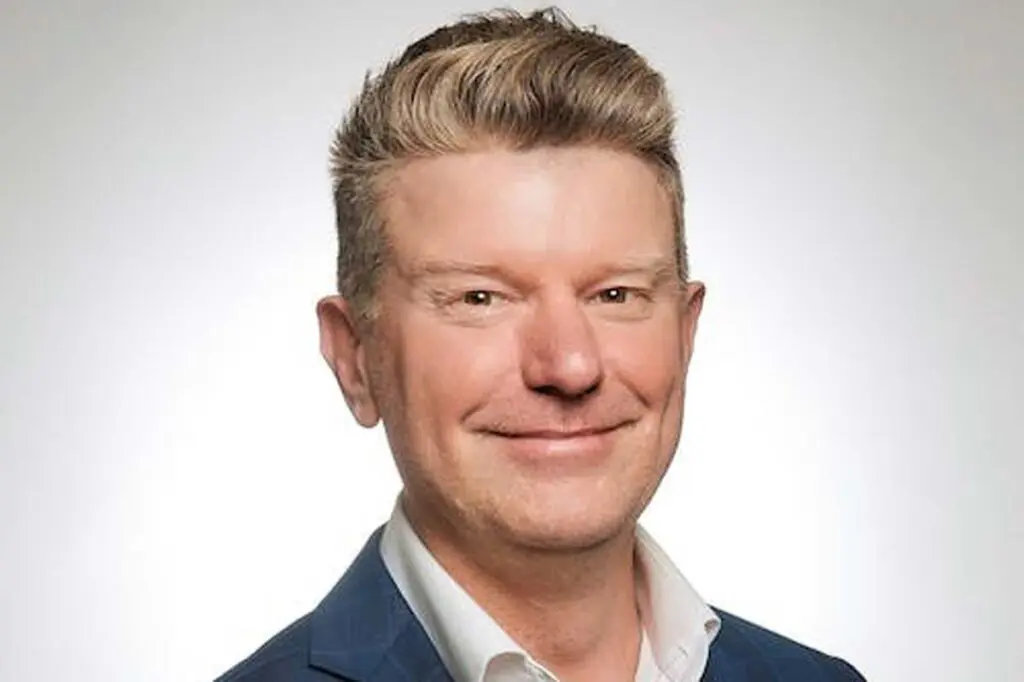

Notably, Kaleido shares the same CEO (Michael Woodhouse) and Chair (Justin Koonin) as ACON, and the clinic receives significant NSW Government funding.
Meanwhile, complaints from the public and organisations such as Women Speak Tasmania questioning AHPRA’s actions have been routinely dismissed or closed without substantive investigation. In contrast, regulatory action against doctors raising evidence-based concerns appears swift.
This situation is occurring even as several countries, following systematic reviews like the UK’s Cass Review, have severely restricted the use of puberty blockers and cross-sex hormones for minors due to weak evidence and significant risks. Australia’s regulator appears to be moving in the opposite direction.
Why This Matters
The Senate Estimates hearing on 3 June 2026 has shone a much-needed spotlight on AHPRA’s handling of gender medicine cases. Senator Sarah Henderson’s robust questioning of CEO Justin Untersteiner has given voice to growing community and professional concerns that Australia’s health regulator may be prioritising ideology over evidence and patient safety.
Women Speak Tasmania’s own experience — lodging detailed complaints about the cases of Drs Andrew Amos and Jillian Spencer, only to see them dismissed or inadequately addressed — further illustrates the problem. When a women’s rights organisation raising legitimate safeguarding issues receives generic responses and closed files, it raises serious questions about AHPRA’s impartiality and commitment to its core duty: protecting the public.
AHPRA must be a regulator that serves all Australians, not an enforcer for one contested ideology. Doctors must be able to engage in good-faith scientific debate without fear of professional destruction. Parents and young people deserve honest information about medical risks, not marketing slogans.