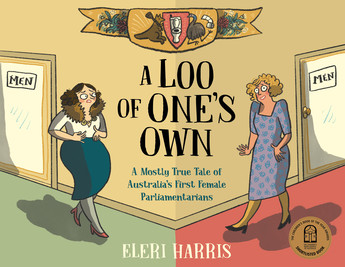
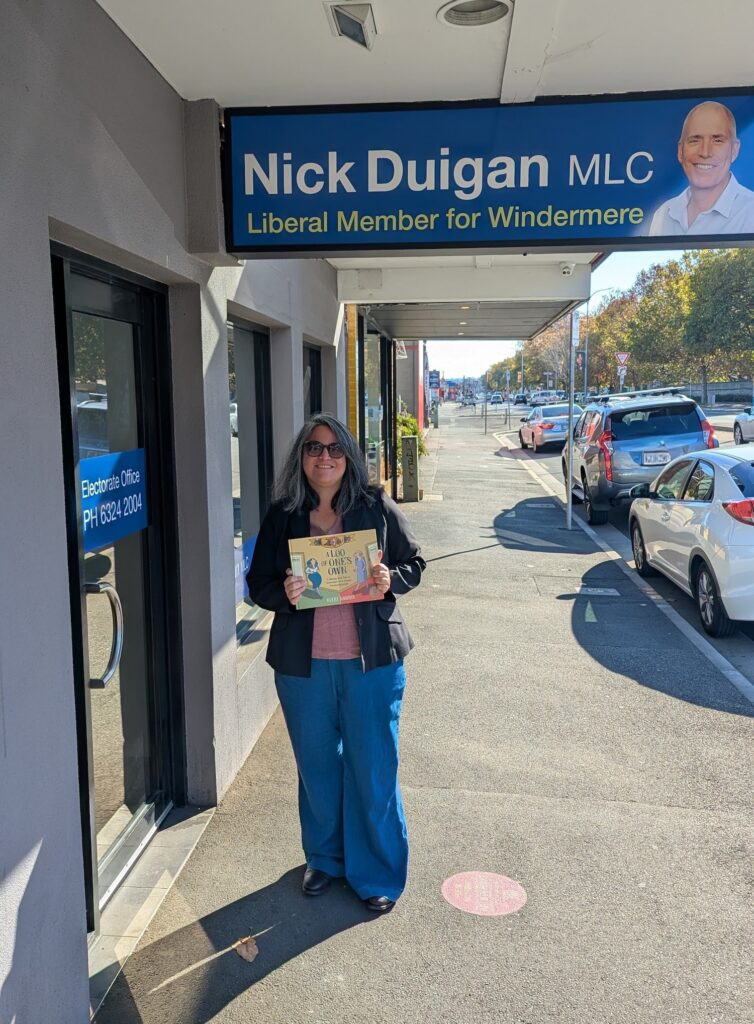
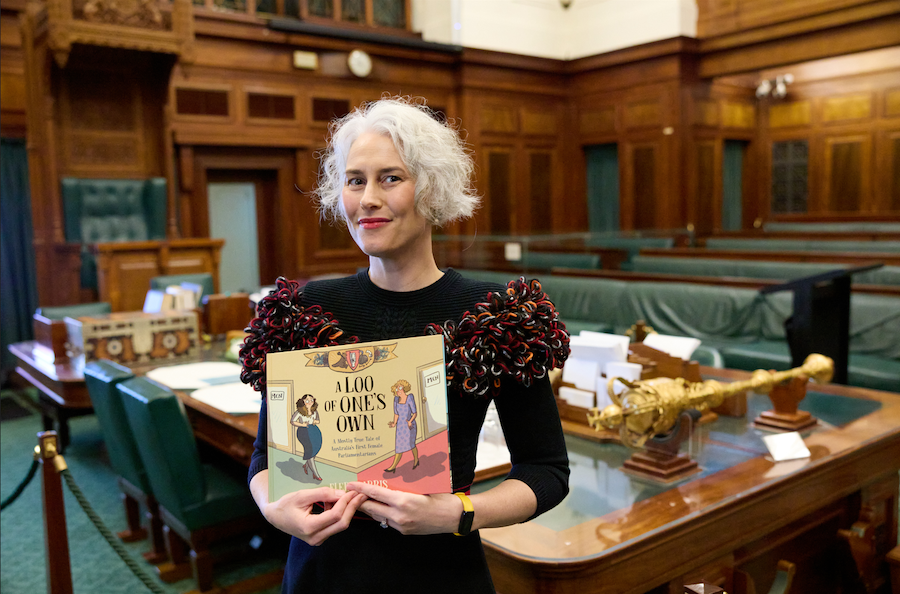
Recently, members of Women Speak Tasmania visited the electorate office of Nick Duigan in Invermay, Launceston. We presented a copy of A Loo of One’s Own by Eleri Harris to the Minister for Sport. At first glance, this colourful children’s picture book appears playful and light-hearted, filled with quirky illustrations and gentle humour. Yet it tells a profound story from Australian women’s history that remains strikingly relevant today.
The Story of Australia’s First Female Parliamentarians
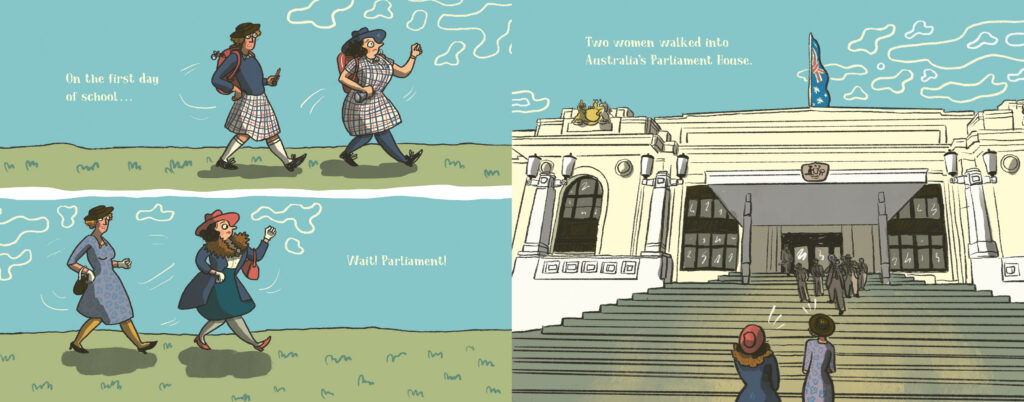
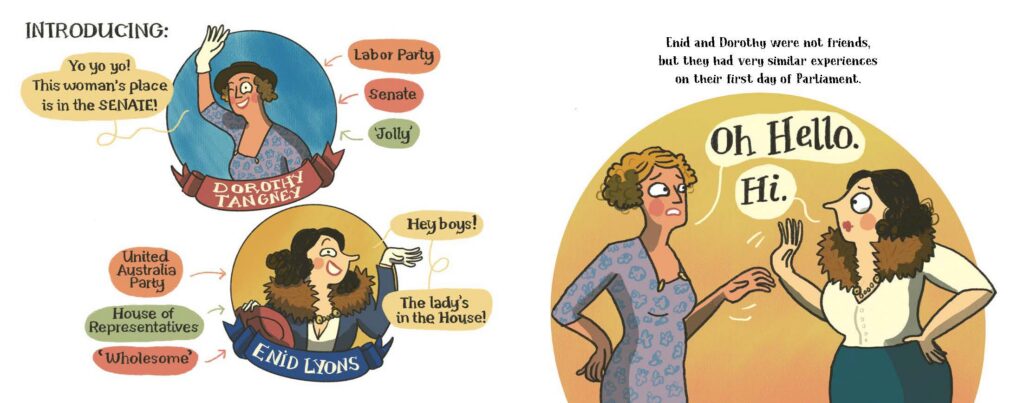
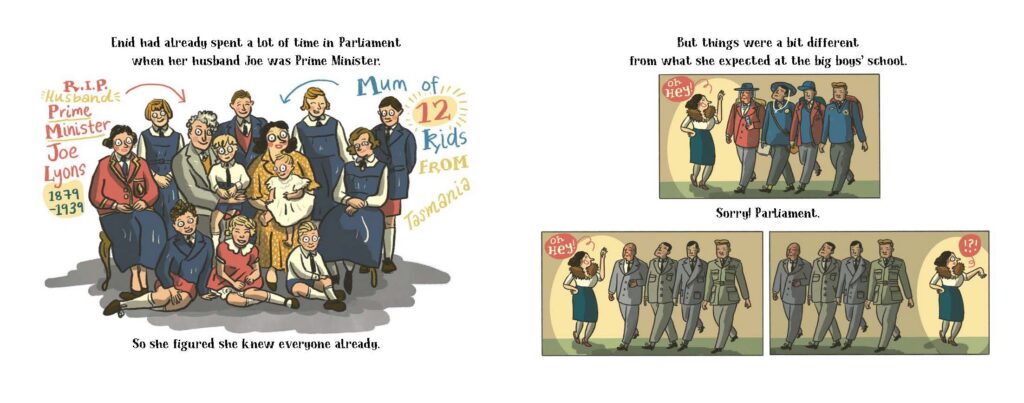
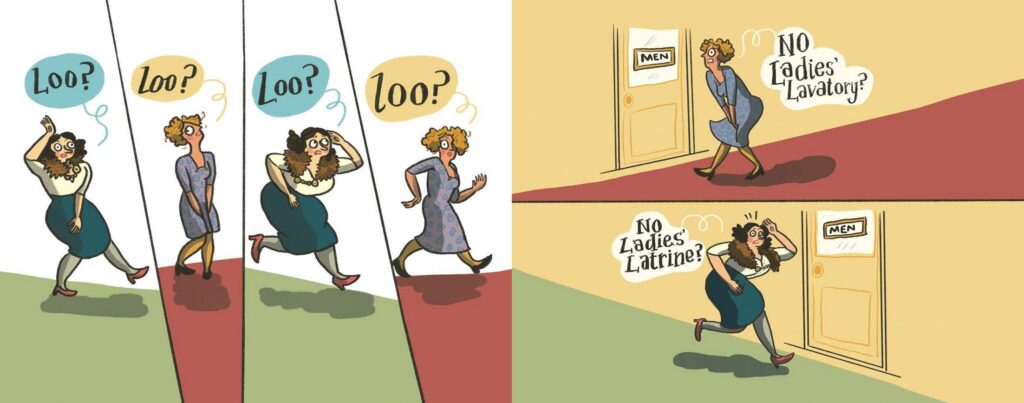
In 1943, Enid Lyons (elected to the House of Representatives) and Dorothy Tangney (elected to the Senate) became the first women to enter Australia’s Federal Parliament. They came from very different political backgrounds but quickly discovered a shared problem: Old Parliament House in Canberra had no toilets for women parliamentarians.
The entire building had been designed on the unquestioned assumption that politicians, staff, and decision-makers would always be men. The only facilities available to women were those for junior staff or visitors. For decades, female MPs had to improvise — going home when possible, using distant public toilets, or making other uncomfortable arrangements. It was not until 1974 — more than 30 years later — that a dedicated women’s toilet was finally installed after persistent complaints from female senators.
This was not merely an inconvenience. The absence of basic facilities symbolised a deeper exclusion: women were still viewed as interlopers in public and political life, an afterthought rather than equal participants.
Hard-Won Spaces: The Long Fight for Privacy, Dignity and Participation
The story of the parliamentary toilets is part of a much larger pattern. Across the 19th and 20th centuries, women actively campaigned for sex-based facilities in workplaces, schools, universities, hospitals, sporting venues, and public buildings.
As women entered factories, offices, and public life in greater numbers, they fought for separate toilets, change rooms, and rest areas. These were never granted out of prejudice — they were demanded by women themselves to ensure privacy, dignity, safety, and practical bodily realities could be respected. Separate spaces reduced vulnerability, enabled participation, and allowed women to engage confidently in society without constant compromise.
This advocacy was rooted in lived experience: awareness of physical differences, vulnerability to harassment or assault in intimate settings, and the simple need for comfort during menstruation, pregnancy, breastfeeding, or menopause. Female-only infrastructure became essential social architecture that supported women’s full citizenship.
Why This History Matters in Tasmania Today
Today, Australia is witnessing a rapid shift: the replacement of many sex-based facilities with all-gender options in schools, sports centres, and public venues. In Tasmania, the newly opened Northern Suburbs Community Recreation Hub in Mowbray, Launceston, has become a flashpoint. Despite community feedback, the facility was designed with all toilets and change rooms as fully gender-neutral, with no dedicated single-sex options for women or men.
Many local women and families have raised legitimate concerns about privacy, dignity, safeguarding of children and vulnerable adults, and the impact on female participation — especially in a busy community hub used by schools, sports groups, and families. Supporters often frame these worries as outdated or discriminatory. Yet the historical record shows the opposite: women fought for sex-based spaces precisely because they understood how profoundly privacy and safety affect confidence and belonging.
Contemporary safety planning principles, such as Crime Prevention Through Environmental Design (CPTED), continue to recognise that perceptions of vulnerability shape how people — particularly women and girls — experience and use public spaces.
Learning from the Past, Shaping the Future
A Loo of One’s Own is ultimately a reminder that many rights and accommodations women now take for granted were secured through the determination of earlier generations. Enid Lyons and Dorothy Tangney, along with countless other women, refused to accept exclusion from public life. They insisted on facilities that allowed them to participate fully.
As debates continue about the future of public amenities — in Tasmania and across Australia — we must remember this history rather than erase it. Protecting sex-based spaces is not about turning back the clock. It is about honouring the hard-won lessons of the women who came before us and ensuring that today’s girls and women can participate in public life with the same dignity, safety, and confidence.
Women fought for these spaces once. We must not take them for granted now.