
What we learnt from RTI Request 076–2025/26 Working It Out and Growing Up Program
Parents have a right to know what their children are being taught at school—especially when lessons touch on sensitive topics such as sexuality, gender identity, and personal development. A recent Right to Information (RTI) request has raised serious questions about whether that right is being respected in Tasmania.
In September 2025, a member of the public submitted RTI 076-2025/26 to the Department for Education, Children and Young People (DECYP). The request sought access to documents relating to the Department’s partnerships with external organisations delivering LGBTIQA+ inclusion programs in Tasmanian schools—particularly Working It Out (WIO) and Family Planning Tasmania.
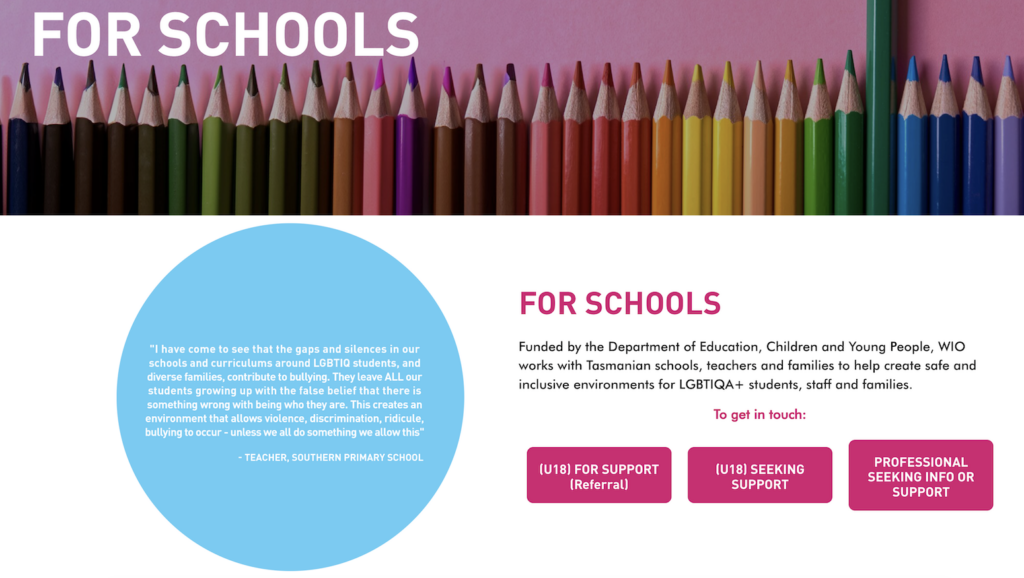
Women Speak Tasmania has reviewed the RTI decision, statement of reasons, and schedule of documents. What emerges is a troubling picture of limited transparency, extensive redaction, and barriers to informed parental consent.
What Was the RTI Requesting?
The RTI sought five categories of information covering the period from January 2023 to September 2025, including:
- funding and grant agreements between DECYP and Working It Out;
- training materials used in schools for Health and Physical Education (HPE), particularly around sexuality and gender diversity;
- resources provided to school nurses to support LGBTIQA+ students;
- departmental correspondence about Family Planning Tasmania’s Growing Up Program; and
- ministerial correspondence responding to complaints from parents and community members about LGBTIQA+ inclusion in schools.
In short, the request asked: What is being delivered in Tasmanian schools, who is delivering it, and on what basis?
The Decision: Release in Theory, Redaction in Practice
The RTI decision was made on 27 November 2025 by a DECYP legal delegate under the Right to Information Act 2009. While the Act operates on a presumption in favour of disclosure, that presumption was applied narrowly in this case.
Although more than 30 documents were identified—amounting to roughly 400 pages—the vast majority were either heavily redacted or withheld in full.
Only four documents were released in full. These were general advocacy reports on intersex issues, not operational school materials. A small number of emails and letters were released in part, with names and contact details removed.
Crucially, more than 300 pages of core material were withheld entirely, including:
- grant deeds and funding agreements with Working It Out;
- PowerPoint presentations used in schools;
- a Gender Affirmation Planning Guide;
- a Foster Pride Guide;
- and multiple flyers, flowcharts, and training resources used with staff and students.
For parents, this means that the documents most relevant to understanding what is taught in classrooms are precisely the documents they are not allowed to see.
Why Were So Many Documents Withheld?
DECYP relied primarily on two exemptions under the RTI Act.
The first was personal information, used to redact names and contact details in correspondence. While some redaction here is expected, even information relating to public officials was withheld on the basis that it might be misused.
The second—and far more significant—was the exemption for third-party business affairs. DECYP accepted Working It Out’s claim that its training materials are “commercial in confidence” and that releasing them could disadvantage the organisation or allow competitors to copy its work.
More concerningly, DECYP also accepted arguments that releasing these materials could cause social harm by enabling criticism or “misuse” of the content, particularly in relation to transgender and gender-diverse young people.
In effect, materials used in publicly funded schools were treated as proprietary products, shielded from public scrutiny—not because they contain trade secrets, but because their disclosure might provoke debate.
What This Means for Parents
For Tasmanian parents, the implications are serious.
You may be asked to consent to, or opt your child out of, lessons on sexuality and gender—but without access to the full materials, that consent cannot be truly informed. Parents are left relying on summaries, assurances, or trust, rather than being able to review content for themselves.
This lack of transparency risks undermining confidence in schools and in Respectful Relationships and HPE programs more broadly. It also sits uneasily alongside Tasmania’s Child and Youth Safe Standards, which emphasise family engagement and safeguarding.
Consent, Safeguarding, and the Bigger Picture
Tasmanian education policy recognises that parents must be notified of sensitive content and given the opportunity to opt out. However, the RTI outcome shows that third-party providers can effectively block parental scrutiny of the materials they deliver.
Without access to full resources, parents cannot assess whether programs are:
- age-appropriate,
- evidence-based,
- consistent with family values,
- or delivered in a way that prioritises children’s wellbeing.
Recent interstate incidents, such as the Renmark High School case in South Australia, demonstrate what can happen when safeguarding and oversight fail. Transparency is not optional—it is a core protection for children.
Why This RTI Matters
This RTI does not prove wrongdoing. What it demonstrates is something more fundamental: a system that resists scrutiny when parents ask reasonable questions.
When publicly funded education relies on opaque arrangements with external organisations, and when parents are denied access to the very materials used with their children, trust is eroded.
Women Speak Tasmania believes that informed consent, transparency, and safeguarding must come before ideology. Parents should not have to rely on leaks, media reports, or distressing incidents to discover what is happening in schools.
We will continue to advocate for parents’ right to know—because children’s wellbeing, not institutional convenience, must always come first.
RTI 076-2025/26 Documents HERE:
Disclaimer :
This is an edited copy of RTI 076-2025/26 released by the Tasmanian Department for Education, Children and Young People (DECYP) under the Right to Information Act 2009.
Edits were made only to reduce file size for sharing. The following documents, which were released in full in the original RTI, have been removed from this copy:
- Fixing Bodies and Shaping Narratives (15 pages)
- Normalisation of Intersex Bodies (8 pages)
- Toilets Matter (24 pages)
- Asleep at the Wheel (83 pages)
No other content has been altered. The full, unedited RTI is available via Right to Information disclosure log or contact the Department of Education.