
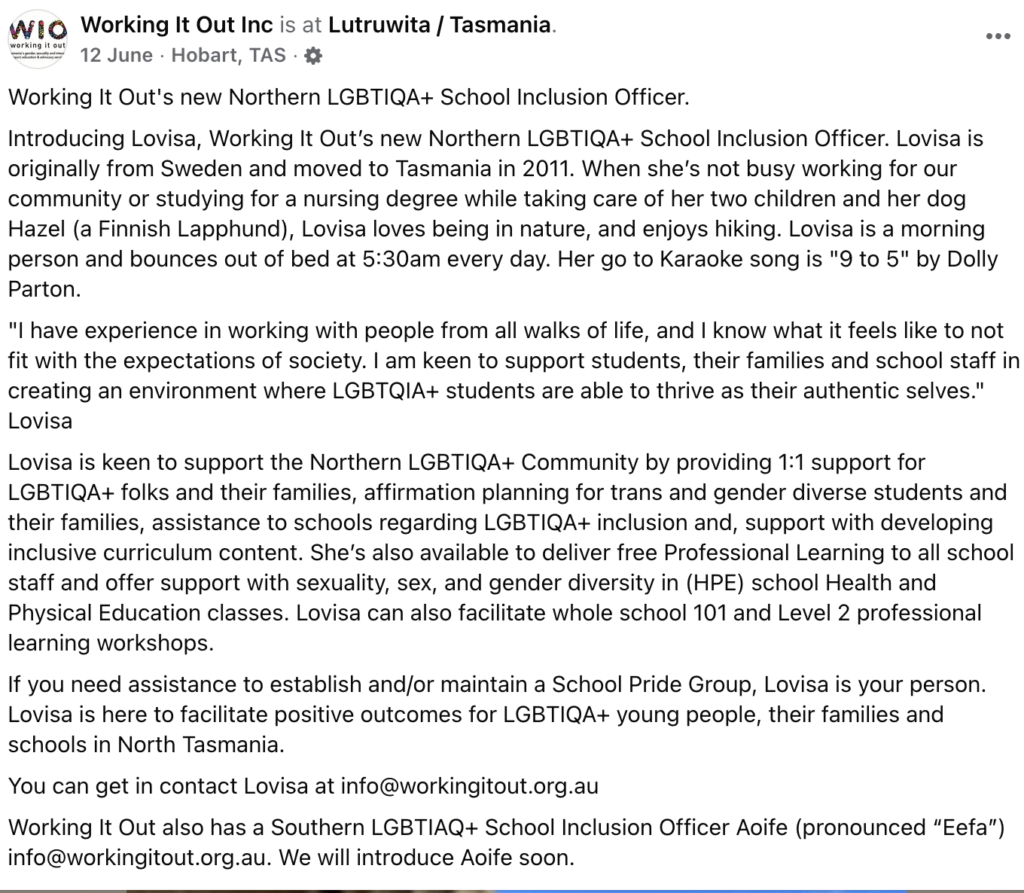
Recent information from multiple sources — including Working It Out Inc.’s own public statements — confirms that the organisation is actively involved in Tasmanian schools, providing “affirmation planning” for trans and gender-diverse students, assisting schools to develop “inclusive curriculum content,” and delivering professional learning to teachers on “sexuality, sex, and gender diversity.”
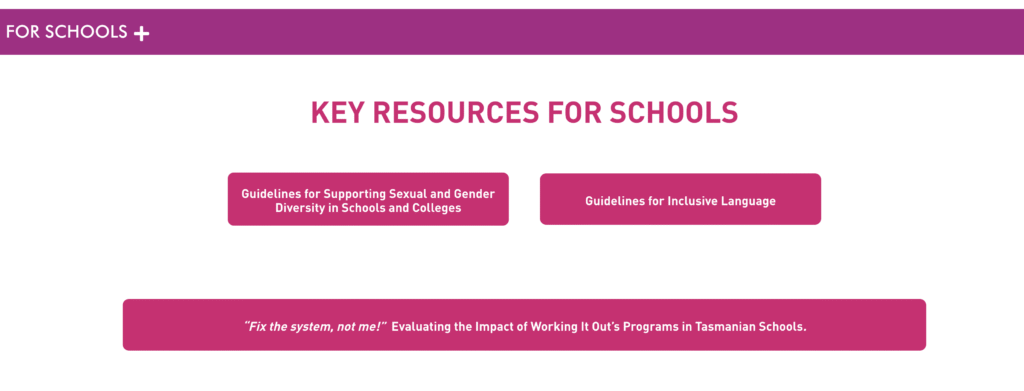
These activities, described in Working It Out’s official Facebook post introducing its new School Inclusion Officer, corroborate earlier reports about the organisation’s expanding role in education settings. Some materials obtained and analysed by Women Speak Tasmania in “Leaked Training Materials: A Closer Look” further reveal that such training includes discussion of social transition for children, breast binding, and language that replaces biological terms like “girls” and “women” with gender-neutral alternatives.
Social Transition and Safeguarding
Social transition — changing a child’s name, pronouns, and presentation at school — is not a neutral act. It can have profound psychological and social consequences, particularly when it happens without full parental knowledge and informed consent. International reviews, including the UK Cass Review, caution against affirming a child’s declared gender identity as the first and only response, especially when underlying distress or comorbid conditions may be present.
In Tasmania, there is currently no clear, transparent framework governing how social transition decisions are made in schools, who authorises them, or how parents are involved. If outside organisations such as WIO are facilitating “affirmation planning,” these activities must be subject to departmental oversight, evidence-based guidelines, and safeguarding protocols that centre parental involvement.
Breast Binding and Physical Health Risks
Breast binding — promoted in some training materials to teachers — is associated with well-documented physical risks, including respiratory restriction, skin damage, and musculoskeletal pain. The use of such practices among minors should never be normalised in school settings. While the leaked materials suggest binding is discussed as a supportive practice, there is no evidence that schools are providing balanced medical guidance or risk warnings to students or parents.
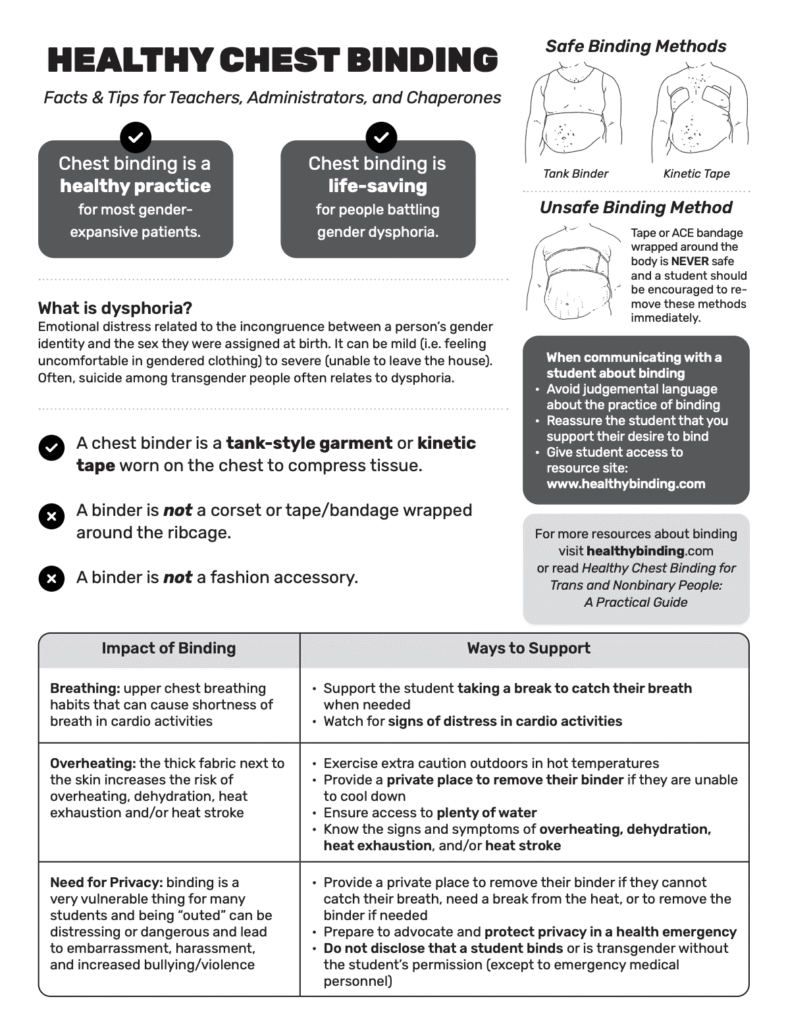
Introducing or endorsing these practices in educational environments without clinical supervision or parental consent raises serious ethical and legal concerns.
Why Parents Must Be Involved
The National Principles for Child Safe Organisations are clear: families are essential partners in safeguarding and must be informed and consulted in all decisions affecting their children. Yet none of the available evidence — including WIO’s own public communications — mentions any formal process for parental consultation or consent when affirmation planning or gender diversity training occurs in schools.
If external groups are working directly with students on matters of identity, wellbeing, or medical significance, parents have a right to transparency, access to materials, and an opportunity to decide what is appropriate for their child’s stage of development.
Time for Oversight and Transparency
Working It Out’s involvement in Tasmanian schools highlights a growing gap between child safety principles and educational practice. This is not about silencing support for LGBTIQA+ students — it is about ensuring that all school programs meet the same safeguarding, parental consent, and evidence-based standards required in any child-facing context.
Our Call
Women Speak Tasmania calls for:
- Mandatory parental access to all materials before sessions occur.
- Stop departmental policies on social transition and affirmation practices.
- Independent review of any health-related content presented to minors.
Protecting children and supporting families are not opposing goals — they are two sides of the same safeguarding principle.
Transparency, accountability, and parental partnership must be restored to every Tasmanian classroom.