Parents across Tasmania are raising serious concerns about the content being delivered to children in schools. Recent reports suggest that some educational materials are embedding “gender ideology” into the curriculum, leaving families worried about the appropriateness and influence of these lessons.
Allegations from Parents
Screenshots shared by concerned parents reveal that students are being exposed to materials promoting specific concepts of gender identity. These materials, distributed by the Department for Education, Children and Young People (DECYP), are causing alarm among families who believe the content oversteps appropriate educational boundaries. For clarity and readability, some images reproduced in this post have been digitally enhanced using AI to improve text quality and visibility, without altering the original content.
Case Study: Rosny College
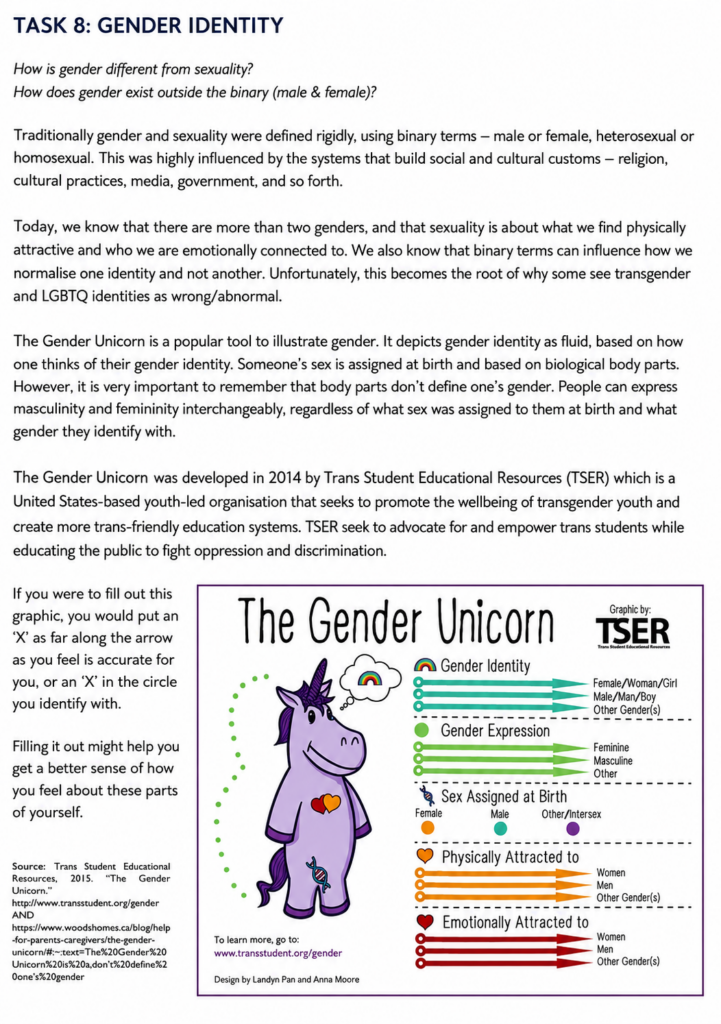
One prominent example comes from Rosny College, where students were reportedly encouraged to engage with the concept of the “Gender Unicorn” during compulsory-style weekly support-group sessions. Parents have raised concerns that these sessions move beyond teaching inclusion and respect, and instead introduce students to a contested ideological framework about sex and gender — often without meaningful parental awareness or consent.
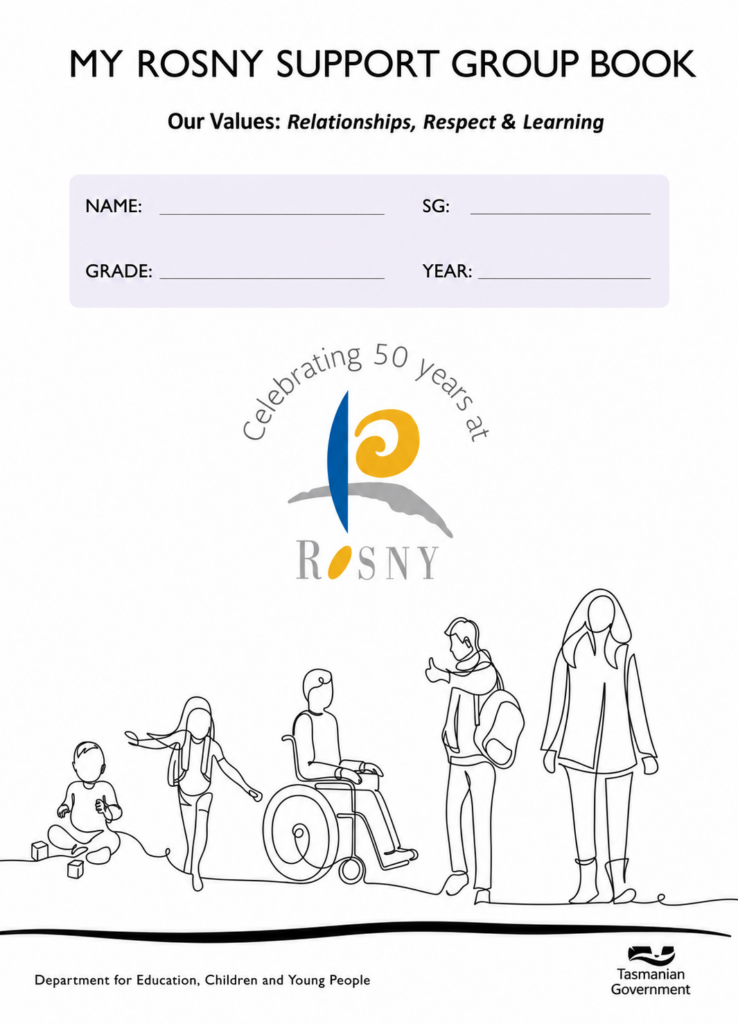
The workbook used in these sessions, My Rosny Support Group Book, asks students to reflect on questions such as:
• Define gender (in your own words)
• What does the Gender Unicorn model imply about the amount of genders and sexualities?
• How can the Gender Unicorn help people describe their identity?
• Is there anything you feel is missing from this illustration?
Students are also introduced to the idea that:
• biological sex and gender identity are separate,
• gender exists on a spectrum,
• pronouns should reflect self-identified gender,
• and sex itself should be described as “assigned at birth.”
This is not a neutral biology lesson.
The “Gender Unicorn” originates from activist educational resources and presents a particular philosophical view of human identity — one where gender is understood primarily as an internal personal feeling rather than a biological reality rooted in sex.
That distinction matters in a public secular education system.
Every student deserves dignity and respect. But there is a significant difference between promoting respectful behaviour and encouraging students to internalise a specific ideology about sex and identity.
Developmental psychology also raises important questions here.
According to Jean Piaget, adolescents are still developing the capacity for independent critical reasoning, identity formation, and evaluating abstract concepts. Young people are especially susceptible to peer influence, authority figures, and social reinforcement during this stage of development.
That is why critics argue schools should approach highly contested identity theories with caution — particularly in compulsory wellbeing settings where students may feel pressure to affirm or adopt particular beliefs.
Biological sex is a foundational scientific concept based on reproductive anatomy and function. Gender identity theory, by contrast, remains socially, philosophically, and psychologically contested.
In secular public education, schools should prioritise:
• evidence-based biology,
• critical thinking,
• transparency with parents,
• and genuine pastoral care,
rather than presenting activist-derived frameworks as settled fact.
Tasmanian parents have every right to ask:
Why are students being encouraged to journal about gender identity and attraction in compulsory support sessions?
Were families fully informed about these materials?
And why are contested theories being embedded into wellbeing programs at all?
This debate is about safeguarding children, respecting parents, maintaining educational neutrality, and ensuring public schools remain grounded in evidence rather than ideology.
Case Study: St Aloysius Catholic College
The materials provided to students at St Aloysius Catholic College go well beyond basic discussions of respect or anti-bullying. They introduce students to contested ideological concepts about gender, identity and society, including the claim that gender is socially constructed and primarily self-defined rather than connected to biological sex. These are not neutral or universally accepted ideas, yet parents report they were presented to children without clear parental knowledge or consent. Many families reasonably expect schools to focus on education rather than promoting particular theories about sex and gender, especially when those theories remain the subject of significant public, scientific, philosophical and political debate.
A Pattern of Concern
These incidents suggest that some Tasmanian schools may be adopting gender ideology content without adequate consultation with parents. For families and advocacy groups, this raises urgent questions about safeguarding children, transparency, and the role of schools in shaping beliefs on sensitive topics.
Women Speak Tasmania is committed to raising awareness and ensuring that families are informed about what children are being taught. Parents have the right to know and to have a say in their children’s education, particularly when it comes to issues of identity, ideology, and moral guidance.