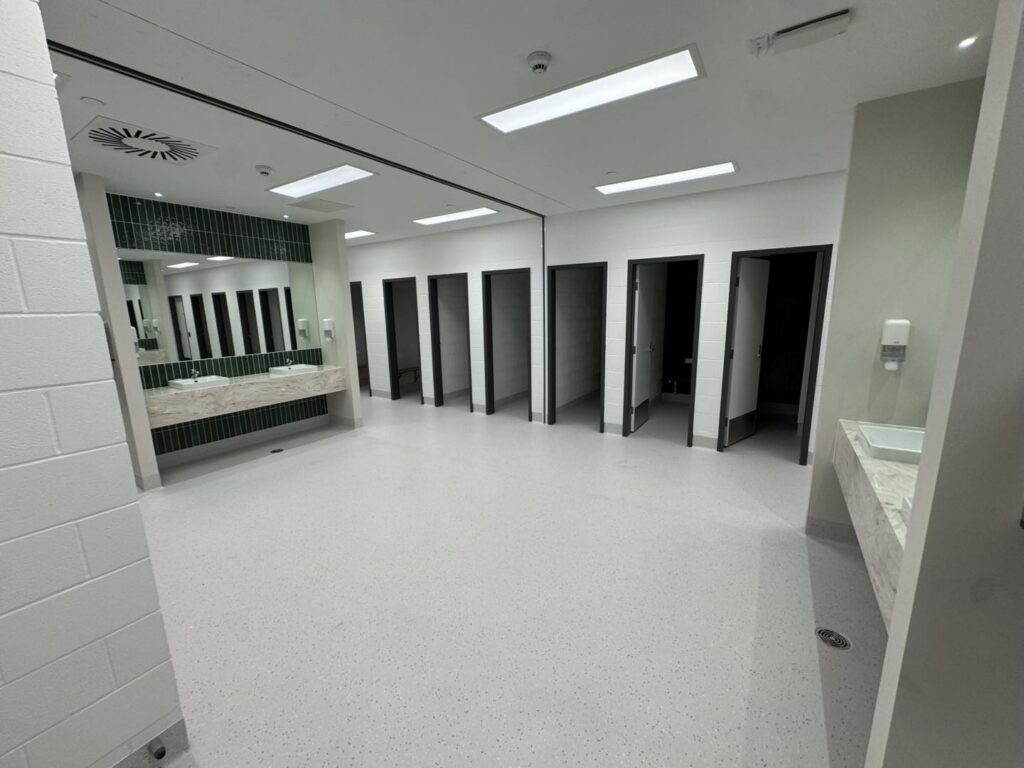
On 28 April, ABC Northern Tasmania Breakfast aired a segment on the new all-gender toilets and change facilities at Launceston’s Northern Recreation Hub in Mowbray. The issue was introduced as controversial, with listeners’ concerns about privacy, safety, hygiene, and female-only facilities briefly acknowledged before Mayor Matthew Garwood was interviewed onsite.
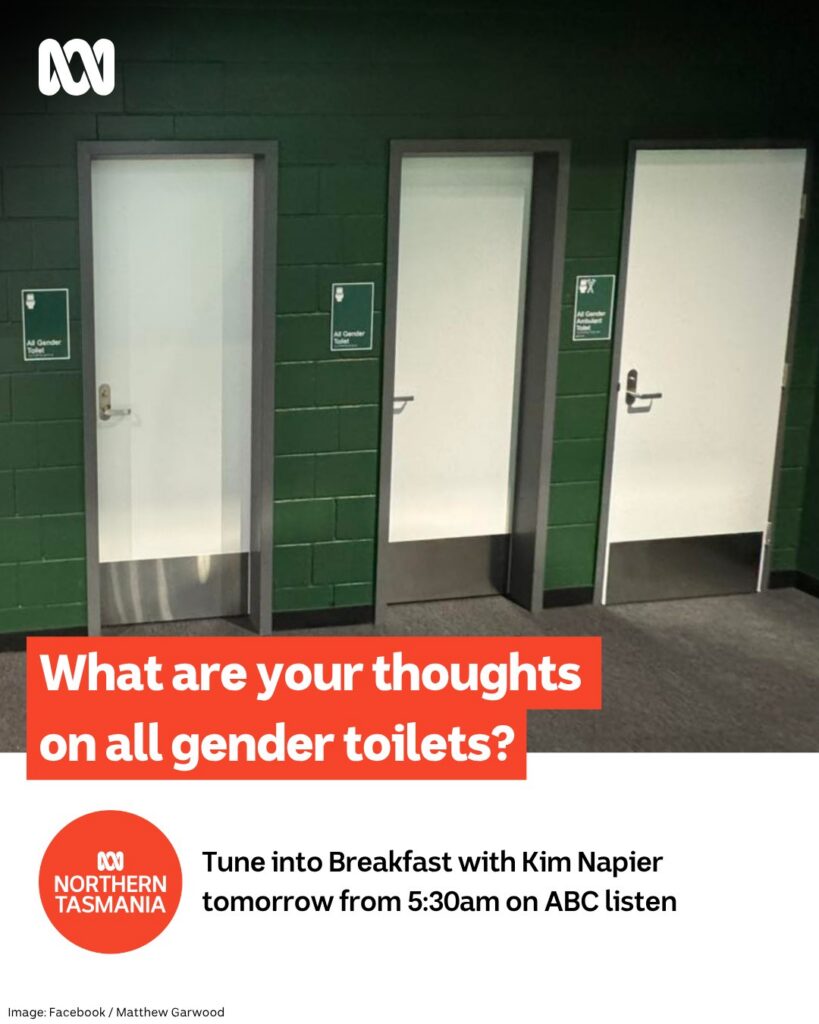
However, while the segment gave the appearance of balance, the discussion itself was overwhelmingly framed through the perspective of the mayor — who has already publicly declared strong support for the design.
Prior to the interview, Mayor Garwood had posted extensively on Facebook defending the facilities, encouraging the public to “go and see for yourself,” and describing the design as “modern, safe, practical” and “just about doing things better.” His public position was already very clear before the ABC segment aired.
A one-sided walkthrough
Rather than presenting a genuine debate between differing viewpoints, the ABC segment largely functioned as an opportunity for the mayor to reinforce and normalise the all-gender facility model with minimal challenge or scrutiny.
Throughout the interview, concerns raised by women and community members were repeatedly redirected into discussions about open handwashing areas, lighting, family convenience, disabled access, financial efficiency, and the idea that people simply need to “have an open mind.”
Mayor Garwood stated:
“I just really want to ask people, just have that open mind and just come have a look.”
Yet the central questions many women are raising were never seriously explored during the interview:
- Should major sporting venues still provide clear female-only spaces?
- Why were sex-separated facilities reduced or removed?
- Can fully enclosed, lockable cubicles create new safeguarding concerns?
- Were women and girls adequately consulted before these decisions were made?
- Why are objections consistently reframed as misunderstandings rather than legitimate policy concerns?
The segment also blurred together several separate issues — accessibility, family facilities, disability access, inclusion, and public safety. These are important considerations, but they are not interchangeable, nor do they automatically justify replacing female-only amenities with mixed-sex layouts.
Importantly, no representative from a women’s advocacy organisation, safeguarding perspective, or opposing community viewpoint was interviewed. Although listener texts expressing concern were read aloud, there was no meaningful follow-up or critical examination of those concerns.
Significant public concern ignored
The program briefly referenced an Australian Christian Lobby poll claiming that most Australians oppose replacing single-sex toilets with all-gender facilities, including a reported 90% of women preferring single-sex toilets. Similar claims have been circulated more broadly during the National Construction Code debate.
Whether people agree with those campaigns or not, the existence of significant public concern makes the absence of contrasting voices in the interview even more noticeable.
Instead, the overall framing suggested the issue was largely a matter of public discomfort that could be resolved through better explanation and modern design.
Public broadcasters play an important role in facilitating difficult conversations fairly and openly — especially when community views are clearly divided. On issues involving women’s privacy, safeguarding, and public infrastructure, many listeners expect more than reassurance messaging and light-hearted banter.
This debate is not simply about whether facilities are “modern” or “inclusive.” It is about whether women and girls continue to have meaningful access to female-only spaces in public sporting environments, and whether those concerns are being genuinely heard.
Community debate deserves more than a one-sided walkthrough.
Source: ABC Northern Tasmania Breakfast with Kim Napier 28.04.26