
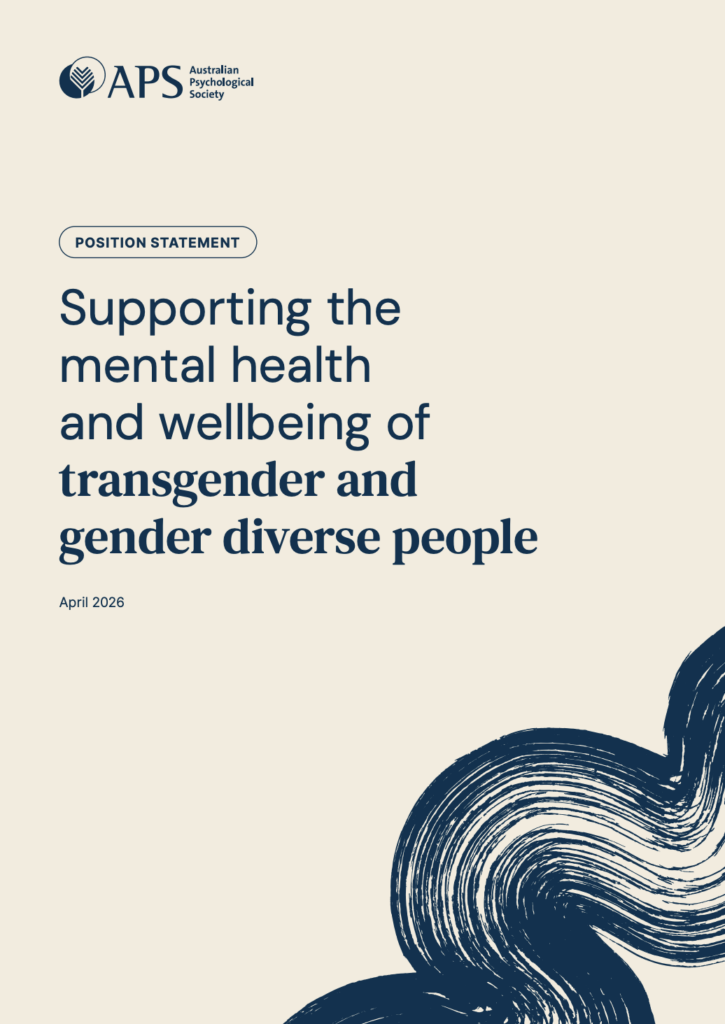
Australia’s peak body for psychologists, the Australian Psychological Society (APS), has released a new position statement titled “Supporting the mental health and wellbeing of transgender and gender diverse people.”
The document was presented as an updated, evidence-informed position on psychological care for transgender and gender-diverse Australians. However, its release has prompted criticism from some clinicians, researchers, parents, and commentators who argue the final version does not adequately engage with emerging international evidence or provide sufficient practical guidance for psychologists working with gender-distressed young people.
What the APS Statement Says
The APS describes the document as a “high-level principles-based” statement rather than a clinical guideline or systematic review. It states that psychologists should provide ethical, evidence-based, person-centred care and notes the field is evolving rapidly.
Among its key positions are:
- Support for “affirming practices” that help transgender and gender-diverse people “thrive”
- Emphasis on respectful language, including preferred names and pronouns
- Recognition that psychologists may support clients considering social, legal, or medical transition
- A recommendation for “thorough psychological assessment and case formulation”
- A warning against practices aimed at suppressing or changing a person’s gender identity, which the statement links to conversion practices
The APS also states that psychologists do not provide medical advice and must work within their professional competence.
Concerns Raised by Critics
Some psychologists and academics have publicly criticised the final statement, particularly because earlier draft references to the UK’s Cass Review and other evidence reviews reportedly did not appear in the published version.
Clinical psychologist Sandra Pertot, who reportedly participated in earlier discussions, described the changes as disappointing and argued the final statement places less emphasis on exploratory assessment before affirmation.
Emeritus Professor Dianna Kenny and child psychiatrist Jillian Spencer have also criticised the APS approach, arguing that the statement does not sufficiently reflect international developments or uncertainty around long-term outcomes for young people undergoing medical transition.
Journalist Claire Lehmann and writer Bernard Lane have similarly questioned why the APS omitted reference to reviews such as the Cass Review, which examined evidence relating to youth gender medicine in England.

The Broader Debate
The debate reflects wider international disagreements over how best to support children and adolescents experiencing gender distress.
Countries including Finland, Sweden, and England have moved toward more cautious clinical approaches for minors, citing limited evidence for long-term benefits of medical interventions and the need for more comprehensive psychological assessment. Critics of the APS statement argue these developments deserved greater acknowledgement.
Supporters of affirming care, however, argue that transgender and gender-diverse people face elevated mental health risks due to stigma, discrimination, and social exclusion, and that affirming approaches remain supported by many professional organisations internationally.
The APS itself states that psychologists should rely on “reputable, evidence-based sources” and acknowledges that the field continues to evolve.
Concerns About Clinical Practice
One issue raised repeatedly by critics is whether psychologists now have enough practical guidance for complex cases involving:
- Co-occurring mental health conditions
- Autism spectrum disorder
- Trauma histories
- Same-sex attraction
- Rapid-onset presentations in adolescence
- Family conflict or social pressures
Some clinicians argue that the current legal and professional climate may discourage open-ended exploratory therapy because of concerns about conversion-practice laws or professional complaints. Others reject this characterisation and maintain that exploratory therapy remains appropriate provided it is not aimed at changing a person’s identity.
The APS statement does recommend assessment and case formulation, but some psychologists say the document provides limited detail about how to navigate difficult presentations in practice.
What This Means for Families
For families seeking psychological support for a gender-distressed child or teenager, the debate may feel confusing and highly polarised.
Parents may wish to ask prospective clinicians questions such as:
- How do you approach assessment and differential diagnosis?
- How do you explore co-existing mental health concerns?
- What role do families play in the process?
- How do you discuss uncertainty, risks, and long-term outcomes?
- What is your approach to social transition in younger patients?
Regardless of viewpoint, most parties in this debate agree that vulnerable young people deserve compassionate, careful, and evidence-based care.
A Discussion Far From Settled
The APS has defended the statement as evidence-informed and person-centred, while acknowledging the area remains complex and rapidly developing.
With the ongoing NHMRC review in Australia and continuing international reassessments of youth gender medicine, it is likely this debate will continue.
Many psychologists, parents, clinicians, and advocates — on all sides — are calling for clearer evidence, better-quality long-term research, and open professional discussion without fear of stigma or professional repercussions.
Evidence-based care, transparency, and thoughtful clinical practice should remain central to that conversation.