
Equality Australia presents itself as the nation’s leading LGBTIQ+ advocacy organisation, dedicated to advancing equality for lesbian, gay, bisexual, transgender, intersex and queer Australians. Founded in 2018 in the wake of the successful same sex marriage campaign, the organisation has grown into a powerful presence in Australia’s legal, political and media landscape. With high-profile patronage, including Governor-General Sam Mostyn, and a strong network of legal and policy advocates, Equality Australia now plays a central role in shaping national conversations about sex, gender and anti-discrimination law.
Yet in recent years, its direction, priorities and methods have prompted growing scrutiny. Its legal interventions, funding arrangements, and increasingly central focus on gender identity have raised a legitimate public question: when Equality Australia speaks of “equality,” whose equality is being prioritised?
From Same Sex Marriage to Gender Identity Reform
Equality Australia emerged from the same-sex marriage reform in 2017. Under CEO Anna Brown, the organisation positioned itself as a specialist legal and policy body working to secure equal rights for LGBTIQ+ Australians.
In its early phase, the organisation was widely viewed as a unifying force within the lesbian and gay community. However, as policy debates shifted beyond marriage to questions of gender identity law, sex-based rights and medical treatment for minors, Equality Australia’s focus evolved accordingly.
The organisation has advocated for:
- expanded anti-discrimination protections based on gender identity
- broader recognition of trans and gender-diverse identities in law
- access to gender-affirming medical care for young people
- legal interpretations of “sex” that include gender identity rather than biological definition
Equality Australia welcomed the 2024 Federal Court decision in Tickle v Giggle, which ruled that excluding trans-identified male Roxanne Tickle from a female-only networking app constituted unlawful discrimination. The organisation later sought to intervene in the appeal, arguing that “sex” under the Sex Discrimination Act should not be confined to biological characteristics fixed at birth.

For supporters, this reflects a principled commitment to protecting transgender Australians from discrimination. For critics, it signals a fundamental redefinition of sex-based rights.
Funding and Deductible Gift Recipient Status
In 2023 and 2024, Equality Australia’s application for Deductible Gift Recipient (DGR) status was rejected by the Administrative Appeals Tribunal and later upheld by the Federal Court, which found the organisation primarily engaged in advocacy rather than benevolent relief.
During this period, Equality Australia partnered with Thorne Harbour Health, an established HIV/AIDS charity with DGR status, to process tax-deductible donations through an auspicing arrangement. The organisation has stated this is a common and lawful practice in the not-for-profit sector.
In March 2025, the federal government approved DGR status for Equality Australia, reversing the earlier outcome. The decision attracted political attention because DGR status effectively subsidises donations through foregone tax revenue.
Supporters argue that many advocacy organisations receive DGR status and that law reform is a legitimate charitable purpose. Critics contend that public subsidy of contentious policy advocacy deserves careful scrutiny.
A Divided LGBTIQ+ Sector
The most significant controversy, however, lies not in tax status but in internal community division.
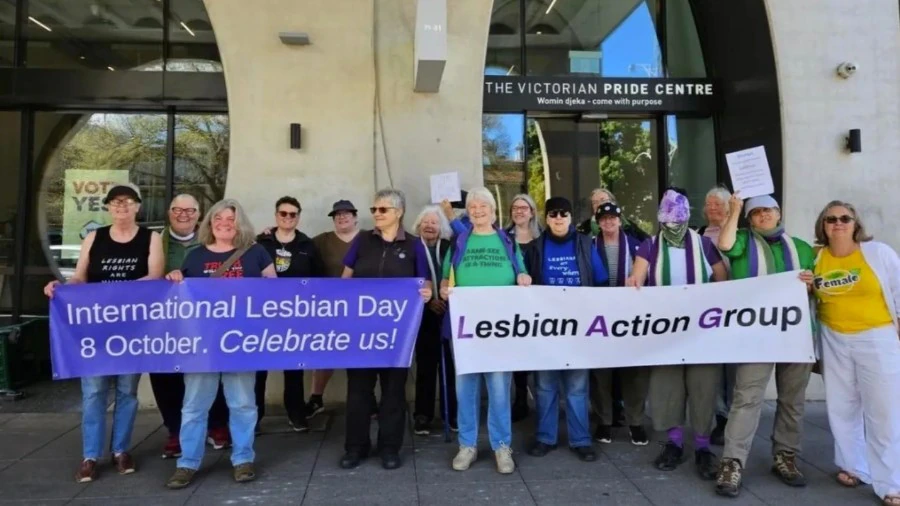
The Tickle v Giggle case exposed fault lines within the broader LGBTIQ+ umbrella. Lesbian organisations such as the Lesbian Action Group and LGB Alliance Australia argued that redefining sex to include gender identity risks undermining same-sex association rights and female-only spaces.
Equality Australia, by contrast, argues that excluding trans- identified males from women’s spaces constitutes discrimination inconsistent with modern equality law.
This disagreement is not merely semantic. It goes to the heart of how Australian law defines “woman,” “sex,” and the boundaries of lawful association.
Some lesbian groups have accused major advocacy bodies of sidelining same-sex attraction in favour of gender identity frameworks. Equality Australia rejects this characterisation and maintains that advancing trans equality does not diminish lesbian, gay or bisexual rights.
Nonetheless, the division is real and increasingly public.
Why the Debate Matters
The disagreement surrounding Equality Australia is not simply about one organisation or one legal case. It reflects a broader question facing liberal democracies: how should competing rights claims be resolved when they appear to conflict?
At the centre of the debate are two foundational principles.
On one hand, there is the argument that equality requires the legal recognition of gender identity, including redefining “sex” in certain contexts to prioritise self-identified gender.
On the other, there is the view that equality also depends on maintaining clear sex-based distinctions in law — particularly where they protect women’s spaces, same-sex association, and the rights of lesbians and gay men to organise and gather on the basis of biological sex.
These positions are not merely abstract philosophical disagreements. They affect the interpretation of the law, the operation of single-sex services and sporting categories, and the scope of freedom of association.
What is now evident is that Australia is no longer debating whether rights tensions exist. The central question is how they should be balanced — and whether open, good-faith discussion is permitted when those balances are contested.