
After much controversy, the push to encourage “trans and gender diverse” use of Hobart’s public toilets is to result in signage derided as “meaningless”.
The Hobart City Council has for months been wrestling with the wording of poster-style signs urging acceptance of people using the toilet — male or female — that aligns with the gender with which they identify.
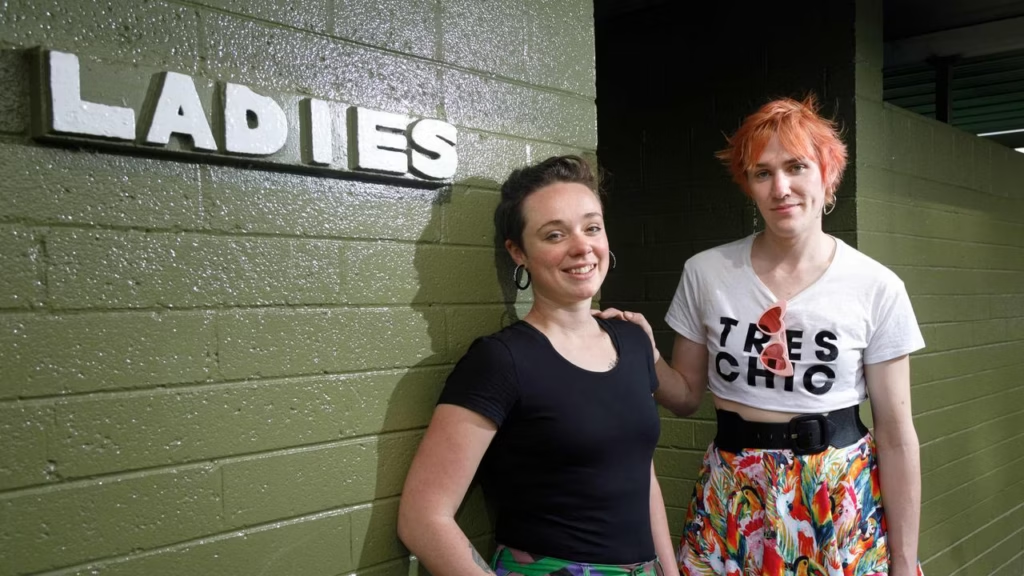
After consultation, council officers have decided a form of words to be voted on by the parks and recreation committee on Thursday.
The posters, to be displayed in public toilets on rotation with other health and community notices, will say: “We all need somewhere to go. If we accept that our bodies come in all different shapes and sizes and respect each other’s privacy, then everybody can feel safe in here.”
Some on both sides of the debate are underwhelmed.
“It’s a bit non-committal,” transgender activist Martine Delaney of Transforming Tasmania said.
“It’s great that it’s suggesting inclusion but it doesn’t seem to be wanting to push any boundaries. It sounds very much like a statement that was cooked up by a committee
“But it’s a starting point, and you’ve got to say congrats to the council for that.”
The non-binary councillor behind the push, Holly Ewin, said: “I had hoped for something a lot more explicit but maybe the final design will have pictures that make it more so.
“And if this is what the relevant groups want to make them feel safer, then it’s OK by me.”
Feminist group Women Speak Tasmania said the wording was “meaningless” and “vague” while still concerning in light of the state’s new laws allowing people to change gender by statutory declaration.
“The signs give confusing and mixed messages to women, who have a right to safe, female-bodied sex-segregated facilities,” WST spokeswoman Isla MacGregor said.
While backing the installation of the temporary posters in toilets, the council report recommended against permanent signage, the ultimate aim of the original motion.
“The installation of trans and gender diverse posters may have unintended social consequences and as such a three-month temporary poster installation is seen as a good starting point,” the report said.
It said the posters “may create a backlash of discriminatory comment in the public sphere” and future permanent signage may need to be more broadly worded, given “people from different cultural backgrounds” may see them “differently”.
Ms MacGregor said “unintended social consequences” could be a reference to potential attacks on women or to concerns the removal of sex-segregated toilets may offend people of the Muslim or Jewish faiths.
Supporters of the poster push were unsure what the phrase referred to.
by Matthew Denholm
Source: The Australian