
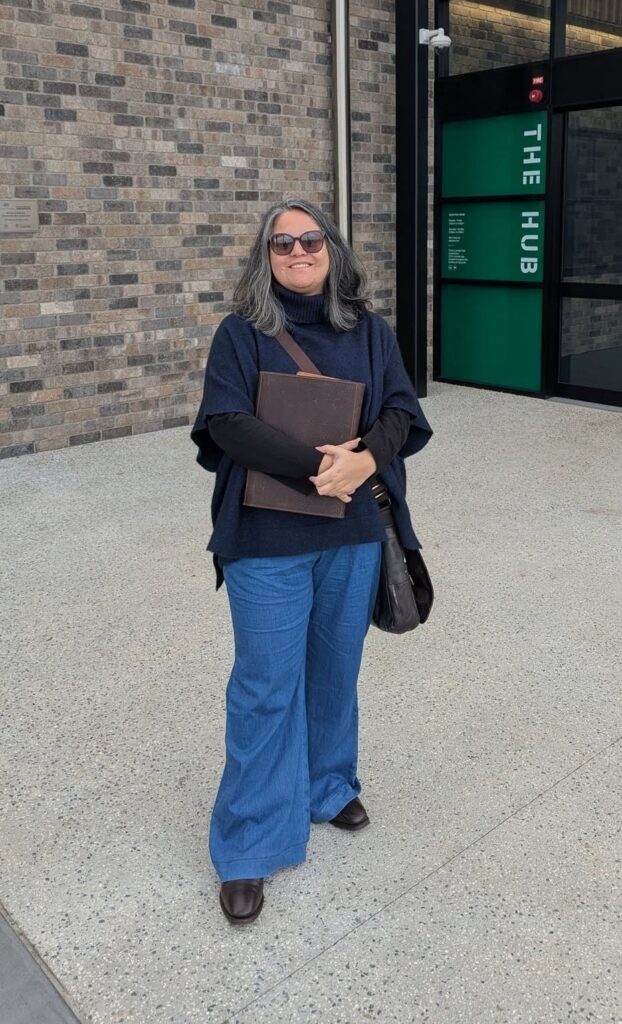
On 29 May 2026, representatives from Women Speak Tasmania attended the Northern Suburbs Community Recreation Hub in Mowbray following an invitation from the Tasmanian Department of State Growth to inspect the facility’s all-gender amenities and discuss the design philosophy underpinning the project.
As previously outlined in correspondence from Minister for Sport Nick Duigan, the Hub’s amenities were designed according to Crime Prevention Through Environmental Design (CPTED) principles — an architectural approach that emphasises visibility, passive surveillance, open circulation, and the reduction of isolated spaces as strategies for improving safety and reducing antisocial behaviour.
Alex Barber, Director of the Major Infrastructure Projects Branch within Infrastructure Tasmania, guided the tour and answered questions about the design and operation of the facilities. While some questions remain pending our Right to Information request, the visit gave us valuable firsthand insight.
Before examining the newer all-gender model adopted at the Hub, however, it is worth taking a brief journey through the history of public toilets and change room design itself.
The Architecture of Women’s Spaces: Privacy, Boundaries, and Communal Oversight
For much of modern history, public toilets and change rooms balanced personal privacy with practical oversight. Women’s facilities in particular evolved as sex-segregated communal spaces that provided both dignity and informal safeguarding.
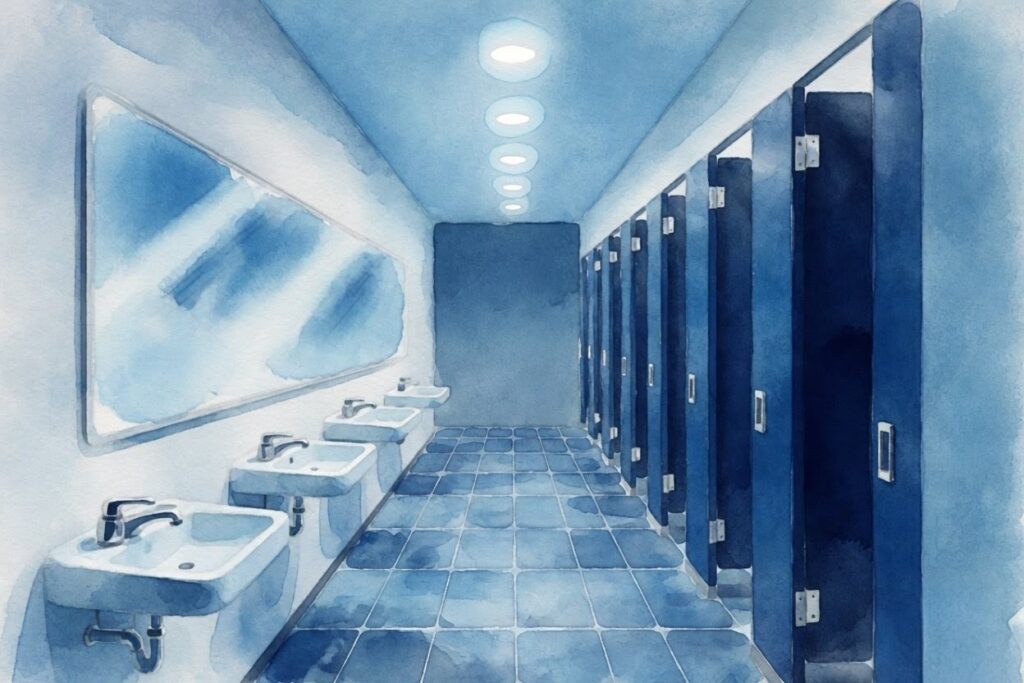
These spaces established clear territorial boundaries and shared behavioural expectations. Privacy was moderated rather than absolute. Traditional cubicles often included gaps beneath doors for better ventilation, easier cleaning, and emergency visibility — allowing staff or other users to quickly check if assistance was needed. This was especially important given women’s higher average occupancy times due to menstruation, pregnancy, and childcare responsibilities.
Fully enclosed spaces, by contrast, increase isolation during emergencies, which is why accessible toilets typically include emergency buttons. Traditional design therefore achieved safety through a careful balance of privacy, visibility, and communal awareness.
The Rise of CPTED and the Shift Toward Universalised Spaces
By the late 20th century, growing concerns about crime, vandalism, and antisocial behaviour led to the development of Crime Prevention Through Environmental Design (CPTED). Emerging in the 1970s and 1980s, CPTED argues that the built environment can reduce opportunities for crime by increasing visibility, strengthening territorial awareness, enhancing natural surveillance, and minimising isolated or hidden spaces.
While often misunderstood as simply promoting openness, CPTED also recognises the importance of clear boundaries, territoriality, and behavioural cues. Historically, sex-segregated amenities served as a powerful form of territorial definition. Female-only spaces communicated expected standards of behaviour and provided women and girls with a sense of psychological safety and mutual protection through informal communal oversight.
The Northern Suburbs Community Recreation Hub applies CPTED principles differently. Instead of relying on sex-defined communal rooms with internal oversight, the design favours fully enclosed individual cubicles that open directly onto visible, open circulation areas. According to the Tasmanian Government, this approach maximises safety and accessibility by eliminating hidden communal spaces and relying on passive surveillance, lighting, and continuous public movement.
This represents a significant philosophical shift in public facility design. Traditional women’s amenities balanced privacy with communal female oversight inside clearly sex-segregated spaces. The newer model prioritises universal access, individual privacy, and external environmental surveillance. This fundamental change lies at the centre of the controversy surrounding the Hub.
Inside the Hub: First Impressions and the Netball Court Amenities
Having explored the historical evolution of public amenities and the architectural principles that influenced the Hub’s design, we turned our attention to the facility itself.
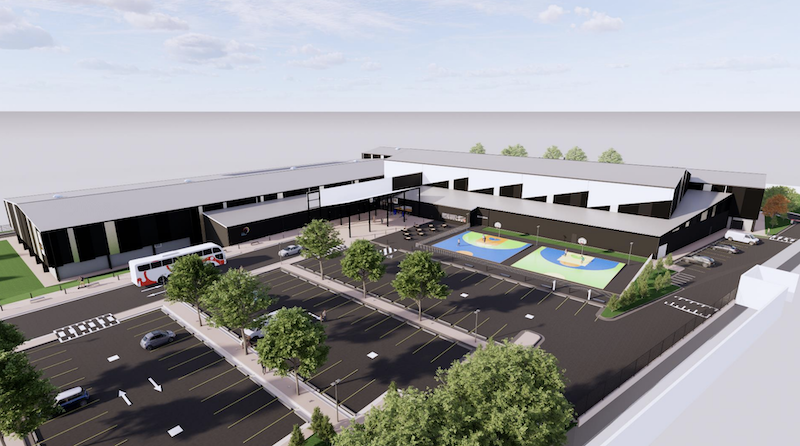
The Northern Suburbs Community Recreation Hub is an impressive large-scale community facility housed within a repurposed warehouse structure. The building benefits from high ceilings, abundant natural light, and an open-plan layout that creates a bright and welcoming atmosphere. Throughout the tour, the facility appeared exceptionally clean, modern, and well maintained.
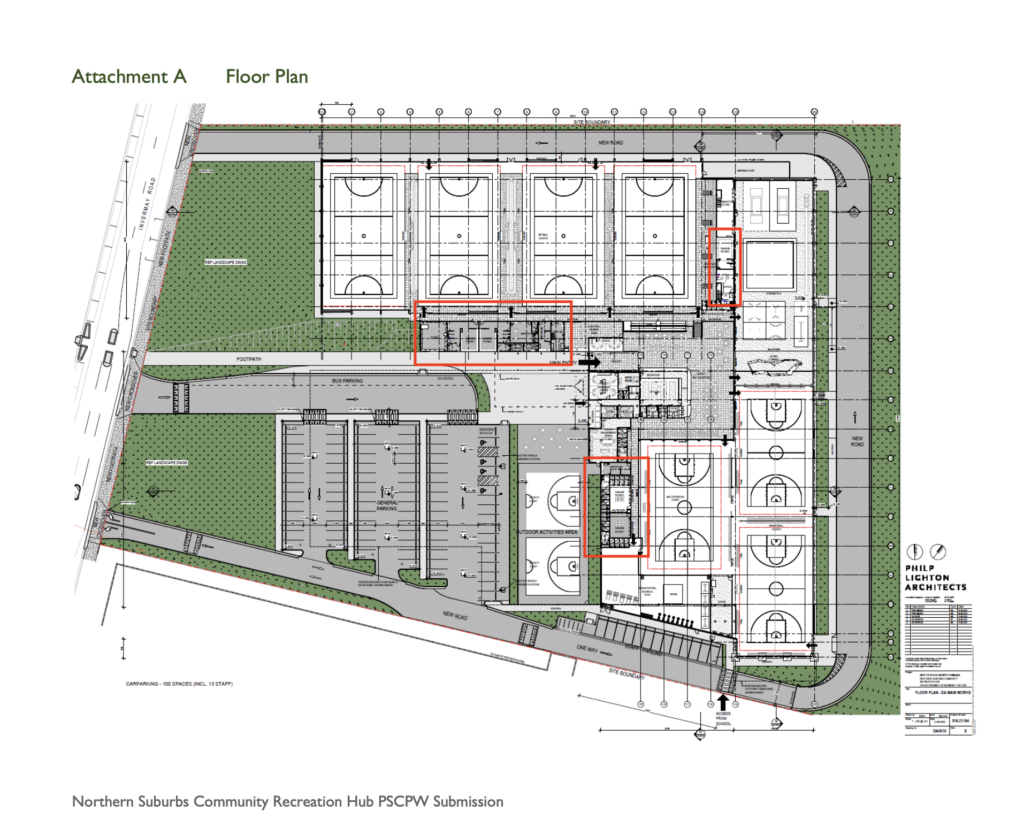
Our inspection focused primarily on the toilet and change room facilities located within the two main amenities precincts, as well as the change room facilities servicing the gymnastics area.
At first glance, several positive features were immediately apparent. Ventilation, cleanliness, disability access, and privacy appeared to have been carefully considered throughout the facility. The finishes were modern and practical, with bright, well-lit spaces and a consistent design aesthetic.
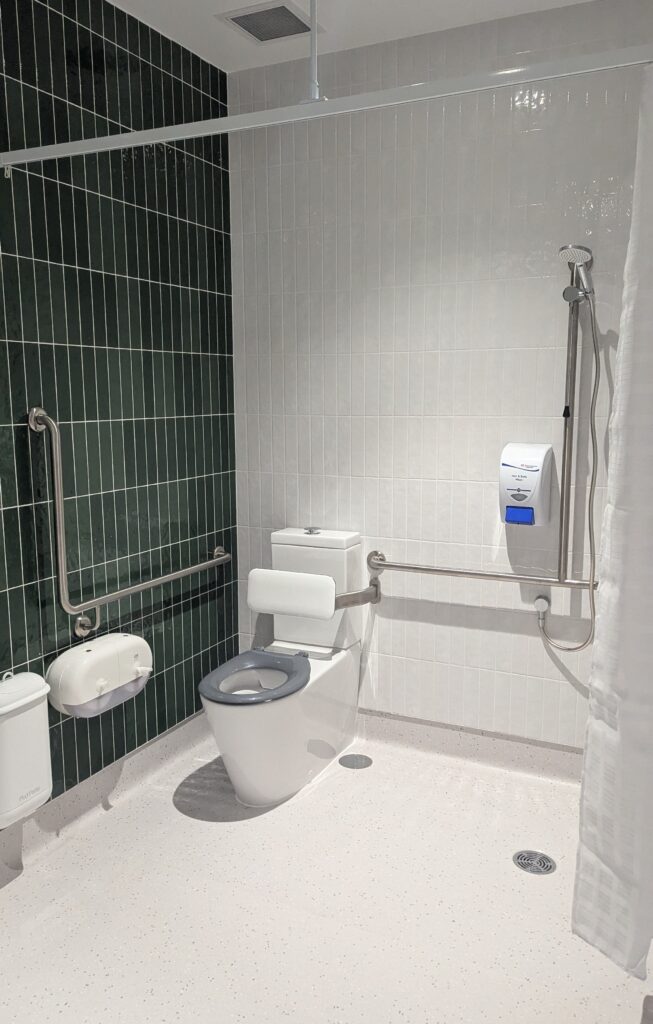
One of the most impressive features was the provision of disabled toilet facilities. We inspected a large disabled toilet located near the gymnastic area, which also incorporated a disabled-access shower. The room was spacious, thoughtfully designed, and provided ample room for wheelchair users, carers, mobility equipment, or parents with prams. It represented a high standard of design and would likely be considered among the better examples of such facilities in Tasmania.
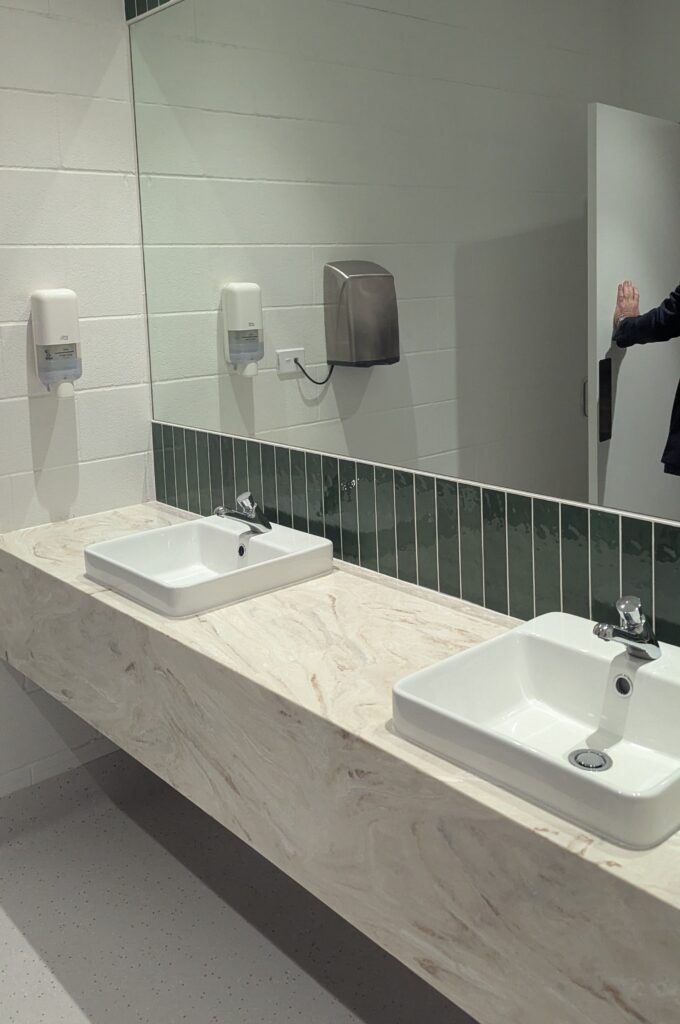
We also viewed the all-gender ambulant toilet facilities. These consisted of individual floor-to-ceiling cubicles, each containing its own hand basin. Unlike traditional public toilet designs, the cubicles were fully enclosed, providing a high degree of individual privacy. We were advised that this approach was intended to maximise privacy and dignity while relying on the building’s overall ventilation system rather than the traditional open gaps beneath cubicle doors. The cubicles were bright, clean, and finished with modern white and dark green tiling.
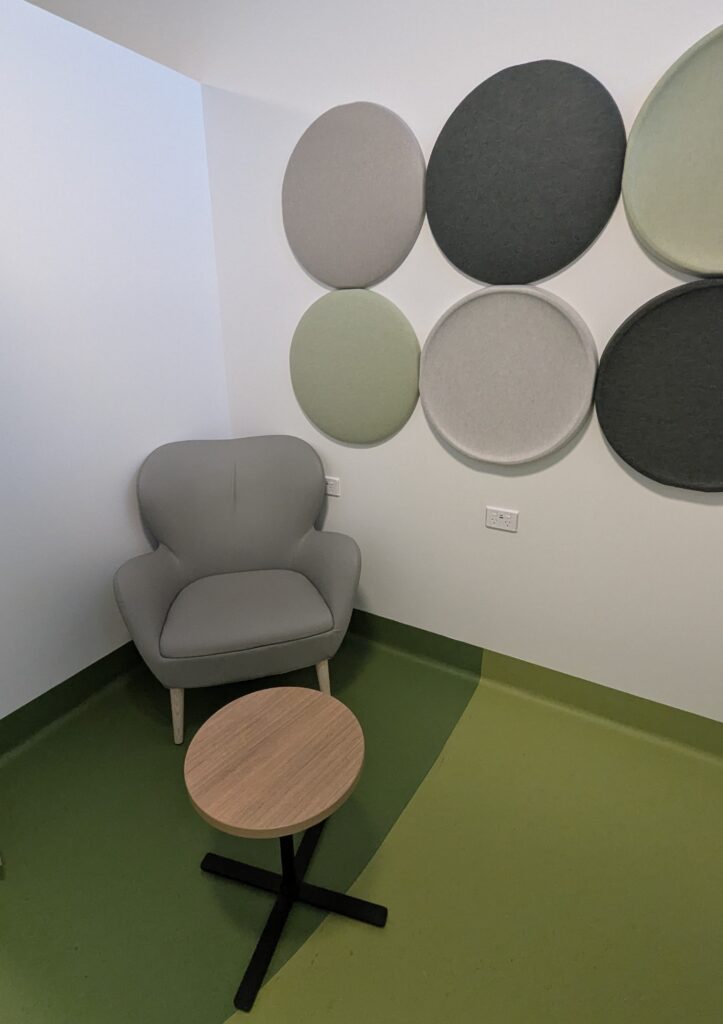
Parent rooms were similarly well appointed. Dedicated rooms provided comfortable seating suitable for breastfeeding and sufficient space for parents using prams. These facilities appeared practical, private, and family-friendly.
We were also informed that the Hub incorporates an extensive surveillance system throughout the building. According to staff, the system includes facial recognition capabilities and forms part of a broader safeguarding strategy intended to reduce the risk of children becoming separated from parents or carers, while also supporting general security and supervision throughout the facility. This approach was presented as consistent with contemporary safety planning and the overall design philosophy of the Hub.
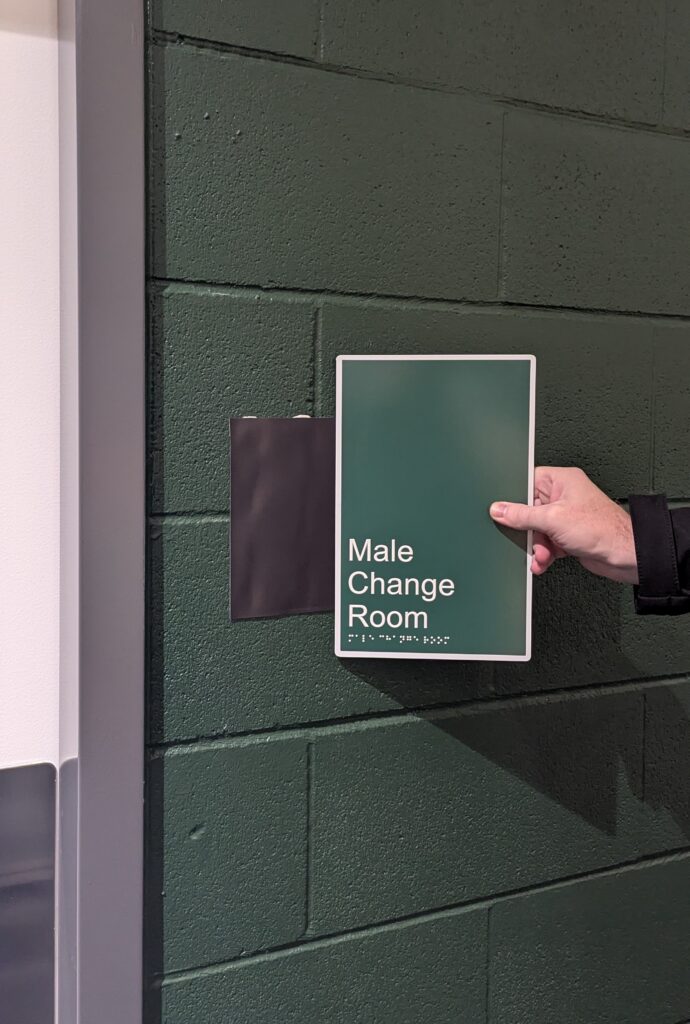
The amenities block opposite the netball courts includes dedicated male and female change rooms and toilets, plus a separate umpire room. A magnetic signage system allows these rooms to be reassigned for single-sex events, such as all-female netball competitions. These spaces are conveniently located yet sufficiently separated from the courts, with fully enclosed internal cubicles and generous bench areas for players’ belongings. Water dispensers further support their sporting purpose.
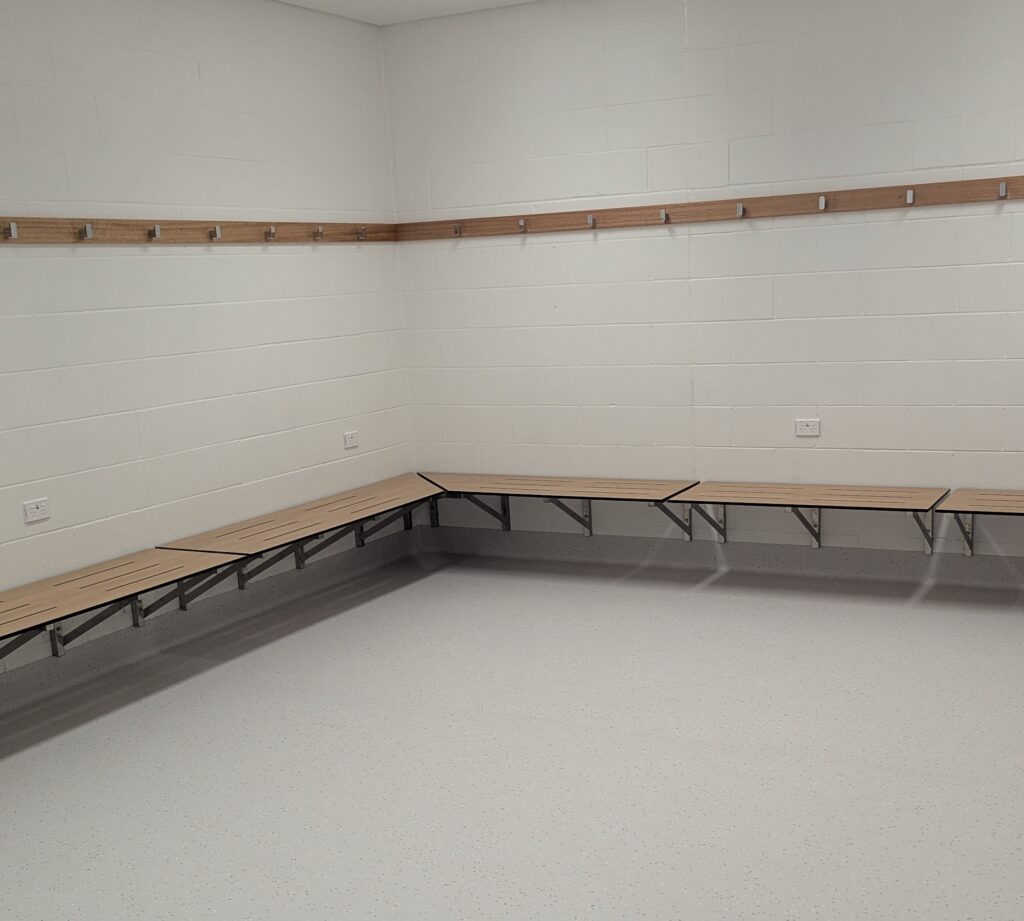
One question that arose during the tour concerned the current designation of these facilities. Community members may recall that the Hub’s amenities attracted controversy when they first opened. It remains unclear whether the male and female designations now in place were part of the original operational plan or whether the current signage arrangements evolved in response to community feedback and user preferences. This is another matter on which we hope to obtain further clarification.
The Main Amenities Precinct and Gymnastic Facilities
The second amenities precinct we inspected was located adjacent to the gym and multi-purpose court areas. This section of the facility has attracted the greatest level of public discussion and is the area most frequently referenced in community concerns regarding the Hub’s all-gender design.
Unlike the netball court amenities, which operate primarily through dedicated male and female change rooms, this precinct adopts a more open and flexible configuration intended to accommodate a broad range of users and sporting activities.
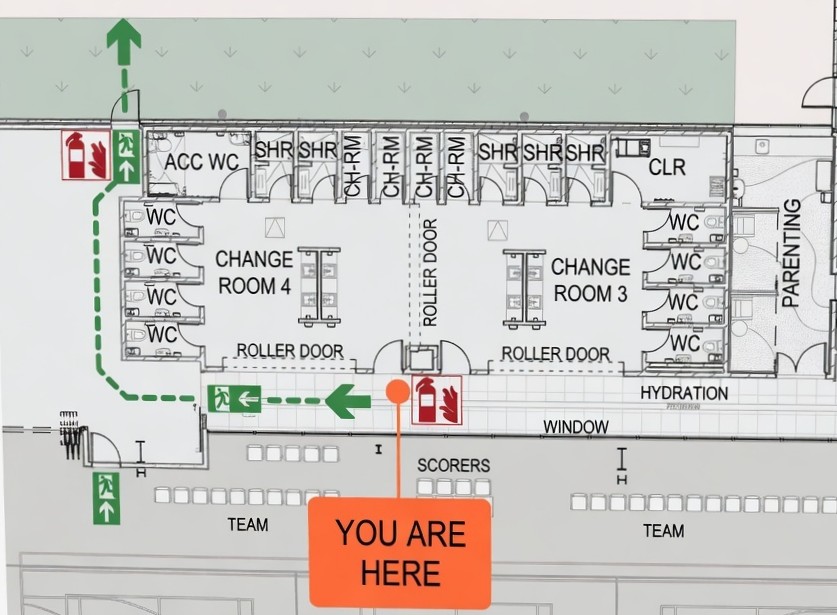
At the centre of the precinct is a large open-plan change room area designed for use by all genders. Facility representatives explained that flexibility was a key consideration in the design. Large roller doors have been installed at strategic locations throughout the space and can be closed when required to create separate male and female sections during major sporting events, competitions, or specific bookings, with a door that is already built for purpose when the area is fully enclosed.
According to staff, this arrangement allows the facility to adapt to the changing needs of different user groups while maintaining the capacity to accommodate large numbers of participants during peak periods.Adjacent to the open change room area are a number of all-gender ambulant toilet cubicles together with disabled toilet facilities.
During the tour, we also received feedback from a facility user regarding one of the cubicle locking mechanisms. The lock was reportedly not functioning correctly, making it difficult to determine whether the cubicle was occupied. While this appeared to be a maintenance issue rather than a design feature, it highlighted the importance of reliable hardware within a high-use public facility where privacy depends heavily on the effective operation of individual cubicles.
The open-plan nature of the precinct represents a significant departure from traditional sporting change room layouts. While the roller-door system provides the capacity to create separate spaces when required, the default arrangement remains a shared open environment capable of being configured according to operational needs.
Our tour also included the gymnastics area and its associated facilities. Unlike the main amenities precinct, there are no toilet facilities located directly within the gymnastics area itself. Users must instead access the nearby main amenities precinct.
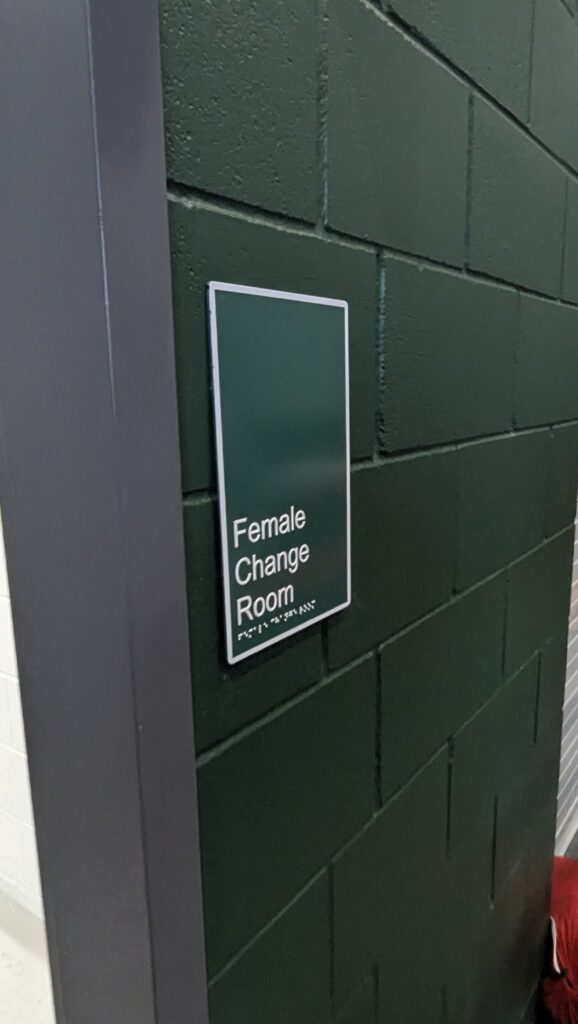
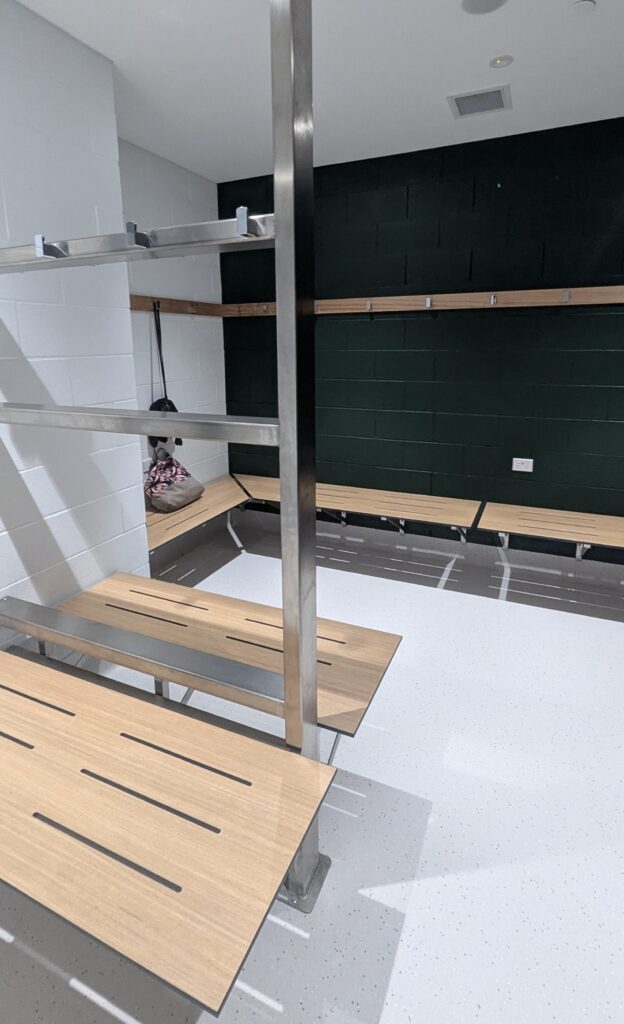
However, dedicated male and female change rooms have been provided adjacent to the gymnastics storage area. These change rooms are spacious, well located, and benefit from good visibility and supervision from surrounding areas. Each room also contains a small enclosed cubicle for users who require additional privacy when changing.
From a practical perspective, the gymnastics change rooms appeared more closely aligned with traditional sporting facility layouts, combining sex-segregated spaces with the option of additional private changing facilities where required.
Questions Raised During the Tour
While the tour provided valuable insight into the design philosophy and operation of the Hub, several important questions remained only partially answered or unresolved.
Representatives advised that consultation took place with government stakeholders, sporting organisations (including the Northern Tasmania Netball Association and PCYC North), and community groups. However, questions remain about whether women and girls were consulted as a distinct stakeholder group. Given that women and girls are among the primary users of the facility, the level of targeted engagement with female sporting participants, women’s organisations, trauma-informed services, and cultural groups remains unclear.
Medical emergencies and risk assessment were also discussed. No specific risk assessment appears to have been undertaken regarding incidents inside the fully enclosed ambulant cubicles. While disabled toilets include emergency assistance systems, we did not observe equivalent measures in the standard cubicles. This issue, along with how the design balances individual privacy with effective safeguarding, remains an important area for further clarification through our Right to Information request.
Looking Ahead
During the tour, we were advised that the planned Stage 3 expansion, expected to be completed by the end of 2027, will significantly increase the size of the facility and bring the total number of indoor courts to eleven. Importantly, this stage is expected to include additional dedicated male and female toilets and change rooms.
If delivered as described, these future amenities may address some of the concerns currently expressed by sporting participants and community members seeking sex-segregated facilities within the broader Hub environment.
In the meantime, several practical improvements could be considered.
First, the reliability of cubicle locking mechanisms should be reviewed to ensure users can easily determine whether facilities are occupied and feel confident that privacy is being maintained.
Second, consideration could be given to more frequent use of the roller-door separation system during routine sporting activities involving large numbers of women and girls, rather than reserving its use primarily for major events.
Finally, if fully enclosed cubicles continue to form a central part of the facility’s design, additional emergency response measures should be considered. This could include emergency assistance buttons within cubicles or alternative design solutions that balance privacy with the ability to identify and respond quickly to medical emergencies.
Conclusion
Our visit to the Northern Suburbs Community Recreation Hub provided a valuable opportunity to move beyond assumptions and examine the facility firsthand.
Many aspects of the Hub are genuinely impressive. The facility is modern, accessible, thoughtfully maintained, and clearly represents a substantial investment in community sport, recreation, youth engagement, and public infrastructure. The quality of the disabled amenities, parent facilities, sporting spaces, and overall presentation reflects significant planning and investment.
At the same time, the tour reinforced that the debate surrounding the Hub is not simply about toilets. Rather, it reflects a broader discussion about how public architecture balances privacy, dignity, safeguarding, accessibility, inclusion, operational flexibility, and the differing expectations people bring to shared public spaces.
The tour also highlighted the importance of meaningful stakeholder engagement. Facilities such as the Hub serve diverse users with diverse needs, and future planning processes benefit when consultation extends beyond operational stakeholders to include the women, girls, families, sporting participants, and community members who will ultimately use the spaces every day.
Whether the Hub’s model ultimately succeeds for all users remains a question that will continue to be tested through lived experience, future development stages, and ongoing public discussion.