
In late 2025, Freedom of Information (FOI) disclosures revealed a deeply troubling episode: senior Australian officials quietly attempted to undermine Reem Alsalem, the United Nations Special Rapporteur on Violence Against Women and Girls.
Rather than publicly contesting her views, elements within the Australian government—including the Sex Discrimination Commissioner and the Department of Foreign Affairs and Trade (DFAT)—engaged in behind-the-scenes manoeuvring that raised serious concerns about interference with an independent UN mandate.
At stake is a fundamental question: will Australia defend women’s sex-based rights as recognised under international law, or quietly work to redefine them under ideological pressure?
Who Is Reem Alsalem—and Why Was She Targeted?
Reem Alsalem was appointed UN Special Rapporteur in 2021 and reappointed in 2025. Throughout her mandate, she has consistently affirmed that international women’s rights law—including the Convention on the Elimination of All Forms of Discrimination Against Women (CEDAW)—protects women and girls on the basis of biological sex, not gender identity.
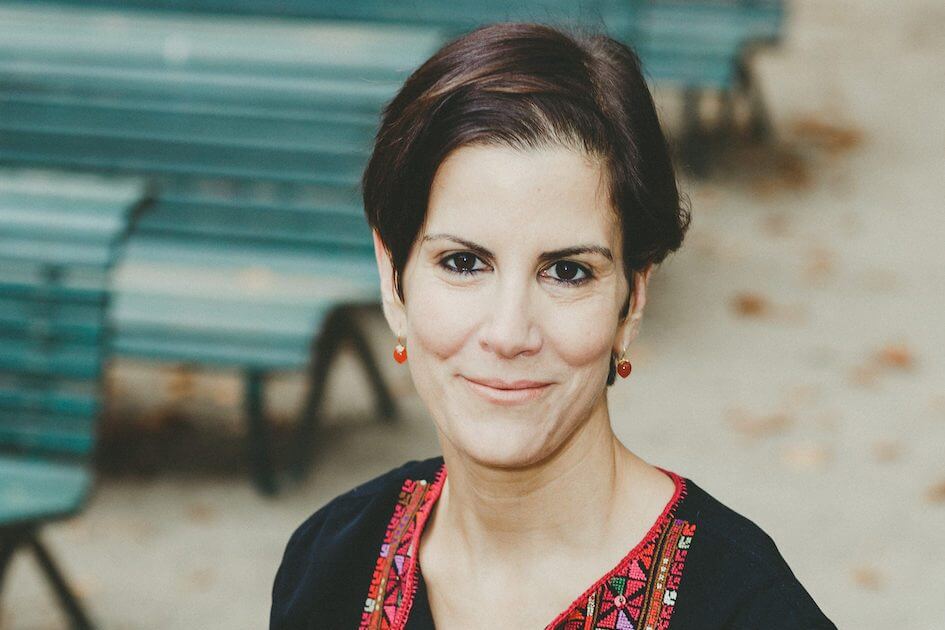
Her reports and statements have addressed issues such as:
- the impact of self-identification laws on women’s single-sex spaces,
- surrogacy as a form of exploitation of women and girls,
- sex-based data erasure,
- and safeguarding in contexts of violence, conflict, and displacement.
These positions are firmly grounded in the text and drafting history of CEDAW. However, they have drawn hostility from gender-identity activists—and, as FOI documents reveal, from some Australian officials.
FOI Revelations: Attempts to Undermine a UN Mandate
Internal Email from Sex Discrimination Commissioner Anna Cody (May 2024)
FOI documents show that Anna Cody wrote internally to Leanne Smith, CEO of the Australian Human Rights Commission (AHRC), expressing concern about Alsalem’s interpretation of CEDAW.
Cody criticised Alsalem’s position that CEDAW does not extend protections to males who identify as women, suggesting this was contrary to “academic consensus.” She queried whether the Global Alliance of National Human Rights Institutions (GANHRI)—of which the AHRC is a member—could influence Alsalem’s reappointment or formally express concern about the “inappropriateness” of her views.
While no formal representation to GANHRI ultimately occurred, the inquiry itself is significant. UN Special Rapporteurs are explicitly protected from political interference or reprisals by member states.
Alsalem later responded publicly, describing Cody’s criticism as “rather ironic” and reaffirming that her mandate clearly defines “women and girls” as biologically female, in line with UN treaty law.
DFAT Engagement Behind Closed Doors (September 2024)
Further FOI disclosures revealed that Stephanie Copus Campbell, Australia’s Ambassador for Gender Equality at DFAT, addressed public servants in a recorded “fireside chat.”
In that session, Campbell stated that Alsalem had taken “a fairly difficult position on transgender rights in a way that doesn’t conform with our views.” She confirmed that the Australian government was “directly engaging through various different mechanisms” to address concerns with Alsalem’s work.
Notably, the subsequent portion of the transcript was redacted by DFAT on the grounds that its release could damage international relations.
Alsalem responded by requesting an urgent meeting with Australia’s UN mission in Geneva, reminding officials that disagreement with a mandate holder does not justify interference, pressure, or behind-the-scenes lobbying.
The Tickle v Giggle Case: A Key Context
These actions followed Alsalem’s attempted intervention as amicus curiae in Tickle v Giggle, a landmark Australian case concerning sex-based services.
Alsalem’s submission argued that CEDAW protections are grounded in biological sex. While Federal Court Justice Robert Bromwich declined her formal intervention, her statement was read aloud in court.
By contrast, Commissioner Cody intervened in the case in support of extending protections based on gender identity under Australia’s Sex Discrimination Act—placing the Australian government at odds with a UN expert charged with interpreting the very treaty Australia has ratified.
Fallout—and the Absence of Accountability
The FOI revelations prompted widespread calls for Anna Cody’s resignation, intensified by her Senate Estimates testimony, in which she claimed not to understand the concept of “biological men.”
Alsalem was reappointed to her UN role in July 2025, but so far no UN inquiry, diplomatic rebuke, or apology from the Australian government has occurred.
The Albanese government has avoided direct comment, with DFAT offering only generic statements about respect for rapporteur independence.
Why This Matters—for Tasmania and Beyond
For Tasmanian women and gender-critical advocates, this episode reveals a disturbing pattern: public institutions quietly aligning against evidence-based, sex-based protections for women, while attempting to reinterpret international law without public scrutiny.
When a UN expert defending women’s rights as defined in binding treaties faces covert pushback from Australian officials, it raises urgent questions about transparency, accountability, and democratic integrity.
Women’s rights cannot be protected if the category “woman” is no longer allowed a clear, biological meaning.
Women Speak Tasmania stands firmly with Reem Alsalem and her principled defence of women and girls under international law.
Her work is a reminder of a simple truth:
“You cannot protect what you cannot define”.