
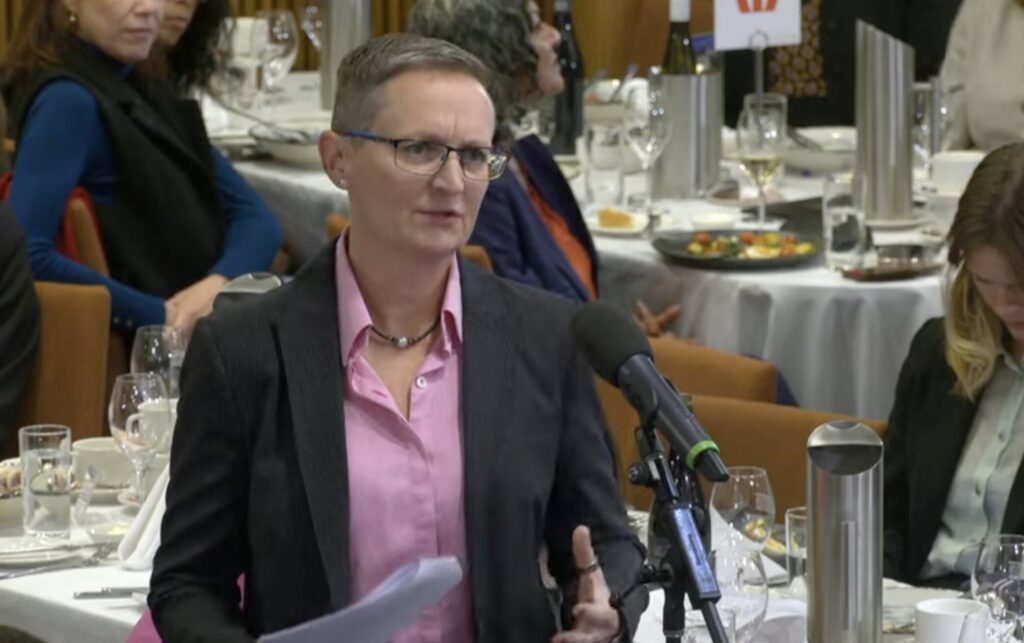
At the National Press Club address on 24 September 2025, Australia’s Sex Discrimination Commissioner, Anna Cody, was asked a direct question by Dr Megan Poore of the Women’s Advocate about whether she would use her powers to ensure that women’s groups working for sex-based rights are meaningfully consulted in law and policy.
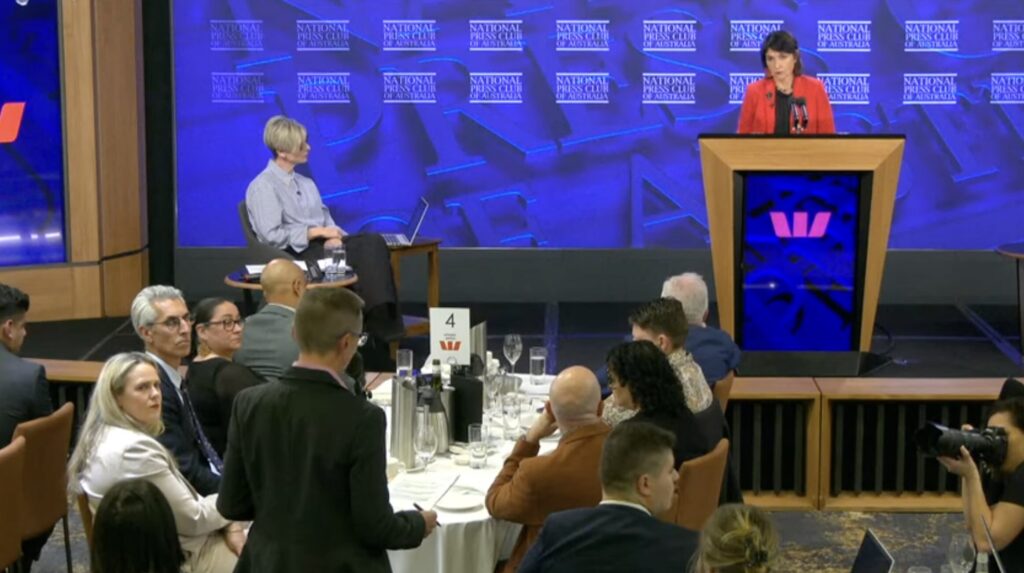
CEDAW Article 7 — the Convention on the Elimination of All Forms of Discrimination Against Women — requires that women participate fully in decision-making across government. Dr Poore pointed out that women’s advocacy organisations have been systematically excluded from consultation on sex and gender policy, and asked whether the Commissioner would investigate this breach.
The Commissioner’s Response
Commissioner Cody replied that consultation with women who have experienced discrimination is “fundamental” to her work, citing projects such as Speaking from Experience. She added that consultation occurs particularly with First Nations women, culturally marginalised women, and women with disability. While acknowledging “there is always room for improvement,” she maintained that meaningful participation is already happening in policy development.
When pressed further about women’s organisations advocating for sex-based rights, Dr Poore emphasised that these are the very women CEDAW was designed to protect.
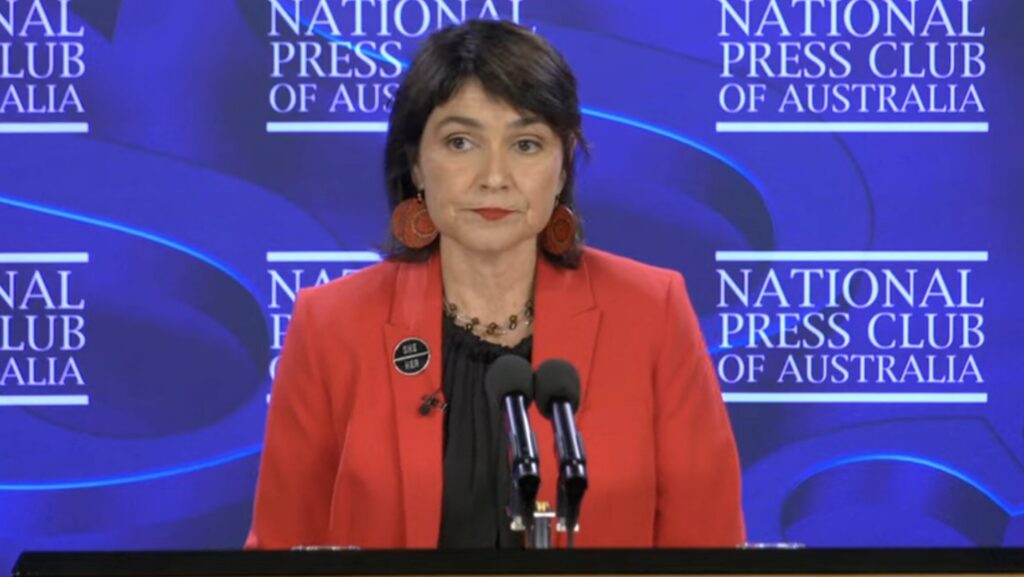
In response, Commissioner Cody said:
“CEDAW has been interpreted and understood to include all women … it has also been interpreted by the committee … to include culturally marginalised women, lesbians, First Nations women, women with disability and transwomen. So it absolutely includes all women because that is who women are. We’re not one version of women and so that’s why it has to be an inclusive definition of women.”
Why This is Troubling
CEDAW was created in 1979 to protect women and girls from sex-based discrimination — discrimination that arises because of biological sex. By redefining “women” to include transwomen (biological males), Commissioner Cody effectively:
- Dilutes sex-based protections that CEDAW was written to guarantee.
- Sidelines women’s rights organisations who advocate for female-only spaces and protections.
- Places male interests inside a treaty that was created for women and girls only.
This redefinition is not just a matter of language. It directly affects the ability of women to secure protections in law, sport, healthcare, prisons, and public life.
Conclusion
The exchange at the National Press Club highlights the central challenge for Australian women today: if even the Sex Discrimination Commissioner refuses to define women as female, then who will uphold sex-based rights?
CEDAW was written to protect women and girls from discrimination on the basis of sex. Its purpose should not be rewritten to include males. Australian women deserve a Commissioner who will listen to them — especially those advocating for sex-based protections — and ensure their rights remain central to law and policy.
Listen or Read the Transcript below:
Transcript:
Next question is Megan Poore from the Women’s Advocate
Megan Poore, the Women’s Advocate:
Commissioner you have powers under Section 11 of the AHRC Act to enquire into acts or practices inconsistent with human rights. Women’s advocacy groups report systematic exclusion from consultation on sex and gender policy. Will you use your powers to investigate whether this meets CEDAW, Article 7’s, requirement for Meaningful participation across government agencies, including the commission itself.
Anna Cody, Australia Sex Discrimination Commissioner:
Consultation and listening to women, who have lived, who have actually experienced any type of discrimination or violence is fundamental to the way we work at the Australian Human Rights Commission and it was a fundamental part of the speaking from experience project. And any project that I lead will absolutely centre the voices of women who have experienced discrimination.
It is part of Human Rights to have meaningful participation and decisions that affect you on a daily basis, and across government, I am conscious, certainly within the areas that I deal with that, there is consultation and participation particularly consultation with First Nations women with culturally marginalised women, women with disability about the policies that impact them. I’m sure that could be improved, it always can be, but there is definitely a commitment and I have seen that happening in the development of policies that I’ve seen develop.
Megan Poore, Women’s Advocate:
The question specifically about women’s rights organisations, working for sex-based protections and rights. It’s about the women that CEDAW was designed to protect and who remain central to CEDAW regardless of any retrospective interpretations. I was wondering about women in those organisations.
Anna Cody, Australia Sex Discrimination Commissioner:
So CEDAW has been interpreted and understood to include all women, if that’s what you’re getting at, certainly the Convention on the Elimination of all forms of Discrimination Against Women, so CEDAW is absolutely, it’s the women’s convention, but in understanding as we have developed, it was signed back in 1979, I believe.
Since it’s been in force in Australia, it has also been interpreted by the committee that looks at the meaning and the understanding of each of the articles of the convention, so that includes and it is specifically said it includes culturally racially marginalized women. It includes Lesbians, it includes. First Nations women, women with disability and TRANSWOMEN. So it absolutely includes all women because that is who women are. We’re not one version of women and so that’s why it has to be an inclusive definition of women.