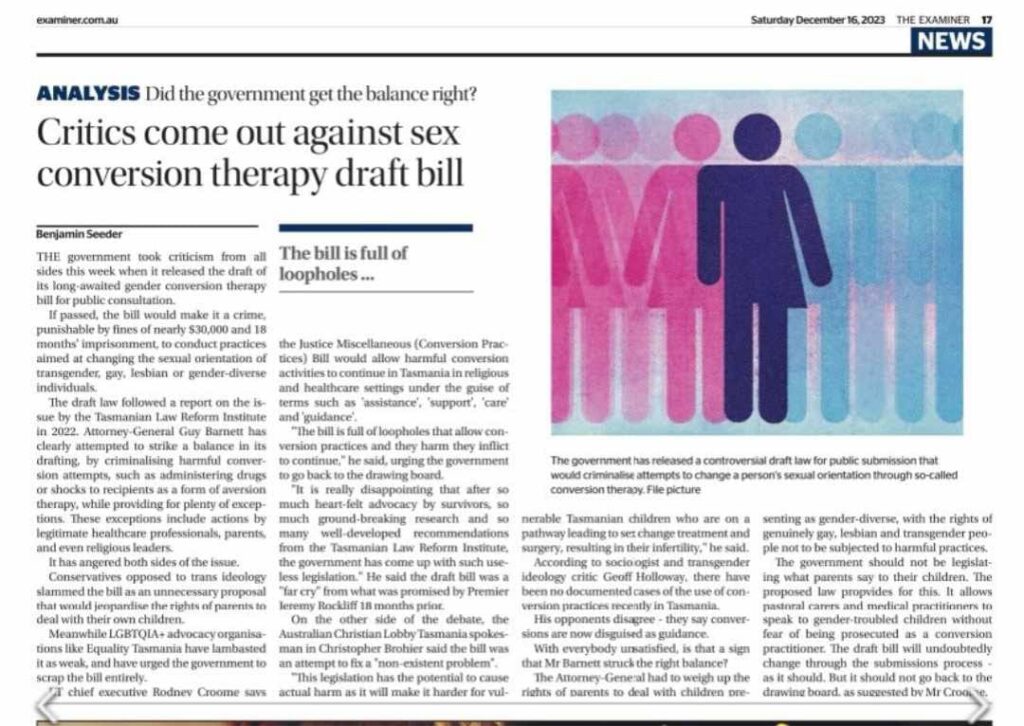
The government took criticism from all sides this week when it released the draft of its long-awaited gender conversion therapy bill for public consultation.
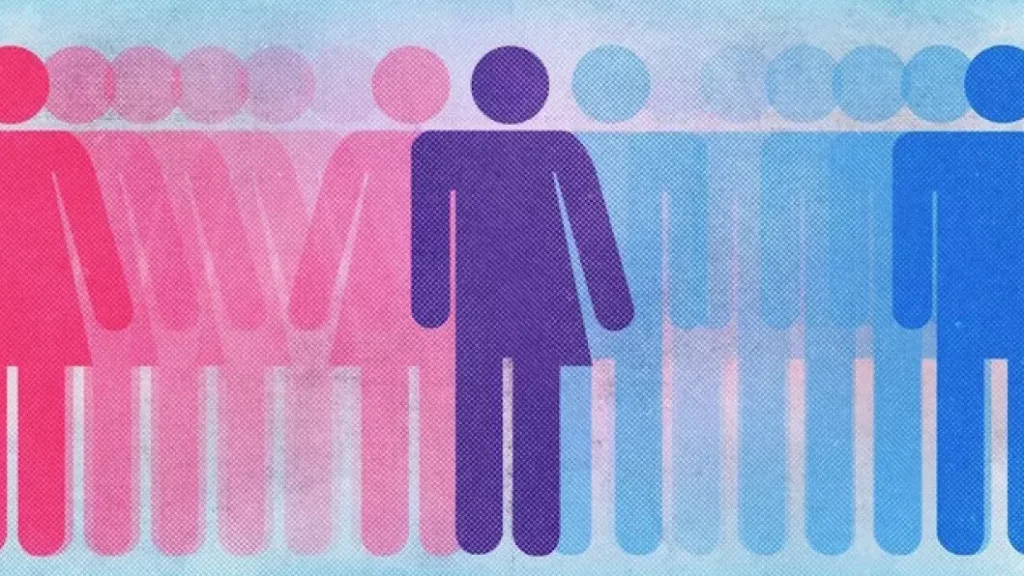
If passed, the bill would make it a crime, punishable by fines of nearly $30,000 and 18 months’ imprisonment, to conduct practices aimed at changing the sexual orientation of transgender, gay, lesbian or gender-diverse individuals.
The draft law followed a report on the issue by the Tasmanian Law Reform Institute in 2022. Attorney-General Guy Barnett has clearly attempted to strike a balance in its drafting, by criminalising harmful conversion attempts, such as administering drugs or shocks to recipients as a form of aversion therapy, while providing for plenty of exceptions. These exceptions include actions by legitimate healthcare professionals, parents, and even religious leaders.
It has angered both sides of the issue.
Conservatives opposed to trans ideology slammed the bill as an unnecessary proposal that would jeopardise the right of parents to deal with their own children.
Meanwhile LGBTQIA+ advocacy organizations like Equality Tasmania have lambasted it as weak, and have urged the government to scrap the bill entirely.
ET chief executive Rodney Croome says the Justice Miscellaneous (Conversion Practices) Bill would allow harmful conversion activities to continue in Tasmania in religious and healthcare settings under the guise of terms such as ‘assistance’, ‘support’, ‘care’ and ‘guidance’.
“The bill is full of loopholes that allow conversion practices and they harm they inflict to continue,” he said, urging the government to go back to the drawing board.
“It is really disappointing that after so much heart-felt advocacy by survivors, so much ground-breaking research and so many well-developed recommendations from the Tasmanian Law Reform Institute, the government has come up with such useless legislation.” He said the bill was a “far cry” from what was promised by Premier Jeremy Rockliff 18 months ago.
On the other side of the debate, the Australian Christian Lobby Tasmania spokesman Christopher Brohier said the bill was “an attempt to put a ‘non-existent’ problem.
“This legislation has the potential to cause actual harm as it will make it harder for vulnerable Tasmanian children who are on a pathway leading to sex change treatment and surgery, resulting in their infertility,” he said.
According to sociologist and transgender ideology critic Geoff Holloway, there have been no documented cases of the use of conversion practices recently in Tasmania.
His opponents disagree – they say conversions are now disguised as guidance.
With everybody unsatisfied, is that a sign that Mr Barnett struck the right balance?”
The Attorney-General had to weigh up the rights of parents to deal with children presenting as gender-diverse, with the rights of genuinely gay, lesbian and transgender people not to be subjected to harmful practices.
The government should not be legislating what parents say to their children. The proposed law provides for this. It allows for pastoral carers and medical practitioners to speak to gender-troubled children without fear of being persecuted as a conversion practitioner. The draft bill will undoubtedly change through the submissions process as it should. But it should not go back to the drawing board, as suggested by Mr Croome.
Source: The Examiner (printed edition)