
Over the past months, a series of highly publicised cases across multiple Australian jurisdictions has raised grave concerns about prison placement policies that allow male prisoners to be housed in women’s correctional facilities on the basis of gender identity or legal sex change rather than biological sex.
In several documented instances, these policies have coincided with sexual assault, intimidation, psychological harm, and secret compensation payments—inflicted on women who are already among the most vulnerable in the country. While governments insist that safety remains paramount, the evidence emerging from court records, media investigations, and whistleblower accounts suggests a pattern of systemic failure.
Women Speak Tasmania stands with incarcerated women whose safety has been compromised. These cases are not abstract policy debates. They involve real women, locked behind bars, with no ability to escape risk imposed by the state.
Victoria: Repeated Failures in Women’s Prisons
Victoria provides some of the clearest and most extensively reported examples.
Clinton Rintoul
Rintoul was convicted in 2009 of the unprovoked murder of 19-year-old refugee Liep Gony and sentenced to 20 years’ imprisonment. After identifying as transgender while in custody, Rintoul was transferred in April 2022 to Tarrengower Women’s Prison, a minimum-security facility.
Subsequent reporting revealed that senior corrections staff had warned the transfer posed an “unacceptable risk” to female inmates. In June 2022, Rintoul sexually assaulted a young female prisoner in a prison washroom. In 2026, it was reported that the victim received a confidential, taxpayer-funded compensation payment.
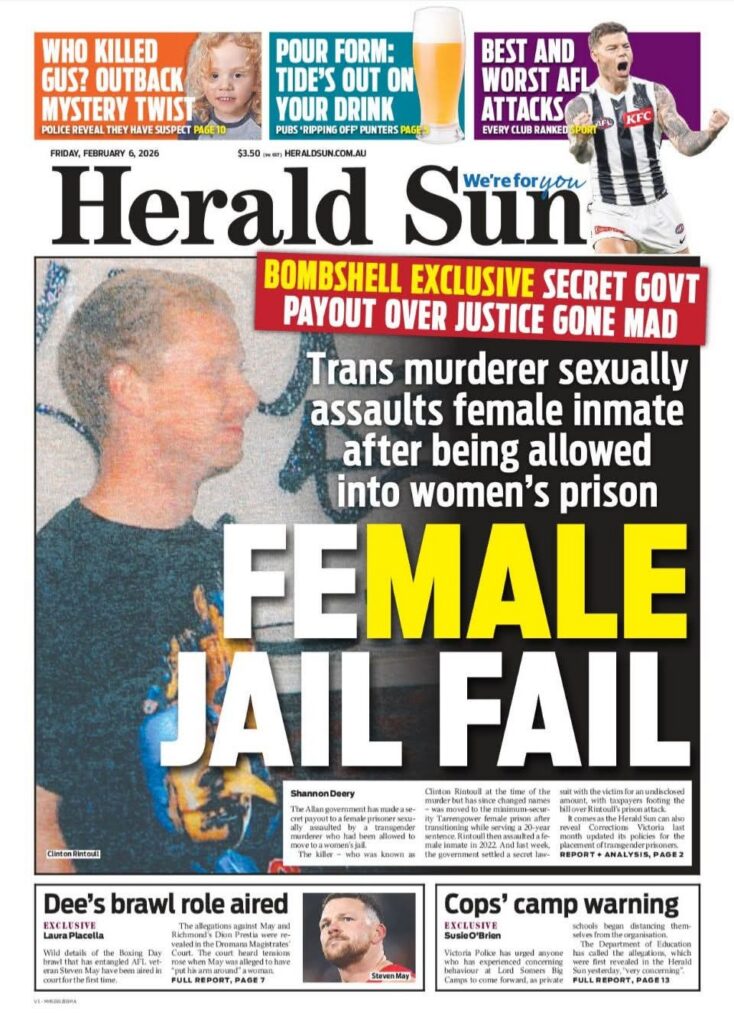
Following public scrutiny, Corrections Victoria amended its placement policy in January 2026 to give greater weight to offending history. Critics argue the change came only after irreparable harm had occurred.
Hilary Maloney
Maloney was sentenced for the sexual abuse of his five-year-old daughter, including the production of child abuse material. During sentencing, the judge referred to Maloney’s vulnerabilities and coercion in mitigation, reducing moral culpability.
Despite widespread public concern and advocacy from women’s organisations, Maloney was placed in Dame Phyllis Frost Centre, Victoria’s main women’s prison. The Victorian Government declined to comment on the placement, referring inquiries to corrections authorities, who cited privacy obligations.
South Australia: Allegations at Adelaide Women’s Prison
In South Australia, Krista Richards—formerly Lesley Graham Richards—has been the subject of multiple allegations reported by The Advertiser.
Richards, convicted of attempted murder and other serious offences, was transferred to women’s prisons despite a documented history of violence against women. By late 2025, at least six former inmates had publicly alleged sexual assault, physical violence, intimidation, and prolonged harassment.
While no criminal convictions have resulted from these allegations, the consistency of accounts has prompted calls for an independent inquiry. The South Australian Government has so far declined to change its policy framework.
Western Australia: Legal Sex Change and Prison Placement
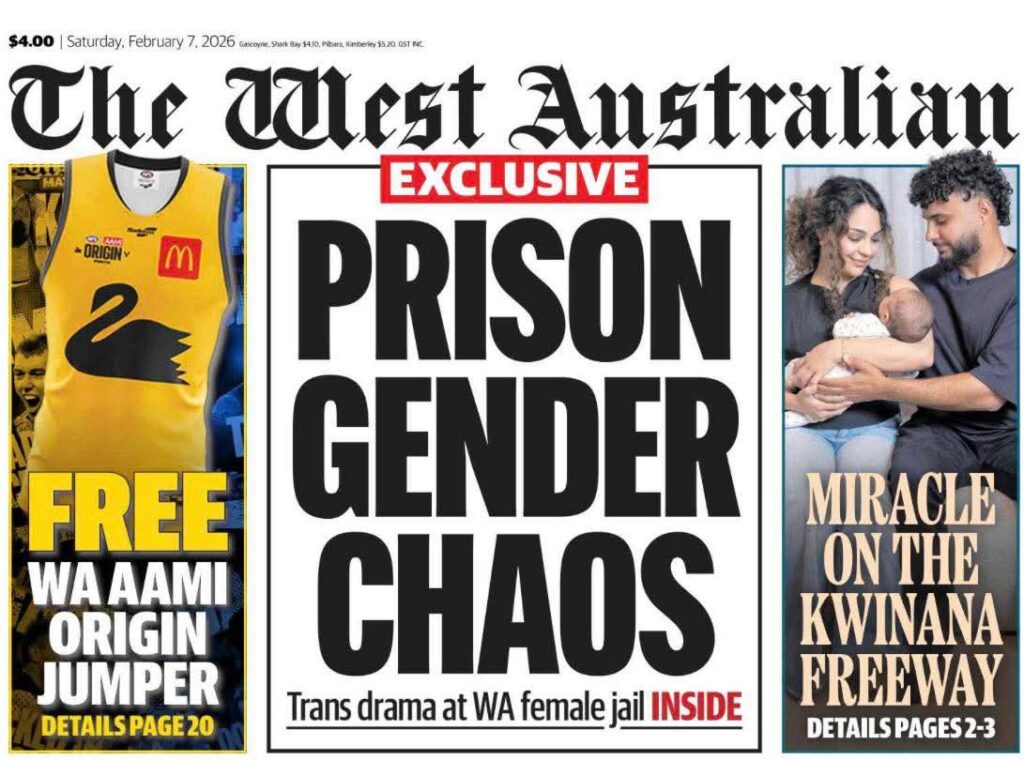
In Western Australia, a male accused of domestic violence was placed in Bandyup Women’s Prison in 2025 after presenting documentation reflecting a legal sex change, permitted under WA law without surgical transition.
Corrections authorities confirmed the inmate was segregated due to safety concerns. The case has intensified debate over whether legal sex markers should override biological sex in custodial settings.
A National Reckoning
These cases triggered widespread public concern in late 2025 and early 2026. Advocacy groups, including Women’s Forum Australia, launched petitions and protests calling for sex-based prison placement.
In October 2025, the Northern Territory became the first Australian jurisdiction to formally exclude males from women’s prisons, citing safety obligations.
Across jurisdictions, common themes emerge:
- Violent or sexual offenders housed with women
- Internal warnings ignored
- Women silenced or compensated quietly
- Government reluctance to acknowledge error
- Women prisoners treated as collateral damage in policy experiments
A Clear Duty of Care
When the state incarcerates women, it assumes full responsibility for their safety. Women in custody cannot leave, cannot refuse access, and cannot protect themselves. Prison placement policy must therefore be grounded in biological reality and rigorous risk assessment, not ideology.
Women Speak Tasmania has formally raised these concerns with Tasmania’s Attorney-General, calling for transparency, consultation with women’s organisations, and a clear, sex-based prison placement policy that protects female prisoners while providing appropriate alternatives for male prisoners who identify as transgender.
Recent interstate cases show the cost of getting this wrong. Tasmania must act now to ensure that women’s safety, dignity, and rights are not compromised behind prison walls.
Women’s rights do not end at the prison gate. Women’s safety must come first.