
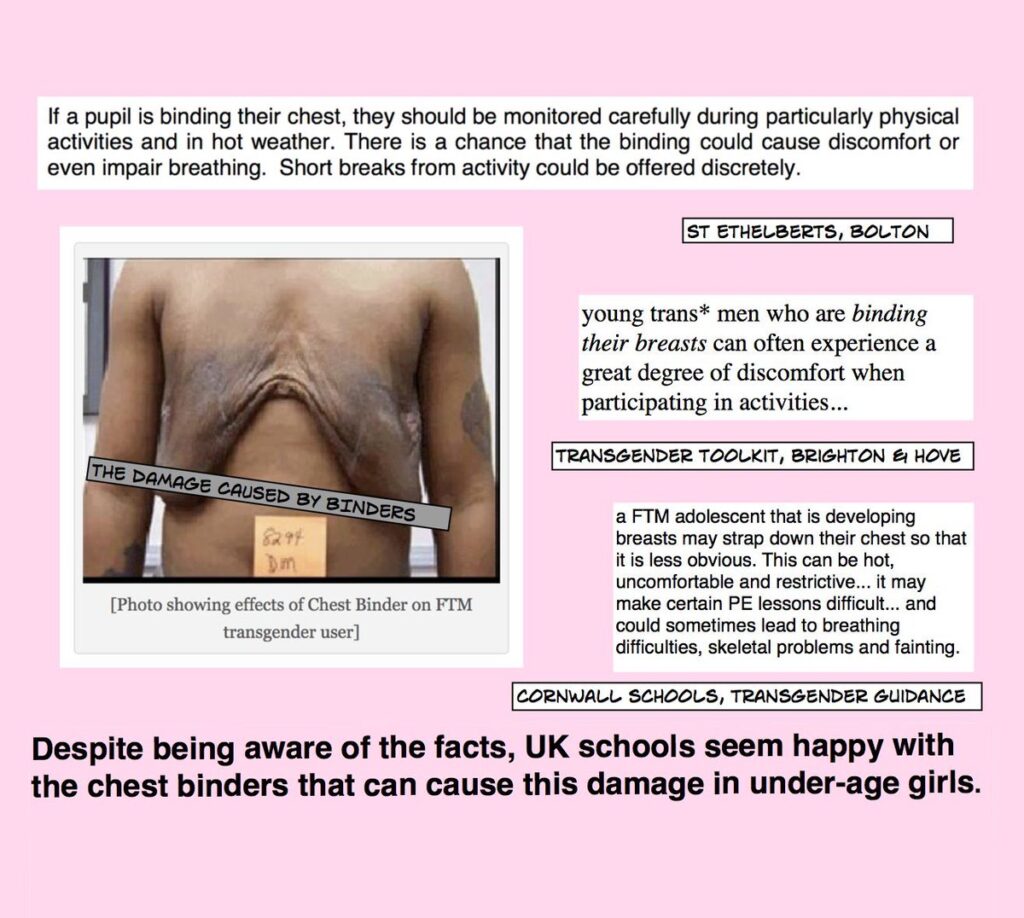
Recently, Women Speak Tasmania uncovered concerning information within a teacher training program delivered in Tasmanian schools, including the promotion of so-called “safe binding”—the practice of compressing female students’ breasts with tight garments to create a flatter chest.
This practice, has become increasingly common among young girls exploring gender identity. While it may offer temporary relief from gender dysphoria, it’s crucial to understand that breast binding carries significant health risks, particularly for developing bodies.
What Is Breast Binding?
Breast binding involves using tight garments, such as binders, elastic bandages, or even duct tape, to flatten the chest. While some individuals report psychological benefits, including reduced gender dysphoria, the physical health implications are concerning.
Health Risks for Young Girls
Respiratory Issues
Tight binding restricts chest expansion, leading to shallow breathing and reduced lung capacity. A study published in JAMA Surgery found that chest binding can cause acute restrictive pulmonary effects, highlighting the importance of informed binding practices.
Musculoskeletal Problems
Prolonged compression can lead to back, shoulder, and rib pain. A survey of individuals who engaged in breast binding revealed that 65% experienced back pain, 48.6% had shortness of breath, and 30% reported chest pain .
Skin Damage
Using inappropriate materials like duct tape or plastic wrap can cause skin irritation, rashes, and even bruising. The Gender Construction Kit warns that such methods are associated with various negative health impacts .
Breast Tissue Damage
Repeated compression can permanently damage breast tissue, leading to uneven growth or deformation. The Women’s Rights Network notes that binding can be painful and cause lasting damage to breast tissue .
Psychological Stress
While binding may temporarily alleviate gender dysphoria, it can also contribute to body image anxiety and mental health challenges if performed unsafely or without proper guidance.
Medical Advice and Alternatives
Healthcare professionals strongly advise against breast binding for young girls. If a child or adolescent experiences discomfort with their body, safe alternatives include:
- Supportive counseling or therapy to address body image or gender-related concerns.
- Medical-grade compression garments designed under professional supervision.
- Open communication with parents, guardians, and healthcare providers about body-related concerns.
Our Advocacy
Women Speak Tasmania advocates for the protection and safety of young girls. We emphasize that schools, healthcare providers, and families must be aware of the physical and psychological risks of breast binding. Education on these dangers is essential, especially when advocacy groups or training programs may encourage unsafe practices.
Girls deserve environments where their health, privacy, and well-being are prioritized, free from interventions or guidance that could cause long-term harm.
Conclusion
Breast binding is not a harmless practice. For young girls, it poses real risks to physical health, development, and emotional well-being. Families, educators, and healthcare providers must work together to ensure children are protected, informed, and supported safely.