Tasmanian Liberal Senator Claire Chandler has shone a much-needed spotlight on the controversial Guidelines for the Inclusion of Transgender and Gender Diverse People in Sport during Senate Estimates hearings.
In a robust exchange on 4 March 2020, Senator Chandler pressed officials from Sport Australia and the Australian Human Rights Commission (AHRC) on the real-world impact of the June 2019 guidelines on female athletes and girls’ participation in sport.
The Senate Estimates Exchange
During the hearing, Senator Chandler highlighted the volume of constituent concerns she had received, particularly from parents worried that biological males would compete in women’s and girls’ categories under the new guidelines.
She asked whether Sport Australia agreed that “the division of sex in sporting competitions… is a pretty logical and necessary practice in sport” — designed to ensure women compete against other women and feel safe.
Officials acknowledged the historical division of sport into male and female categories but emphasised a broader discussion around inclusion. When pressed on competitive advantages and the purpose of women’s sport, Acting CEO Rob Dalton repeatedly took questions on notice and provided few direct answers.
Key exchanges included:
Senator Chandler: “Does Sport Australia agree that the basis of women’s sport is to provide sporting competition and activity for people who are biologically female?”
Rob Dalton: “I’m not specifically aware of what our policies on that are. I’d like to take that under notice.”
Senator Chandler also raised comments from former Olympian Tamsyn Lewis, who had highlighted retained male advantages in areas such as bone structure, strength, lung capacity and heart size following male puberty. Dalton indicated he was not fully briefed on those comments and did not provide a clear position on whether female athletes could be disadvantaged or whether girls might be discouraged from participating in sport.
In Women Speak Tasmania’s view, the hearing revealed a concerning lack of clarity from Australia’s peak sporting body on an issue with significant implications for women and girls participating in sport.
What Do the Guidelines Actually Tell Us?
Released in June 2019 by the Australian Human Rights Commission and Sport Australia, the guidelines were promoted as a framework for sporting organisations seeking to include transgender and gender-diverse participants while complying with anti-discrimination law.
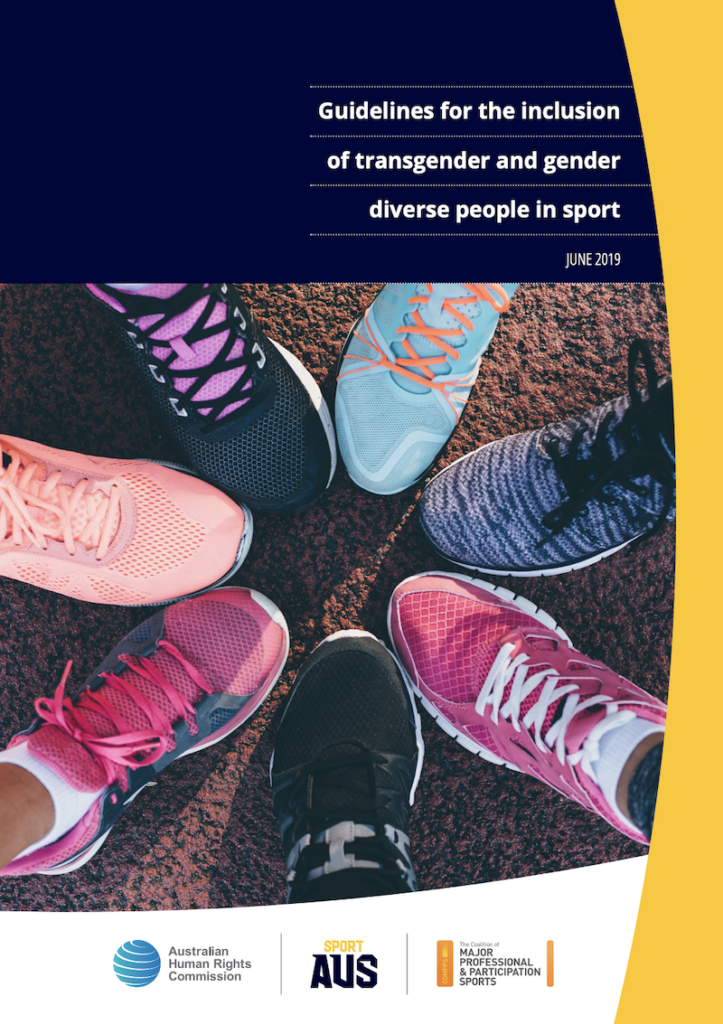
The document was intended to influence more than 16,000 sporting clubs and associations across Australia and potentially affect millions of participants.
Key features of the guidelines include:
- A strong emphasis on preventing unlawful discrimination under the Sex Discrimination Act 1984 and promoting participation based on gender identity.
- An inclusion-first approach that encourages sporting organisations to facilitate participation by transgender and gender-diverse athletes wherever possible.
- Detailed guidance on inclusion, privacy, dignity and wellbeing for transgender participants.
- A framework that Women Speak Tasmania believed gave insufficient weight to concerns about fairness, safety and the retention of female-only sporting categories.
Women Speak Tasmania raised many of these concerns in media releases issued on 17 June and 28 June 2019. In particular, we questioned whether the guidelines would make it increasingly difficult for sporting bodies to maintain female-only categories and warned that the changes could discourage participation by women and girls at grassroots and junior levels.
These concerns were raised long before the issue attracted broader political attention through Senate scrutiny.
Escalation: Senator Chandler’s Letter and Growing Pushback
As reported by journalist Bernard Lane in The Australian “Transgender goals risk alienating female players” on 21 June 2020, Senator Chandler later followed up the Senate hearing with a sharply worded letter to Rob Dalton, describing Sport Australia’s responses as “evasive, dismissive and insulting” to women.
Lane reported that officials had failed to provide full details regarding consultation processes despite repeated references to “broad consultation” during the development of the guidelines. Concerns were also raised that sporting clubs and associations could face significant legal pressure under the guidelines while receiving limited practical guidance on balancing inclusion with fairness and safety.
Sport Minister Richard Colbeck publicly distanced the Federal Government from the guidelines and emphasised the importance of protecting the integrity of women’s sport.

Female athletes also began speaking out more openly.
Former Olympian Tamsyn Lewis highlighted the ongoing physical advantages associated with male puberty and expressed concern that many athletes felt unable to raise legitimate questions because of fears of social or professional backlash.
A young female soccer player, identified by the pseudonym “Lina”, described the substantial physical differences she observed between boys and girls after puberty and warned that allowing biological males into female categories could create safety concerns and reduce opportunities for girls.
Why This Matters
The evasive handling of Senator Chandler’s questions in March 2020, combined with the content of the guidelines themselves, reinforced concerns among many female athletes, parents and advocacy groups that inclusion policies were being advanced without adequately addressing questions of fairness, safety and the continued participation of women and girls in sport.
Women Speak Tasmania has consistently advocated for the preservation of sex-based sporting categories as a means of protecting opportunities for biological females. From grassroots recreation through to elite competition, women’s sport exists because sex-based differences matter.
The questions raised by Senator Chandler in 2020 reflected concerns that were already emerging across Australia and internationally. As sporting bodies continue to grapple with these issues, policymakers must ensure that the rights and opportunities of women and girls are not treated as secondary considerations.
Sport Australia and the Australian Human Rights Commission should revisit these guidelines and ensure that future policies are based on clear evidence, transparency and an appropriate balance between inclusion, fairness, safety and the integrity of female sporting categories.