SBS The Feed recently examined Tasmania’s recently enacted self-identification laws and the debate surrounding them. Women Speak Tasmania participated in the discussion to raise concerns about the impact of these reforms on women’s rights, sex-based protections and single-sex spaces.
On 6 June 2019, SBS The Feed aired a segment titled The Debate Over Gender Optional Birth Certificates, examining Tasmania’s recently enacted gender law reforms and the controversy surrounding them.
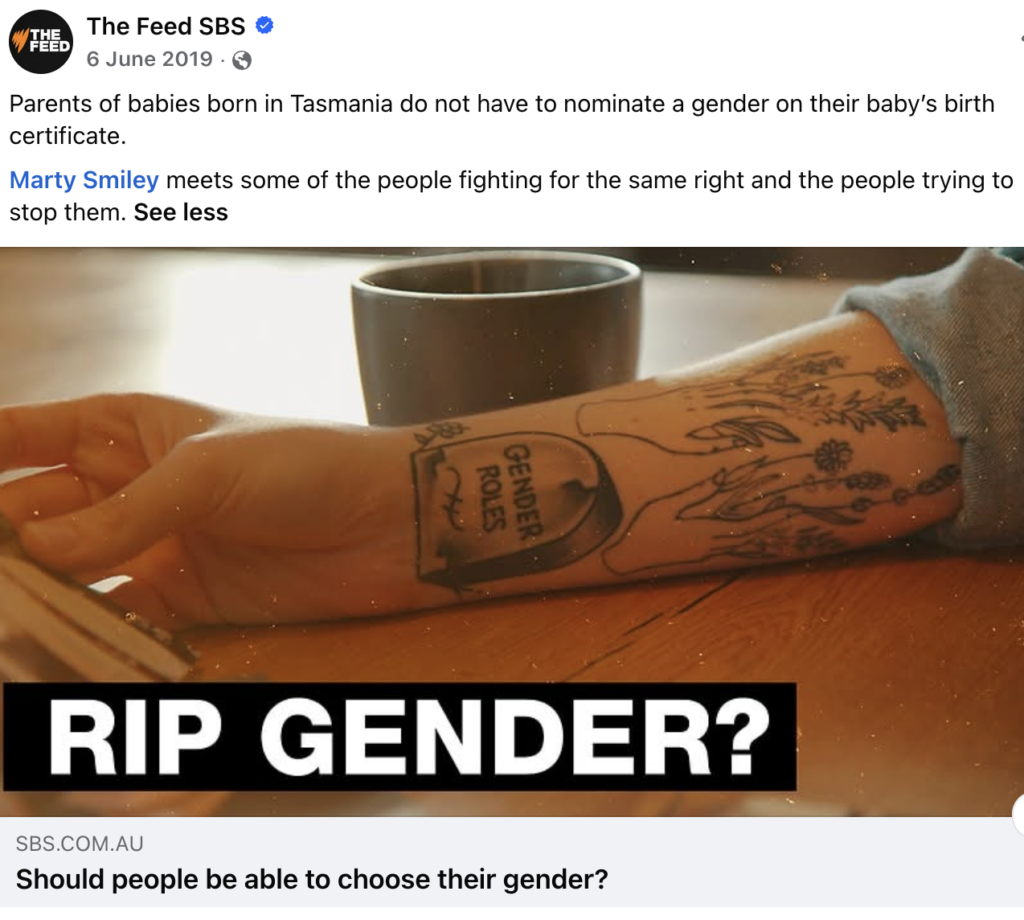
Just weeks earlier, the Justice and Related Legislation (Marriage and Gender Amendments) Act 2019 had passed both Houses of Parliament and received Royal Assent. The legislation introduced a self-identification model, allowing people aged 16 and over to change the sex recorded on their birth certificate through a statutory declaration, without any requirement for surgery or medical treatment.
The reforms were passed despite significant public opposition. An EMRS poll conducted in December 2018 found that more than 70 per cent of Tasmanians opposed the proposed birth certificate changes.
Yet throughout the debate, many women who raised concerns about the reforms found themselves dismissed, misrepresented or accused of prejudice.
As Women Speak Tasmania spokesperson Isla MacGregor observed during the SBS interview:
“Our debate has been shut down here by multiple factors — denial, slurs and misinformation.”
Concerns About Women’s Single-Sex Spaces
For Women Speak Tasmania, opposition to the reforms was never about hostility towards transgender people. Rather, it centred on concerns about the impact that self-identification laws could have on women’s rights, protections and single-sex spaces.

Bronwyn Williams explained:
“We’ve moved through a time when great gains have been made in women’s rights and we can now see that they’re being eroded.”
She added:
“They’re winding back rights…”
Isla MacGregor illustrated these concerns with a practical example:
“If I go into a women’s gym and a male-bodied person comes in and wants to change in that gym, I have no right to say to that person, ‘I don’t want you undressing in front of me.’”
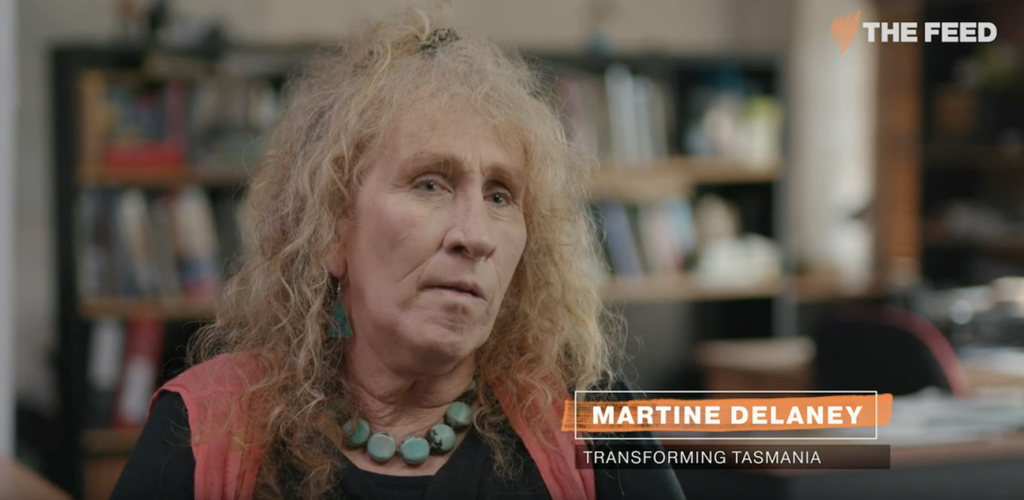
Supporters of the reforms rejected such concerns. Martine Delaney from Transforming Tasmania argued:
“I don’t see how it could possibly have any impact on these situations. They have policies and are practising them in place to make sure it’s about providing services to trans women and not opening their doors for predatory men.”
However, Women Speak Tasmania questioned whether that confidence was justified.
By removing medical requirements and allowing legal sex to be changed through self-identification, Tasmania fundamentally altered the relationship between biological sex and legal status. The amendments also expanded legal recognition of gender identity, creating uncertainty about how sex-based rights and exemptions would operate in practice.
Once a male person could obtain official documentation identifying them as female, organisations providing female-only services faced difficult questions about admission policies, privacy protections and compliance with anti-discrimination law.
Women’s groups argued that these changes would create a chilling effect. Many women would feel unable to object to the presence of male-bodied individuals in female-only spaces for fear of being labelled discriminatory or transphobic.
Similar debates had already emerged internationally, particularly in relation to women’s shelters, prisons and changing facilities. These developments reinforced concerns that legal self-identification could create conflicts between gender identity claims and sex-based protections.
Bronwyn Williams expressed the concern bluntly:
“Well, as far as I’m concerned, you know, one woman assaulted by a man in a domestic violence shelter is one too many. I think it will happen.”
More Than a Birth Certificate Debate
Throughout the SBS segment, Women Speak Tasmania emphasised that the issue extended far beyond administrative changes to birth certificates.
At its core, the debate concerned the meaning of sex and whether legal recognition should continue to be based on biological reality.
As Isla MacGregor explained:
“What we’re saying to the transgender community is we want to see your rights protected, but not to the detriment of our rights and not by you redefining what we are.“
Supporters of the reforms viewed the matter very differently.
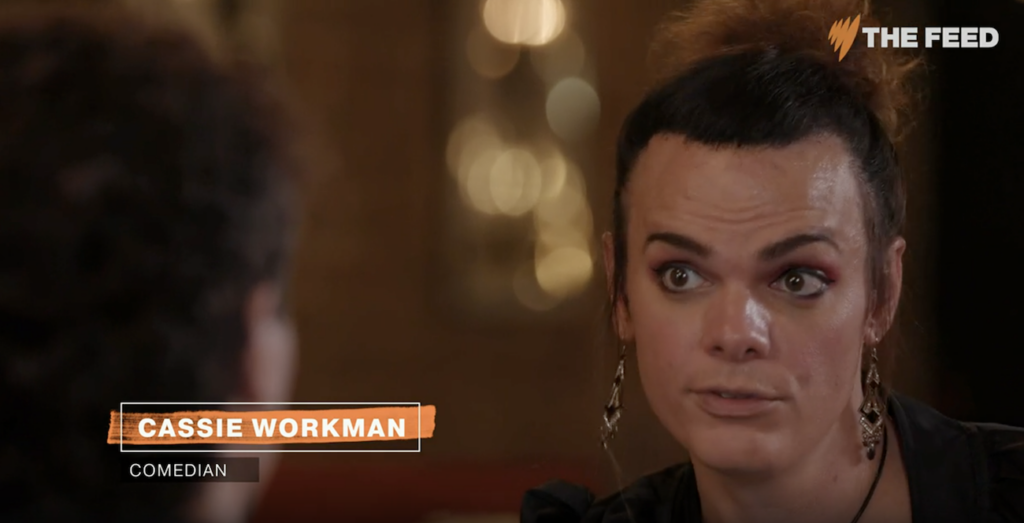
When asked whether the transgender movement could achieve its goals without restricting the freedoms of other groups, comedian Cassie Workman responded:
“Of course I really don’t see a conflict.”
Workman argued that the reforms would reduce the likelihood of transgender people being involuntarily outed when applying for official documents and described gender identity as something that should be determined by the individual rather than by external classification.
The segment also featured the following remarks:
“Every human society has been based on this dichotomy of men and women. So to be transgender is the ultimate anarchist act. And so of course conservatives are terrified by that…”
For many women concerned about the preservation of sex-based rights, comments such as these highlighted the extent of the disagreement. The debate was not simply about making government paperwork easier to change. It reflected fundamentally different views about sex, gender and the role of law in recognising both.
Workman also dismissed concerns raised by women’s groups, stating:
“There’s some small but very loud groups who are quite dedicated to turning mainstream culture against us. I don’t think it will work. We are a reality as a people. And we will continue to be born and we will continue to live in society, so you might as well start accommodating us.”
Our Perspective
Women Speak Tasmania welcomed the opportunity to participate in this SBS discussion and to ensure that concerns about women’s rights were represented.
However, the segment devoted considerable attention to the personal experiences of transgender-identifying individuals while giving less attention to the broader legal and social consequences of the reforms that had just been enacted in Tasmania.
Much of the program focused on the difficulties faced by people seeking to change the sex recorded on their legal documents. While those experiences are important, they do not address the central concerns raised by women regarding privacy, safety, fairness and the preservation of sex-based rights.
The fundamental question remains whether legal sex should continue to reflect biological reality or whether it should become a matter of personal declaration.
Women Speak Tasmania supports the dignity and rights of all people. However, we reject the idea that protecting transgender rights requires the redefinition of women as a sex class or the erosion of protections that were established specifically for women and girls.
As Isla MacGregor concluded during the interview:
“You cannot redefine what women are.”