
Adolescent psychiatrist Riittakerttu Kaltiala has seen an improvement in treatment under new guidelines in Finland, where puberty blockers, cross hormones and surgery are no longer the norm.

A leading adolescent psychiatrist says the treatment of young people with gender dysphoria in her homeland has “totally changed” since winding back the practice of gender-affirming care.
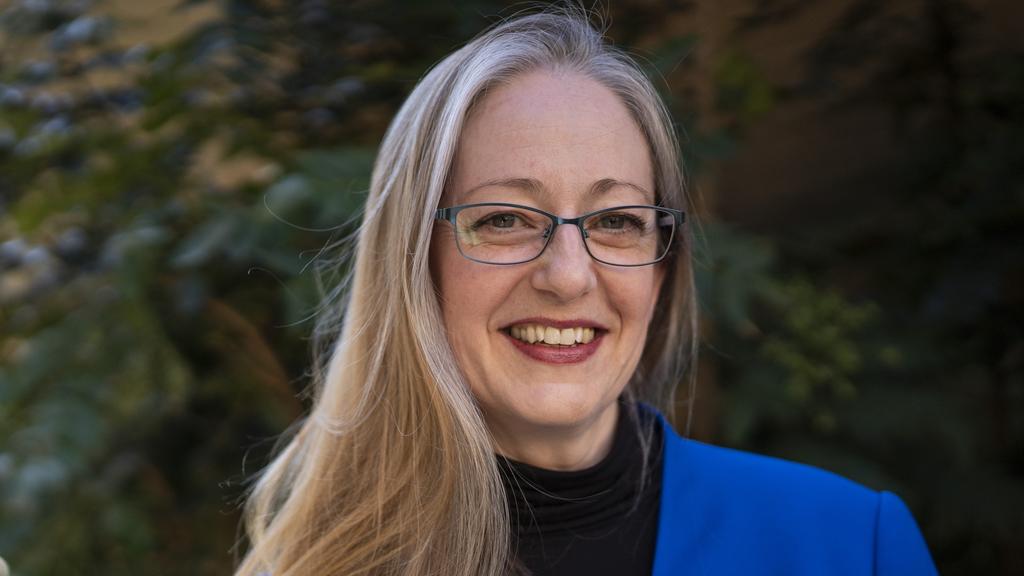
Finnish psychiatrist Riittakerttu Kaltiala, who will be a keynote speaker at the biggest conference on the treatment of gender dysphoria to be held in Australia, said she had been heartened to see an improvement in the treatment of young people under the new guidelines brought in Finland, where the use of puberty blockers, cross hormones and surgery is not banned but is no longer the norm.
Dr Kaltiala will be joined by several prominent Australian medicos in what conference organisers say is a growing sign of disquiet in the scientific community around the use of surgical intervention and puberty blockers on the young.
The 2025 Gender Healthcare Conference has been organised by the Coalition for Advancing Scientific Care, an Australian organisation dedicated to promoting the prevention or control of gender dysphoria and gender-related distress in children and adolescents.
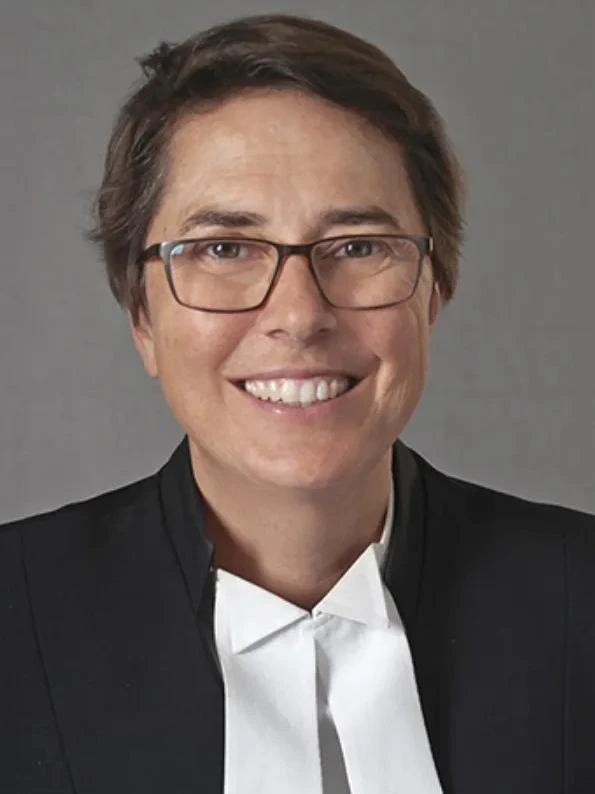
Other speakers include British author Helen Joyce, whose book Trans: When Ideology Meets Reality argues that gender-affirming care is rooted not in science but politics, and prominent Melbourne barrister Belle Lane, who has represented parents who don’t want their children placed on puberty blockers in family law cases.
The conference comes as the Albanese government has flagged a review of gender-affirming care in Australia, the findings of which are expected next year.
Dr Kaltiala told The Australian she would be advocating the same science-based approach to gender-related distress that has seen Finland move away from the so-called Dutch model of gender-affirming care, to adopting new guidelines that insist on more holistic treatments that examine broader mental health challenges and sexuality issues faced by young patients.
She said she believed there was a growing recognition as to the serious and irreversible nature of some of the treatments that were routinely employed under gender-affirming care.
Dr Kaltiala is professor of adolescent psychiatry at Finland’s Tampere University and worked with other specialists in the early 2010s on the creation of Finland’s gender-affirming care model in line with the Dutch model.
However, she since worked on the rollback of those practices amid growing concern among psychiatrists and other medical experts that the treatment being given to young people was in many cases not only not solving their health problems, but making them worse.
She has been the leader of one of the two nationally centralised gender identity services for minors in Finland since 2011, when the services were first opened.
“The situation has totally changed,” Dr Kaltiala told The Australian.
“Schools are providing better support, psychiatric services are providing treatment whether or not the adolescent has a problem with their gender. Then when it is timely we can carry out a gender assessment and only then can some of these young people proceed to gender reassignment.
“This is a great improvement from the early years. But because this issue has become so political and is so much in the spotlight, young people are by their nature suggestible. They may find themselves thinking that gender reassignment might be a solution to a variety of their problems which cannot be solved with medical interventions to the body.
“This issue has been exceptionalised way too much. Young people who suffer feelings of gender dysphoria may have already achieved a stabilised identity, but quite a big share of young people who temporarily think that gender reassignment is their solution, in reality may often need a variety of other interventions and could actually be harmed by medical intervention.
“To proceed to medical intervention and modify sexual characteristics is in my opinion a very severe decision during developmental years and needs to be taken with severe caution and appropriate assessment.
“The problem with adolescents and not to mention children is the identity process is still in development. That’s why we have to be cautious and recognise that it’s not such a simple issue. It is not a case of a young person saying ‘I am another gender’ and we should just do it.”
Her comments were backed by author Dr Joyce, who said she believed a cult-like mentality had developed around the supposed benefits of gender-affirming care.
She said the politics around gender-affirming care and “trans” rights meant people felt cowed into avoiding questions about its medical and scientific basis.
“There is this very broad feeling that this was the next big civil rights movement,” Dr Joyce said. “When you frame it like that, you don’t examine it carefully (and) you really aren’t paying attention to the details of the policies.
“That’s why these medical treatments have been allowed to happen without anyone even examining them. Especially when you are on the liberal side of politics, when people start saying to you that this is a bit weird, they’re actually sterilising kids at these clinics, or that men are winning women’s sporting medals, they think that you’re a bigot.
“The reality is, nobody thinks if you’ve got a girl who’s got a passing fear of adolescence, for very understandable reasons, that you should sterilise her or cut off her breasts. Yet that’s what’s been happening.”
Dr Kaltiala and Dr Joyce both said they were heartened that the CASC was staging the conference to ensure issues could be discussed in the open. Dr Kaltiala said as a lifelong medical professional with no political agenda, she had “no idea what a political minefield” trans politics was until her involvement with reviewing gender-affirming practices.
“It is unacceptable that scientists and clinicians are attacked for mentioning that young people who put their hopes in gender reassignment might really need something else,” she said.
“If speaking out against that is physically dangerous, that is unacceptable.
“It is ultimately going to be to the disadvantage of these young people. It will also lead to cases we are now seeing in the US and Australia and in other countries where people are suing medical professionals because they have been rushed into making life-changing decisions they have come to regret.”
by David Penberthy
Source: The Australian
or archive link: